Ecom Organic Traffic 61.5x ROI Case Study: How A $5,000/mo Content Budget Beat Fitness Giants Spending $100M+ On Ads

Share article link​

A fitness equipment brand from Ohio faced an impossible challenge.

Their competitors, Peloton and NordicTrack, each spent over $100 million annually on content & advertising. Meanwhile, our client had only $60,000 to invest in content for the entire year. They were outspent 7,000 to 1.

They could not compete on paid ad spend as they were hitting a wall in sustainable profits. This huge gap in paid ad spending against their major competitors is a death sentence. 

You can’t win a bidding war when your annual budget equals what your main competitor spends daily. They will eventually squeeze you out or, at best, keep you small.

That’s when they reached out to AmpiFire for help, and we pointed out the rarely seen opportunity: 

Like in most industries, 93% of buyers research online before purchasing fitness equipment, and during that research phase, budget doesn’t determine who wins. 

What wins is the content that shows up when they research, as it’s that content that drives the final recommendation.

After 15 months with AmpiFire’s managed content service, this brand turned its $5,000 monthly investment into $1.845 million in sales over the most recent 6 months. That’s a 61.5x return on content spend.

The numbers tell the story:

Sole Treadmills: Organic Performance Snapshot (Last 6 Months)

Monthly Investment $5,000
Total Investment (6 Months) $30,000
Avg Monthly Blog Traffic (Google Only) 41,000 visits
Conversion Rate 0.5%
Average Order Value (AOV) $1,500
Avg Monthly Sales from Blog $307,500
Total Revenue (6 Months) $1,845,000
ROCS (Return on Content Spend, 6 Months) ≈ 61.5×

Facing Giant Competitors With 7,000x Bigger Budgets

This national e-commerce brand designed and sold high-quality fitness equipment through its Shopify store. They had a solid business with repeat customers who loved their products. 

But one problem threatened everything: they couldn’t afford to match their competitors’ marketing budgets, and paid ads had continually shrinking margins. 

In the fitness equipment industry, if you can’t afford to outspend the competition and only focus on paid ads, you cannot win, and risk getting squeezed out by deeper pockets.

$60K Annual Budget vs $100M Corporate Giants

Their major competitors, Peloton and NordicTrack, spend over $100 million each year on advertising.

Market Position: Client vs. Major Competitors (After 12 Months with AmpiFire)

Our client only had a $60,000 annual marketing budget.

The math was devastating. Their competitors outspent them 7,000 to 1.

Why Outspending Them Was Impossible (And Unnecessary)

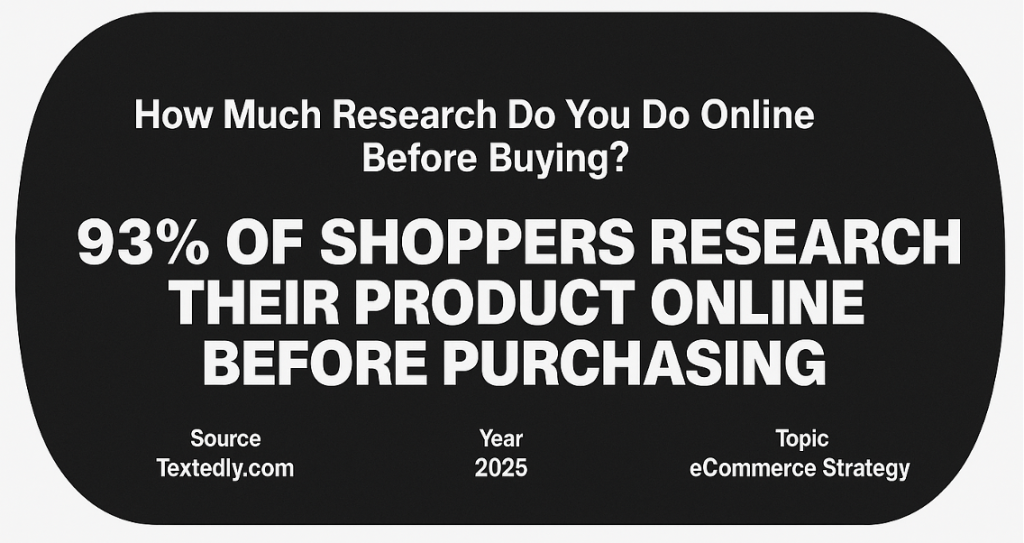
Most people research before they buy. 93% of shoppers look up products online first. Source: Textedly.com, 2025.

Peloton and NordicTrack’s massive advertising presence drowned out every Facebook ad they ran. They spend $100M+ on ads to get attention. But 93% of buyers research online before purchasing.

Paid advertising spend put them at a 7,000-to-1 disadvantage, but the research phase leveled the playing field. When shoppers compare options, organic content matters more than advertising budget. That’s where this brand won.

When someone sees a Peloton ad and starts researching “best fitness equipment,” “Peloton alternatives,” or “home gym setup for small spaces,” if your content answers those questions, you benefit from their $100M ad spend without spending a dime on awareness.

The Small Brand Advantage

Giant brands optimize for:

  • ✅ Mass awareness (expensive)
  • ✅ Paid traffic volume (expensive)

But they miss:

  • ❌ Mass informational content

Such content is overlooked by big brands that overthink things, play it safe, get too corporate with messaging, have excessive and slow editorial, and prefer ‘brand vibe’ content to hit some ill-thought-out corporate messaging target. The result is a huge content gap.

Small and mid-size underdog brands can win by:

  • ✅ Creating better answers to specific buyer questions
  • ✅ Creating content at scale, recognizing volume is more important than perfection
  • ✅ Building trust through helpful content before asking for the sale

This is actually a big opportunity in most industries that is rarely understood. For example, in the fitness equipment space, Peloton’s ads create awareness and grow the market, and that increase in demand is something they can tap into. But they miss creating helpful content in any meaningful way at scale.

AmpiFire helped this ecom store not only poach big-brand customers but also get seen in places their competition had overlooked. All just by answering buyer questions.

The AmpiFire Solution: Content That Brings Buyers

The brand started working with AmpiFire.

Instead of competing in the paid advertising arms race, we offered a different path. We helped them gain visibility through a strategic content marketing plan.

What Makes AmpiFire's MultiCasting Content Strategy Different

Firstly, we focus heavily on producing content that addresses questions and research people do before they buy, allowing us to grow a targeted audience of potential buyers when they are primed to buy. We do this at volume publishing to the website at least once per day.

Then we take their best-performing or highest-potential content and further boost it with multicasting using our world’s first in-house technology, which is not publicly available. 

Here’s the difference: Most content agencies take one blog post and share it across social media. That’s repurposing. It’s the duplicate content, same format, slightly different captions.

MultiCasting transforms a single topic into 8 completely different content formats: News Articles, Blog Posts, Interview Podcasts, Longer Informational Videos, Infographics, Flipbooks/Slideshows, Social Posts, and Reels/Shorts.

Each format is optimized for its platform’s algorithm and audience expectations. A YouTube video isn’t just your blog post read aloud—it’s scripted, structured, and styled specifically for YouTube’s recommendation system. A podcast interview flows naturally for audio listeners. An infographic visualizes data for Pinterest and Instagram.

Then we publish these eight formats to 300+ platforms, including Google News, YouTube, Spotify, Apple Podcasts, Business Insider, and major social media channels.

This is how one topic becomes omnipresent throughout the entire research journey. By leveraging our in-house technology, we can do this at scale at a fair price, giving brands the chance to generate returns that are significantly higher than those from paid ads. 

This approach delivers five key advantages: 

  1. Compounding Traffic Growth: Their first month’s content still drives visitors in month 15. Each published piece adds long-term traffic that can last for years. By month 15, over 73% of their blog traffic came from content published 6+ months earlier. Paid ads stop working the moment you stop paying.

  2. Competitor Ad Spend Becomes Your Advantage: When Peloton runs a $2M Super Bowl ad, curious shoppers search for “Peloton alternatives” and “best home gym equipment.” Our client’s content captured those searches. They benefited from Peloton’s awareness spending without paying for the initial click.

  3. Paid Ads Convert 2.4x Better: When prospects see an ad, research the brand, and find helpful content across search, social, video, AI, and more, they’re 2.4x more likely to convert.

  4. Higher Profit Margins Than Ads: Content creation is a one-time cost. Every visitor after that is free. The client’s blog traffic delivered 90%+ profit margins. Their paid ads (after ad costs) delivered 23% margins. Same customer value, 4x more profitable.

  5. Increased company value – You show up across search, social, video, podcasts, AI recommendations, image searches, and more. This makes your business more stable. It’s harder to copy and instantly recreate this presence with a big ad budget, as content creation and building trust with the traffic algorithms takes time. Copying paid ads is easy.


When You Can't Outspend Them, Dominate With Buyer-Research Content"

Our content strategy followed three steps:

1. Research Specific Buyer Questions

We didn’t create general content. Our team researched the exact questions potential customers ask before buying the fitness equipment they sell, and then focused on very specific long-tail keywords and sub-niches that major competitors ignored.

2. Create Better Educational Content

We developed content that answered those questions more thoroughly than any competitor. Rather than sales-focused material, each piece provided genuine value, including detailed comparisons, buying guides, and educational resources that shoppers actually wanted during research.

3. Distribute Across Several Channels

We published that content to their site and amplified select topics to reach more people by repurposing the content into:

  • News Articles, 
  • Additional Blog Posts, 
  • Interview Podcasts, 
  • Longer Informational Videos, 
  • Infographics, 
  • Flipbooks/Slideshows, 
  • Social Posts, and 
  • Reels/Shorts 

and publishing all that content across 300+ channels, including Google News, YouTube, Spotify, Apple Podcasts, Business Insider, and major social media channels. 

This made the brand look trustworthy, active, and popular in the eyes of potential buyers and the traffic algorithms. When people researched the products, brand, and features, there was more positive information out there to close the sale.

This method works best for growing brands with a great product and some traction—small brands competing against larger players.

Giant brands could outspend them, but we could strategically answer hundreds of buyer questions through quality content that increases search, social, AI recommendations, video, and podcast traffic.

A $60K/year budget was now competing for the same customers as $100M+ marketing spends.

The AmpiFire Process: Questions → Content → Conversions

The Client's Time Investment?

One major advantage of AmpiFire’s managed service is that the client’s team spends minimal time.

Here’s what the client provided:

  • Three initial 60-minute strategy calls to kick things off, to create content guidelines and a content plan.
  • A 1-hour review of results each quarter over a call.
  • Answering our occasional questions and instructions sent over email to improve performance.

Total client time per month: Less than 3 hours per month

We handled everything else: keyword research, content creation across all eight formats, all the posting on the site, technical audits, optimization for each platform’s algorithm, and distribution to 300+ sites.

For a small team stretched thin by daily operations, this time efficiency made the difference between executing a content strategy and abandoning it due to bandwidth constraints.

Month 6: The First Win

Within six months, the strategy delivered promising results. The site now attracted 4,700 monthly visitors—traffic that didn’t exist six months earlier, and it was just beginning.

Their site showed up more often when people searched for fitness equipment.

Traffic was converting to sales at healthy rates. We had found a scalable approach. But then something went wrong…

How The CEO's Decision Killed The Campaign And Erased All Growth

Traffic Drop After Content Removal: From Peak Performance to Crisis in 3 Months

The CEO made a hasty mistake. He deleted high-ranking pages because he didn’t understand the strategy before asking for any clarification. Our biggest reason for setbacks is the company itself not following the strategy given.

The CEO had not joined the three initial strategy meetings and didn’t understand our approach. He abandoned our proven process for his own ideas about how posts should look and what content should be posted, particularly when it came to getting stressed about competitors being mentioned. Unfortunately, he did not realize that such posts are only seen when people are already researching competitors.

Upon deletion, the blog’s traffic crashed immediately. Rankings disappeared. The CEO’s decision cost them $300,000+ in lost revenue, as the project lost months of momentum and fell behind—revenue that could never be recovered.

The Revival: $258K Revenue From Blog Traffic In Just 4 Months

From Crisis to Record Performance: 4-Month Recovery After Content Restoration

The consequences were massive. The CEO’s decision set them back at least 4 months as it took time to repost the content, and for the traffic algorithms to re-adjust to the changes. 

The CMO intervened, re-explaining the strategy to the CEO. Once the content was restored and the CEO stepped back from day-to-day decisions, recovery began.

The CMO later explained his intervention:

“I watched the traffic reports. I knew AmpiFire’s strategy worked. When this happened, I jumped on a call with the AmpiFire team to clarify what we should do. The data showed our blog traffic was increasing and converting. Walking away from that strategy because someone didn’t understand it would’ve been business malpractice.”

It took about 4 months for traffic to return to its previous level, after which the upward momentum resumed. When the organic traffic is not generating hundreds of thousands in sales per month, that is a lot to lose!

Despite this setback, now 9 months into AmpiFire’s strategy, the numbers spoke for themselves:

  • 11,475 monthly visitors just to the blog. More than their paid ads generated, at a fraction of the cost per visitor.
  • $258,187 Total Sales Revenue over 3 months, with $86,062 in monthly sales from blog visitors.
  • 17.2X ROCS – $30K invested (6 months of $5k monthly), $516K in sales generated over 6 months. 
The true cost of the CEO's decision: a 4-month delay in their growth.

While these results looked strong, they showed where the company should have been at month 5, not month 9. The disruption caused immediate losses. It pushed back their entire growth timeline. Every future milestone is now delayed by three months.

Even with good results, they operated three months behind their potential.

61.5X return on content spend. After investing $75,000 over 15 months, the last 6 months alone produced $1.85 million in sales.

By month 15, our client spent $5k each month on content creation and distribution. Their competitors spent that amount on advertising every few hours.

Unlike paid advertising, this growth built on itself. Each piece of content added more free traffic from Google. Their strong presence in search results also boosted their paid ads. Their ads converted better and cost less per sale.

This rescued their entire business. Their other marketing channels lost money with poor returns. The company headed toward serious financial trouble.

The content strategy leveled the playing field. They could now compete with giants that have $100M+ ad budgets. Their blog became a key source of profit. Their paid ads struggled under massive competition.

Projecting $3.69 Million in Annual Sales by Year Two

Campaign Performance: Current Results and Future Projections

Unlike ads, blog posts keep working 24/7. A post from six months ago still brings visitors today. Each new post adds more traffic. Google prioritizes sites that publish quality content. The brand pops up again and again while people research. Repeated visibility builds trust. Trust drives sales.

Each post multiplies the previous results. By month 15, they generated $307,500 monthly ($1.845M over the previous 6 months). Projecting steady growth through year two, they’re on track to reach $615,000 in monthly sales. 

Building this content authority takes 12–18 months of consistent work. Money can’t buy a shortcut. This level of brand visibility takes consistent effort over time. Every published article, video, or podcast adds another layer. Competitors with bigger budgets can’t simply buy their way past it.

Poach Market Share From Brands Spending $100M+ on Ads

This case study proves one thing: when big companies can outspend you, you need a different approach. A strategy to intercept customers during their research phase. With that, content marketing becomes the differentiator for higher profits and for competing at a higher level.

The Multiplier Effect: How Content Amplifies Every Ad Dollar

AmpiFire's Distribution Network: 300+ Channels Including News, Video, Podcasts, and Social

AmpiFire doesn’t replace paid advertising. We multiply its effectiveness.

We help businesses create quality content. We publish it on 300+ platforms, including Google News, YouTube, Spotify, Apple Podcasts, Business Insider, and major social media channels. This builds the trust that makes every ad dollar work harder.

When you run ads, most people don’t convert immediately.  When people see your ads, 93% of them research online before purchasing. Our content is what they will find when they search.

Your content answers their questions.

"Competitors can match your ad spend in a day. Building content is like laying a foundation brick by brick. Competitors can't pay to skip years of work."

Why Content Marketing Creates Long-Term Security

Paid advertising rewards big budgets. Content marketing rewards smart strategy. You can’t buy your way to authority overnight. It takes time to build, which creates natural protection against well-funded competition.

After 12–18 months of consistent publishing, competitors can’t throw money at the problem and catch up; they will likely always be behind if you take the lead in organic content.

Why AmpiFire's Method is More Profitable Long Term

Multichannel content marketing delivers advantages that paid ads alone can’t provide:

  • Your traffic stays steady, while paid ads can be unpredictable and risky.
  • Organic traffic typically delivers margins of 30–90% or more, while paid ads often generate margins of 0–30%, since intense competition forces many advertisers to run ads at break-even or even at a loss to acquire customers long-term.
  • Strong content supports your paid campaigns, helping them convert better.
  • Diverse traffic sources reduce risk and dependence on any single channel.
  • Being present in more places not only increases traffic but also improves conversions across the board due to higher trust and brand visibility.
  • Stable traffic, stronger branding, and better profit margins make your business worth more money.

Ready to Compete with Industry Giants?

Is your competition outspending you?

The AmpiFire Agency helps ecommerce brands and growing companies compete with competitors that have 10x, 100x, or even 1,000x bigger marketing budgets.

This approach works best if:

  • You’re spending at least $3,000+ monthly on paid ads
  • Your competitors dominate paid search and social, or struggle to expand your ad spend
  • You have a quality product with repeat customers
  • You’re ready to invest in long-term, consistent content

Not a fit if:

  • You urgently need results this month (organic growth takes time)
  • You’re only testing to see if marketing works
  • You want to do content creation and distribution yourself (in which case, apply for access to AmpCast.ai

If you are a fit and want a done-for-you content solution, the next step is to apply for our Done-For-You services. 

We limit fully managed services engagements to 5 new ecommerce clients per quarter, and not all brands are a fit. If you’re ready to compete with bigger brands without matching their ad budgets dollar-for-dollar, apply now.

AmpiFire Users' Success Stories: ​