
Key Takeaways
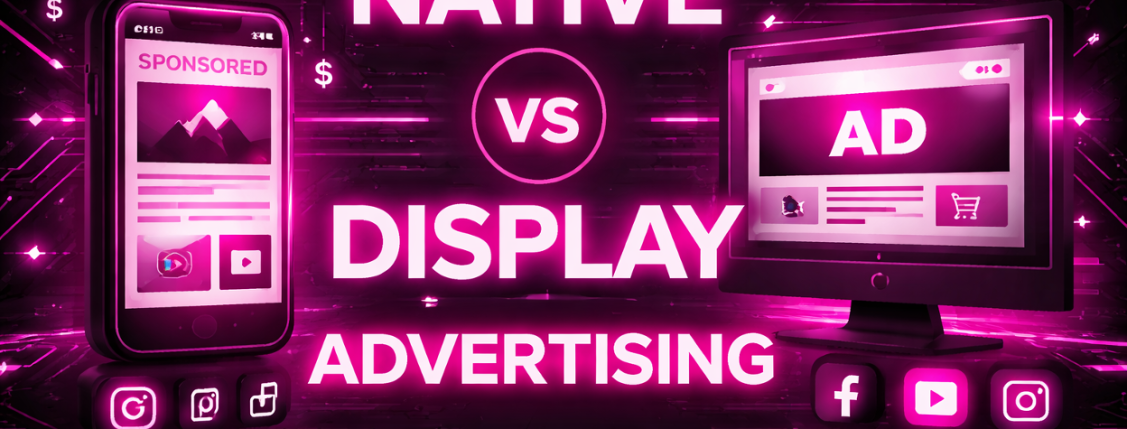
- Native ads blend into content feeds and match the look of the platform they appear on, while display ads appear in separate banner slots like sidebars, headers, and footers that stand out clearly as paid advertisements.
- Native ads build trust and deeper engagement with cold audiences who are already reading, while display ads keep your brand top of mind through repeated visual impressions and retargeting across websites and apps.
- A native ad looks like a sponsored article sitting inside a news feed on sites like Business Insider or MarketWatch, while a display ad looks like a 300×250 banner, sidebar image, or video unit running on the Google Display Network with a logo, headline, and call-to-action.
- Native ads typically cost $0.15 to $0.80 per click and $1 to $5 per 1,000 impressions, while display ads average $3.50 to $3.80 per 1,000 impressions and around $0.63 per click, which makes display cheaper for reach and native stronger for engagement quality.
- AmpiFire’s AmpCast AI turns one topic into 8 content formats (news articles, blog posts, interview podcasts, longer informational videos, reels/shorts, infographics, flipbooks/slideshows, and social posts) and publishes them across 300+ sites, including YouTube, Spotify, Pinterest, Google News, and FOX affiliate sites, to grow long-term organic traffic that complements any paid ad strategy.
What is the Difference Between Native and Display Ads for Brand Awareness?
When businesses choose between native advertising and display advertising for brand awareness, they are really choosing between two very different ways of reaching people online.
Native advertising is a paid format that matches the style, tone, and layout of the platform it sits on, so a sponsored story inside a news feed feels like an ordinary article. Display advertising, on the other hand, uses standalone visual units such as banners, image ads, and video placements that appear in dedicated ad slots across websites and apps.
Most native campaigns run through platforms like Taboola and Outbrain, while display campaigns are largely handled by the Google Display Network and similar programmatic networks.
Some businesses go further and combine these paid formats with organic content distribution, which is how services like AmpiFire’s AmpCast AI grow brand visibility by turning one topic into multiple content formats and publishing it across hundreds of platforms without recurring ad spend.

How AmpiFire Works:
- Research & Target: Find high-demand topics your buyers search for.
- Create & Repurpose: AmpiFire’s AmpCast AI generates news articles, blog posts, interview podcasts, longer informational videos, reels/shorts, infographics, flipbooks/slideshows, and social posts.
- Distribute & Amplify: Auto-publish to 300+ sites, including Google News, YouTube, Spotify, and major news networks.
Get more traffic from people who want to buy your stuff, and powerful “As Seen On” trust badges for your site.
Do It Yourself (with AI), Done For You Content, & 100% Managed Organic Growth options available.
Grow Your Free Traffic From Everywhere
What Are Native Ads?
Native advertising is a type of paid ad that is designed to blend in with the platform on which it appears. It matches the surrounding content in style, layout, and function, so it feels like a natural part of the page rather than a separate or disruptive advertisement.
How Native Ads Blend Into Content Feeds
Native ads are designed to look like the surrounding content, with the same fonts, layout, and tone, so they don’t feel like traditional ad marketing.
This blending helps them get more attention because users don’t feel interrupted. However, they are still clearly labeled as sponsored to maintain transparency.
Common Native Ad Formats
- In-feed ads: Sponsored posts in social feeds (LinkedIn, Instagram, X)
- Content recommendations: “Recommended” or “You May Also Like” widgets (Taboola, Outbrain)
- Sponsored articles: Branded articles on publisher sites
- Promoted listings: Paid product results (Amazon, Google Shopping)
- In-ad native content: Ads designed to blend into page content
Unlike banner or display ads, native ads don’t really look like ads, so they don’t disrupt the user’s interaction with the page.

What Are Display Ads?
Display advertising is a form of digital paid media that uses visual-based ads such as banners, images, videos, and rich media formats. These ads appear in dedicated ad spaces across websites, apps, and other digital platforms.
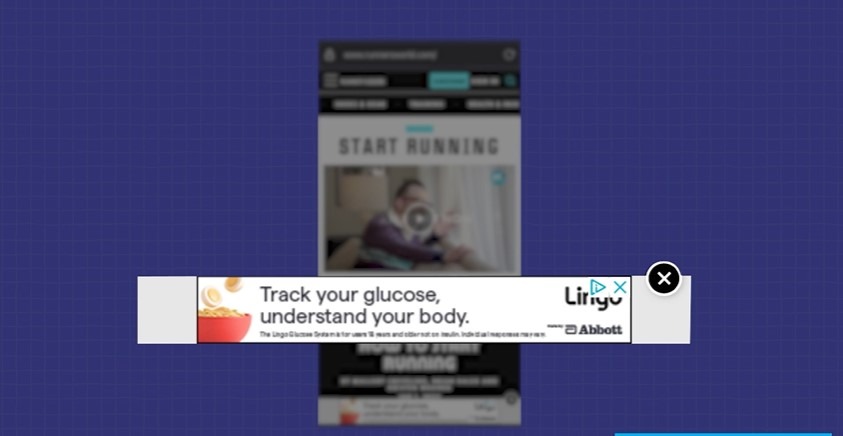
Unlike native ads, display ads do not blend into the content; they are designed to stand out, attract attention quickly, and drive user action such as clicks or conversions.
Standard Display Ad Formats and Sizes
Display ads follow standardized sizes defined by the Interactive Advertising Bureau (IAB) to ensure consistency across platforms. Common formats include 300×250 (medium rectangle), 728×90 (leaderboard), 160×600 (skyscraper), and 320×50 (mobile banner).
Beyond standard sizes, display advertising also includes a broader set of formats, such as:
- Banner ads
- Image-based ads
- Video display ads
- Rich media ads (interactive or animated units)
- Mobile-only display ads
- Native display ads (display ads designed to visually align more closely with page content, while still being labeled ads)
These placements typically appear at the top, sides, or bottom of a webpage, clearly separated from editorial or organic content.
Native vs Display Ads: The Core Differences
The difference between native and display ads covers more than appearance. They vary in placement, user experience, cost efficiency, and performance. These factors directly impact how users interact with them and how well campaigns perform.
Format & Placement
Native ads are placed inside content, while display ads appear around it. Display ads sit in fixed ad slots like headers, sidebars, or footers, making it clear they are advertisements. Native ads, on the other hand, blend into editorial-style content and are designed to feel like part of the page experience.
User Experience & Ad Blindness
Display ads are often affected by “ad blindness,” where users automatically ignore banner areas due to familiarity. This reduces attention even if the ad is technically viewed.
Native ads avoid much of this issue because they appear within the content flow, not in obvious ad zones. While performance still depends on content quality, they are more likely to be read and engaged with before users scroll past.
Ad Blocker Vulnerability
Display ads are heavily impacted by ad blockers, which can block standard banner and programmatic ad formats entirely, reducing reach and impressions.
Native ads are generally less affected because they are delivered as part of content feeds or publisher-integrated placements, making them harder to filter out completely. This gives them an advantage in reaching audiences who actively use ad-blocking tools.
Click-Through Rates & Engagement
Native ads typically generate higher engagement and click-through rates compared to display ads. Display ads often see lower CTRs due to user avoidance behavior, while native ads benefit from being integrated into content environments where users are already actively reading or browsing.
How Much Do Native & Display Ads Cost?
Cost comparison between native and display ads isn’t straightforward because they use different pricing models and deliver value in different ways. Native often focuses on engagement quality, while display prioritizes scale and reach.
Native Advertising Cost: CPM & CPC Benchmarks
Native ads are typically priced using CPM (cost per 1,000 impressions) or CPC (cost per click). On platforms like Taboola, CPC usually ranges from $0.15 to $0.60, while Outbrain averages between $0.25 and $0.80 per click. CPM rates generally fall between $1 and $5.
Costs vary by industry and placement quality, but premium native placements are generally more expensive than standard display ads. The higher cost is linked to stronger engagement rates and better content context, making native ads more valuable for awareness and consideration campaigns.
Display Advertising Cost: CPM & CPC Benchmarks
Display ads are usually priced on a CPM basis, averaging around $3.50 to $3.80 per 1,000 impressions. On programmatic networks like Google Display Network, CPC can be as low as about $0.63. This makes display ads a cost-effective way to reach large audiences.
However, because engagement rates are lower, the effective cost per click can sometimes be higher than that of native ads. Display retargeting campaigns usually perform better since they target users who are already familiar with the brand.
Which Format Delivers Better ROI?
The ROI depends on the goal. Display ads are better for low-cost reach and visibility at scale, while native ads perform better for engagement, content consumption, and driving interest from cold audiences.
The most effective strategy is not choosing one over the other, but using each format where it fits best in the marketing funnel.
Real Examples of Native Ads vs Display Ads
Understanding real-world examples makes the difference between native and display ads much clearer. Each format is designed for a specific purpose, and how they appear reflects that intent.
Native Ad Example: Sponsored Content in a News Feed
A financial brand promotes an article like “Why More Americans Are Rethinking Their 401(k) Strategy Before 50” on sites like MarketWatch or Business Insider. It appears within the content feed, matching the site’s style and labeled as “Sponsored.”
Users engage with it like regular content, often spending more time reading and forming a stronger impression of the brand. The focus here is education, trust, and deeper engagement.
Display Ad Example: Programmatic Banner on a News Site
The same brand runs banner ads across websites through the Google Display Network. These ads include a headline, logo, and call-to-action like “Learn More.”
They are often used for retargeting, reminding users who have already visited the site to come back. The goal here is quick visibility and conversions, not storytelling.
Why the Context of Each Example Matters
Both formats serve different roles. Native ads are used to build awareness and trust with new audiences, while display ads reinforce brand recall and drive conversions from existing users.
Using them together, rather than choosing one, leads to better overall campaign performance.
Native vs Display Ads: Key Differences Comparison Table
| Factor | Native Ads | Display Ads |
| Placement | Inside content feeds or articles | Separate ad spaces (banners, sidebars, headers) |
| Visual Style | Matches surrounding content | Clearly stands out as an ad |
| User Experience | Feels natural and less disruptive | More interruptive and noticeable |
| Ad Blindness | Lower risk of being ignored | Higher risk due to banner familiarity |
| Ad Blockers | Less affected | More likely to be blocked |
| Engagement | Generally higher engagement | Lower engagement on average |
| Primary Goal | Awareness, trust, content engagement | Reach, visibility, retargeting |
| Pricing Model | CPC and CPM (often higher per engagement) | CPM and CPC (generally lower cost per impression) |
| Cost Range | CPC ~$0.15–$0.80+, CPM ~$1–$5 | CPM ~$3.50–$3.80, CPC ~around $0.63 |
| Best Use Case | Cold audience engagement and storytelling | Retargeting and broad reach campaigns |
Why AmpiFire Is the Smarter Way to Scale Native & Display Results
Native ads and display ads serve different but complementary roles. Native builds trust with cold audiences by fitting into content, while display reinforces visibility and brings past visitors back. The smartest campaigns use both rather than picking one.
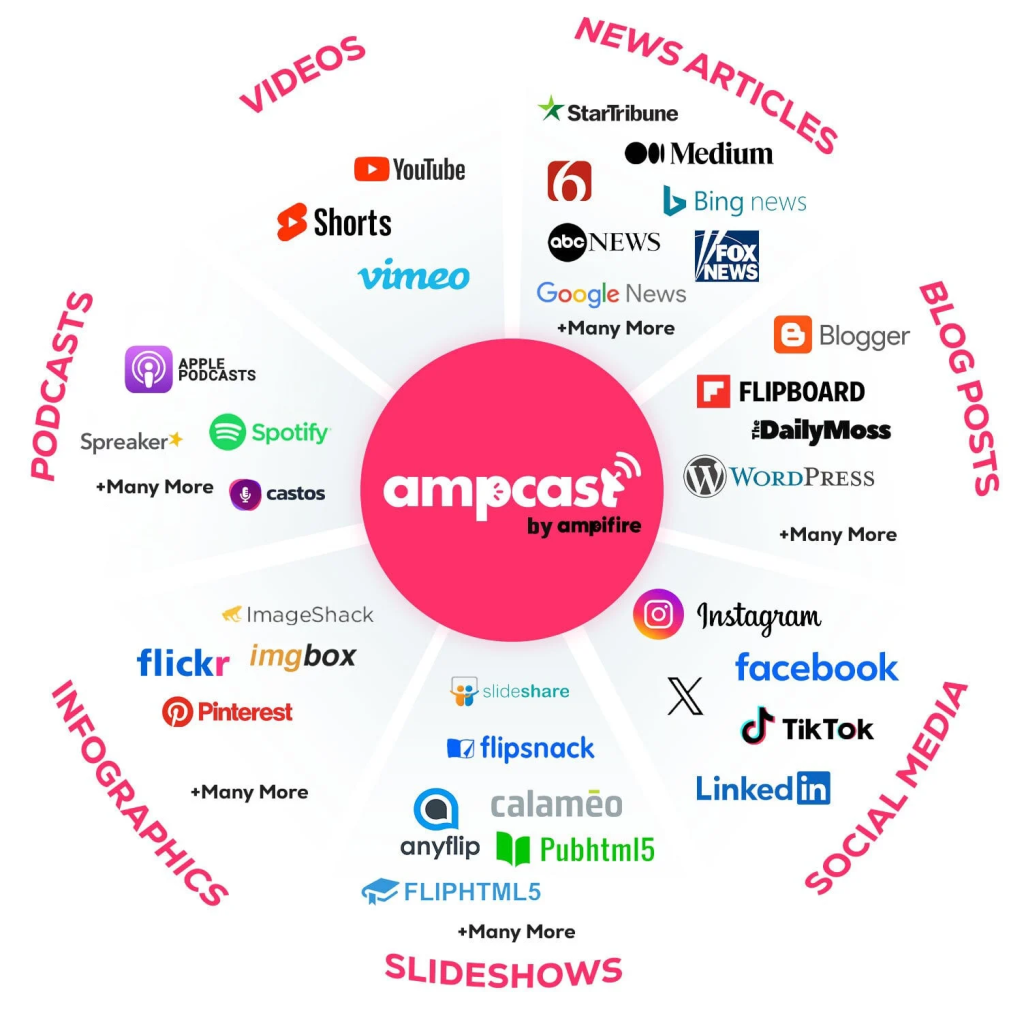
Paid ads work best when supported by strong organic visibility, and that is where we come in. At AmpiFire, we turn one topic into 8 content formats (e.g., news articles, blog posts, social posts, reels/shorts, longer informational videos, infographics, flipbooks/slideshows, and interview podcasts) and publish them across 300+ platforms like YouTube, Spotify, Pinterest, and Google News to grow long-lasting free traffic. If you want to scale your brand with organic content, try AmpCast AI today.
Frequently Asked Questions (FAQs)
What is the main difference between native and display advertising?
The main difference is how they appear on a page. Native ads blend into the content and feel like part of the platform, while display ads stand out in separate spaces like banners or sidebars.
This difference shapes how people respond to them. Native ads attract attention by fitting in, while display ads try to grab attention by being more noticeable.
Are native ads more expensive than display ads?
Yes, native ads are usually more expensive than display ads. This is because they are placed within content and tend to create stronger engagement. However, the higher cost often reflects better quality interaction, especially when trying to connect with new audiences.
Do native ads perform better than display ads for brand awareness?
Yes, native ads are generally more effective for building brand awareness. They allow users to engage with content in a more natural way, which helps create stronger impressions. Display ads can still help with visibility, but native ads are better for building trust and deeper interest.
Can display ads be blocked by ad blockers?
Yes, display ads are more likely to be blocked by ad blockers because they appear in standard ad spaces. Native ads are less affected since they are built into the content, making them harder to filter out.
Should I use native ads or display ads for a new brand launch?
For a new brand launch, native ads help build early trust while display ads keep your brand visible over time. Using both together creates stronger overall awareness.
At AmpiFire, our AmpCast AI platform adds another layer to this by turning one topic into 8 content formats (e.g., news articles, blog posts, social posts, reels/shorts, longer informational videos, infographics, flipbooks/slideshows, and interview podcasts) and publishing it across 300+ platforms so your brand shows up everywhere your buyers already spend time.
*Disclaimer: Results may vary based on individual circumstances, business type, and content strategy. The time savings and outcomes mentioned are based on typical user experiences and are not guaranteed. For specific pricing and service details, please visit AmpiFire.
Author
Related Posts


Press Release Distribution vs Social Media Marketing for Brand Awareness: Differences & Examples
Compare press release distribution vs. social media for brand awareness. Learn key differences and benefits to choose the right strategy…

LinkedIn Marketing vs Facebook Advertising for B2B Lead Generation: Benefits & Costs
LinkedIn vs Facebook for B2B leads: costs, targeting, and how AmpiFire adds organic reach across 300+ platforms to complement paid…

Organic vs Paid Social Media Marketing for Reach: Differences & Examples
Organic vs paid social media marketing differ in cost, speed, and control. Learn how to use both together and how…
Inbound vs Outbound Marketing for B2B Companies: Differences & Examples
Compare inbound vs outbound B2B marketing, learn key differences, and see how AmpiFire amplifies results with multi-platform content and organic…


SEO vs PPC Advertising for Traffic Growth: Examples, Pros & Cons
Learn the key differences between SEO and PPC advertising for traffic growth, with real-world examples, pros and cons, and tips…

Pardot vs Eloqua for B2B Marketing Automation: Differences & Cost
Compare Pardot vs Eloqua on features, pricing, and integrations to find the right B2B marketing automation tool. See how AmpiFire…