
Key Takeaways
- Instagram Reels drives engagement through Instagram’s social network, while YouTube Shorts relies on search and recommendations to surface content to viewers beyond a creator’s existing audience.
- Instagram Reels average about 2.7% engagement, with most reach concentrated in the first few hours after posting before visibility drops off.
- YouTube Shorts average about 5.91% engagement and keep generating views for months through YouTube’s search and recommendation system.
- Instagram Reels performs best with visual storytelling and product-led lifestyle content, while YouTube Shorts favors educational, evergreen, and niche topics built for search.
- AmpiFire’s AmpCast AI turns one topic into 8 content formats, including Reels and Shorts, then distributes them across 300+ platforms so content keeps generating views beyond either app.
Reels & Shorts Are Built for Different Kinds of Reach
Instagram Reels and YouTube Shorts differ because they run on different growth engines. Reels rewards social engagement, while Shorts rewards searchability, and that distinction shapes how far a video travels and how long it keeps earning views after it’s posted. Most creators choose a platform based on video length alone, which misses the deeper mechanic that decides whether a post fades within hours or keeps pulling in views for months.
Getting this wrong has a real cost. A brand that pours effort into cinematic, story-driven Reels but ignores search intent on Shorts misses out on the compounding traffic that keeps videos surfacing long after launch. The reverse is also true, since purely educational Shorts posted without any social hook rarely build the kind of community engagement that grows an Instagram account.
For long-term growth, success comes from adapting content to each platform and scaling it consistently. AmpiFire supports this by turning a single idea into multiple content formats and distributing it across search, social, video, and podcast platforms, helping brands reach new audiences beyond one channel and build a steady stream of organic traffic.

How AmpiFire Works:
- Research & Target: Find high-demand topics your buyers search for.
- Create & Repurpose: AmpiFire’s AmpCast AI generates news articles, blog posts, interview podcasts, longer informational videos, reels/shorts, infographics, flipbooks/slideshows, and social posts.
- Distribute & Amplify: Auto-publish to 300+ sites, including Google News, YouTube, Spotify, and major news networks.
Get more traffic from people who want to buy your stuff, and powerful “As Seen On” trust badges for your site.
Do It Yourself (with AI), Done For You Content, & 100% Managed Organic Growth options available.
Grow Your Free Traffic From Everywhere
Instagram Reels vs YouTube Shorts: Launch & Platform Foundations
Instagram introduced Reels in August 2020 as a short-form video feature built directly into its existing social ecosystem, giving creators instant access to an established network centered on followers, stories, and daily engagement.
YouTube launched Shorts the same year as a beta feature within its video and search-driven platform, designed to support both short-form findability and long-form content. It expanded further in 2021 and became a core part of YouTube’s ecosystem, focusing more on content finding and channel growth over time.
Views & Reach: Which Platform Gets You More Eyes
Raw view counts matter, but reach quality and how long that reach lasts are just as important when building a serious content strategy.
Instagram Reels benefits from Instagram’s massive user base, with content often surfaced to non-followers through the recommended content feed page and Reels feed. This allows strong posts to gain quick visibility beyond your audience soon after publishing.
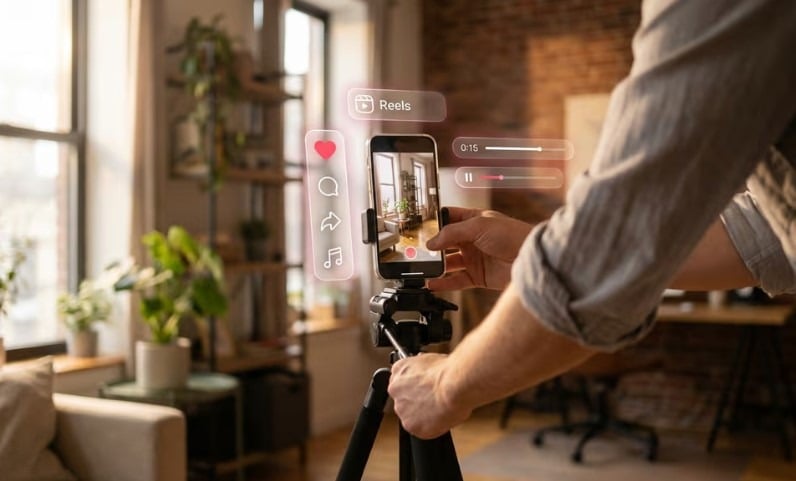
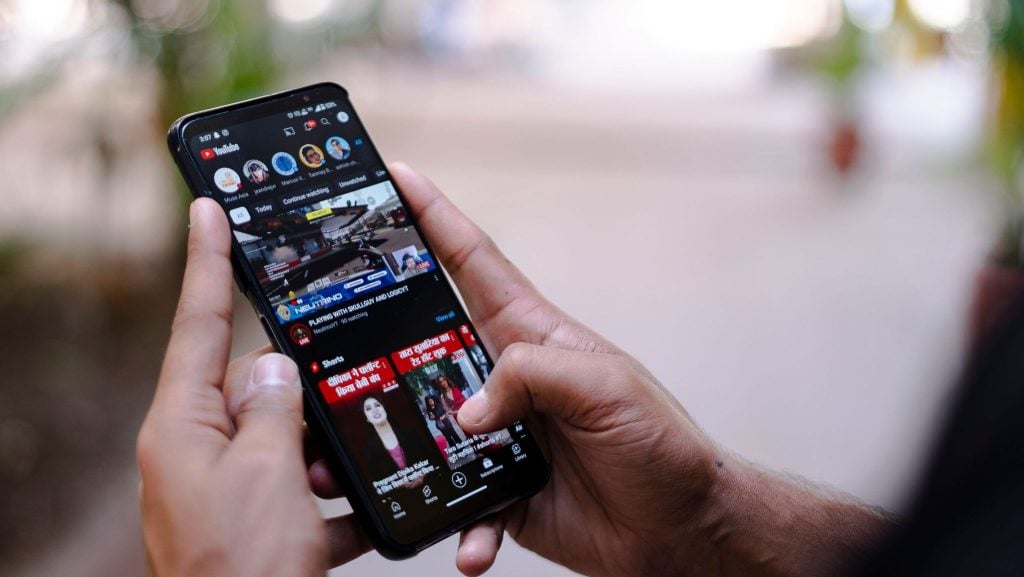
YouTube Shorts also reaches a huge global audience through a dedicated vertical feed. The key difference is that YouTube’s search and recommendation system can keep pushing Shorts long after they’re posted, giving them a longer findability window compared to most social-first platforms.
For new creators, YouTube Shorts often delivers faster early traction since content is actively tested across viewers regardless of subscriber count, while Instagram Reels tends to rely more on early engagement signals to expand reach.
Instagram Reels Average Engagement Rate
Instagram Reels generally drive higher engagement than other Instagram formats, with industry benchmarks putting the average engagement rate of around 2.7%. This makes it strong for creators and brands focused on interaction, community building, and audience connection.
High engagement also feeds the algorithm; when users like, comment, and share, Instagram pushes the Reel to more people, creating a cycle that can lead to viral reach when the content lands well.
Instagram Reels is designed for fast distribution. Most of the reach happens within the first few hours or minutes, and if a post doesn’t perform early, its visibility tends to drop quickly. This makes timing, hooks, and early engagement critical, and requires consistent posting to maintain steady reach over time.
YouTube Shorts Average Engagement Rate
YouTube Shorts have an average engagement rate of around 5.91% based on industry benchmarks, including likes, comments, and shares. The platform is built more for consumption and findability than social engagement.
YouTube Shorts benefits from being part of a search-driven ecosystem, which means content can continue generating views long after posting. Shorts tied to searchable topics can keep appearing in recommendations and search results over time.
Content Strategy That Performs Best on Each Platform
What Works on Instagram Reels: Visual Storytelling & Product-Led Content
Instagram is built around visuals, so Reels that grab attention quickly with strong aesthetics, smooth transitions, or emotional storytelling tend to perform best. Lifestyle content like beauty, fashion, food, travel, and short narrative clips fits naturally because it delivers an immediate visual payoff.
Product-led content also works especially well, particularly for e-commerce and DTC brands. When creators combine storytelling with subtle product placement and use Instagram’s shopping features, Reels can drive both engagement and conversions without feeling overly promotional. Brands producing this type of content at volume have started relying on AI video generation to keep output consistent, and invideo Agent handles that by running latest AI video models like Google Veo 3.1 to take a product brief straight to a finished social video.
What Works on YouTube Shorts: Educational, Evergreen & Niche Content
YouTube users are usually in a findability or learning mindset, so educational and problem-solving content performs strongly on Shorts. Quick tips, mini tutorials, myth-busting clips, and concise explanations tend to outperform purely entertainment-based videos.
Evergreen topics are especially powerful because Shorts can keep getting views through search and recommendations long after posting. A useful topic can continue attracting viewers over time, unlike trend-based content that fades quickly on other platforms.
Niche content also performs well on YouTube Shorts because the recommendation system is highly effective at matching specific interests with the right audience, helping even very focused topics find consistent viewership.
Instagram Reels vs YouTube Shorts: Which Platform Is Right for You?
| Factor | Instagram Reels | YouTube Shorts |
| Platform Focus | Social-first, community and engagement-driven | Search-first and recommendation-driven |
| Reach Pattern | Fast exposure via browse and Reels feed; peaks early | Continuous exploration through search and recommendations |
| Early Growth | Relies on strong early engagement signals | Content is tested broadly, often with faster initial traction for new creators |
| Engagement Rate | ~2.7% (industry benchmark), driven by likes, comments, and shares | ~5.91% (industry benchmark), more consumption-based interaction |
| Reach Longevity | Short-lived; drops quickly after initial push | Long-lasting; continues to gain views over time |
| Content Strategy | Best for visual storytelling, lifestyle, and product-led content | Best for educational, evergreen, and niche content |
Scaling Reels & Shorts Content with AmpiFire’s AmpCast AI
The most effective way to grow on platforms like Instagram Reels and YouTube Shorts is to consistently publish content that matches each platform’s behavior: visual, fast-impact storytelling for Reels, and educational, searchable, or niche-focused content for Shorts. Success comes from aligning format, intent, and distribution rather than just posting more often.
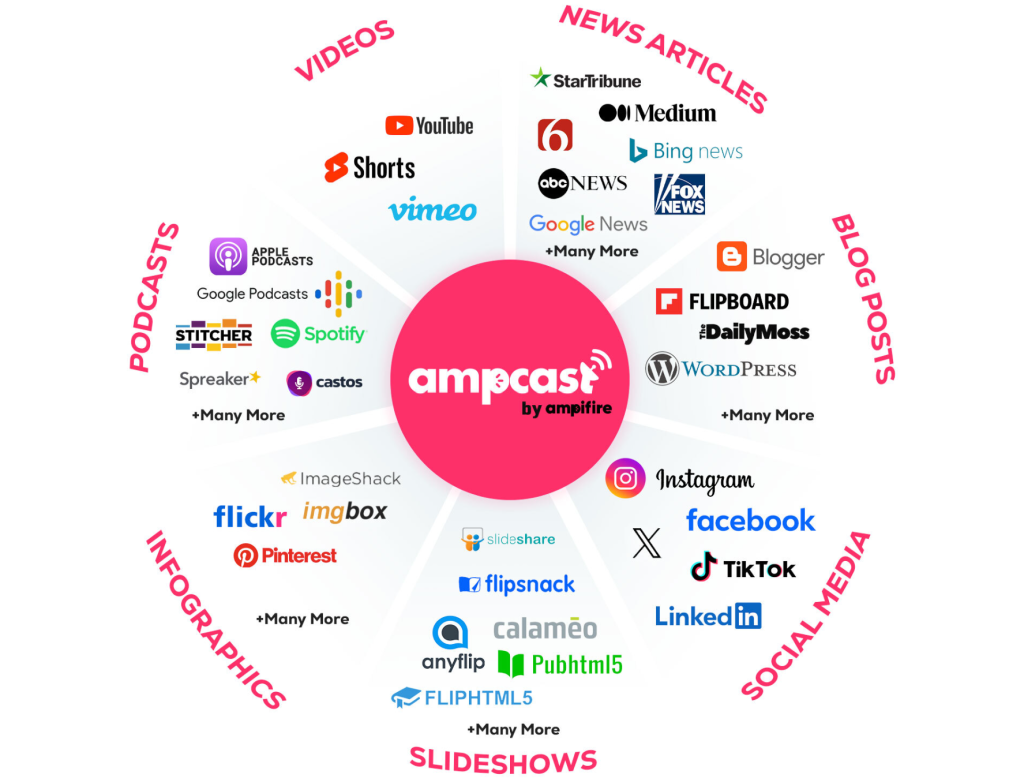
Once that foundation is in place, the next challenge is scale: turning one idea into multiple high-performing content formats and getting it in front of audiences across different platforms. AmpiFire’s AmpCast AI supports this by taking a single high-demand topic and transforming it into 8 platform-optimized content types (e.g., news articles, blog posts, interview podcasts, longer informational videos, reels/shorts, infographics, flipbooks/slideshows, and social posts). The content is then automatically distributed across 300+ high-authority platforms like YouTube, Instagram, Pinterest, Google News, Spotify, and many more. This helps brands stay visible across search, social, and video without relying on manual repurposing or paid ads. Try AmpCast AI today.
Frequently Asked Questions (FAQs)
What is the biggest difference between Instagram Reels and YouTube Shorts?
The key difference is how content gets found and how long it stays visible. Instagram Reels is driven more by social engagement and tends to perform best shortly after posting, while YouTube Shorts is built around search and recommendations, allowing content to keep gaining views over time. This also shapes everything else, from audience behavior to overall growth patterns.
Which platform is better for new creators with no existing audience, Instagram Reels or YouTube Shorts?
YouTube Shorts usually gives new creators a stronger starting point because content can be shown widely based on viewer interest, even without followers. Instagram Reels can also reach new audiences, but early engagement plays a bigger role in how far content spreads, which can make growth less consistent for beginners.
Can you repost TikTok videos to both Instagram Reels and YouTube Shorts?
You can, but it’s important to avoid posting content with TikTok watermarks, as it can limit distribution on both platforms. Clean, original uploads perform better and are treated as native content. It’s also important to adapt captions, audio, and format so the video fits each platform’s style instead of reposting it exactly as-is.
How long should your videos be on Instagram Reels and YouTube Shorts?
Shorter videos tend to work better on Instagram Reels, especially for quick, engaging content, while slightly longer videos can perform well on YouTube Shorts if they hold attention. The main rule is to keep content as long as needed to deliver value without unnecessary length.
How can you create content for both Instagram Reels and YouTube Shorts more efficiently?
Managing separate content strategies for Instagram Reels and YouTube Shorts can be time-consuming. AmpiFire’s AmpCast AI helps simplify the process by turning a single topic into multiple content formats, making it easier to maintain a consistent presence across platforms while reaching audiences through more than just short-form video.
*Disclaimer: Results may vary based on individual circumstances, business type, and content strategy. The time savings and outcomes mentioned are based on typical user experiences and are not guaranteed. For specific pricing and service details, please visit AmpiFire.
Author
Related Posts


Instagram Reels vs TikTok: Views, Reach & Content Tips
Instagram Reels vs TikTok: TikTok wins cold reach; Reels nurtures your followers. Get views, reach tips, and grow on both…
YouTube Shorts vs TikTok: Views, Monetization & Content Strategy
YouTube Shorts vs TikTok: see which platform truly wins on views, reach, and virality, plus how AmpiFire publishes your content…

Where to Share YouTube Videos & Shorts to Get More Views
Discover the best places to share YouTube videos and shorts for more views. Learn effective promotion strategies to grow your…

How to Get More Views on YouTube Shorts After Posting: 8 Tips
Learn how to get more views on YouTube Shorts after posting with 8 tips that keep working weeks later, plus…


How to Get More Views on Instagram Reels After Posting: 6 Tips
Boost Instagram Reels views after posting with proven engagement tactics, Story strategies, and analytics insights to maximize reach and grow…

Best Time To Post Instagram Reels: Days, Hours & Testing Tips
Discover the best time to post Instagram Reels, using data-backed insights on top days and hours for engagement, and learn…