
Key Takeaways
- Social listening analyzes broader conversations across social media, forums, and review sites to reveal sentiment shifts, emerging trends, and competitor insights.
- Social monitoring tracks brand mentions, keywords, and conversations in real time, letting businesses respond fast to customer feedback and reputation issues.
- McDonald’s relied on social listening data to spot pricing backlash and respond with a $5 meal deal, while Ryanair uses social monitoring for quick, humorous replies on X.
- Social listening platforms like YouScan, Brandwatch, and Talkwalker start around $299/month and climb past $1,000/month, while social monitoring tools range from free Google Alerts to Hootsuite at $99/month.
- AmpiFire’s AmpCast AI turns the trends and sentiment uncovered through listening and monitoring into 8 different content formats optimized and distributed across 300+ sites for organic traffic growth.
How Social Listening & Monitoring Work Together
Social monitoring tracks conversations happening right now, while social listening looks for the bigger patterns hiding inside those conversations. Most brands assume the two terms mean the same thing, so they end up with a tool built for quick replies when what they actually need is a system that spots trends before a crisis builds. That mismatch is common because vendors often blur the line between the two features in their marketing.
Getting the choice wrong has a real cost. A brand watching only for mentions can miss the slow build-up of frustration that turns into a viral backlash, the kind McDonald’s faced over pricing before sentiment data forced a response. The right approach usually means starting with monitoring for day-to-day engagement, then adding listening once the volume of conversation is worth analyzing for trends.
Once a business understands what its audience is saying, the next step is turning that understanding into visibility. AmpiFire’s AmpCast AI takes the topics and sentiment surfaced through listening and monitoring and turns them into multi-format content distributed across hundreds of platforms, helping brands reach buyers before they ever search for a competitor.

How AmpiFire Works:
- Research & Target: Find high-demand topics your buyers search for.
- Create & Repurpose: AmpiFire’s AmpCast AI generates news articles, blog posts, interview podcasts, longer informational videos, reels/shorts, infographics, flipbooks/slideshows, and social posts.
- Distribute & Amplify: Auto-publish to 300+ sites, including Google News, YouTube, Spotify, and major news networks.
Get more traffic from people who want to buy your stuff, and powerful “As Seen On” trust badges for your site.
Do It Yourself (with AI), Done For You Content, & 100% Managed Organic Growth options available.
Grow Your Free Traffic From Everywhere
What is Social Listening?
Social listening is the process of identifying, tracking, and analyzing online conversations about a brand, product, competitor, or industry. Rather than focusing on individual mentions, it looks for patterns and insights that can help businesses make better decisions.
How Social Listening Works
A key part of social listening is sentiment analysis, which measures whether conversations are positive, negative, or neutral. It also helps identify recurring themes and emerging trends, giving businesses a clearer understanding of customer opinions and market shifts.
Social listening tools collect data from social media platforms, blogs, forums, online communities, review sites, and other public online sources. This broader view helps businesses understand conversations happening beyond their own social profiles.
What Social Listening Helps You Understand
Social listening turns online conversations into actionable insights. Businesses use it to improve products, analyze competitors, evaluate campaigns, identify customer needs, and make more informed marketing and brand decisions.
What is Social Monitoring?
Social monitoring is the process of tracking brand mentions, keywords, hashtags, and conversations across social media in real time. It helps businesses stay informed about what people are saying and respond when needed.

How Social Monitoring Works
Social monitoring tools track brand names, product names, hashtags, and campaign terms across several platforms. They gather these mentions into one place, making it easier to spot customer feedback, questions, and engagement opportunities.
Social monitoring focuses on immediate action. It helps businesses respond to customer concerns, manage reputation issues, and join relevant conversations while they are still active.
What Social Monitoring Can & Cannot Tell You?
While monitoring shows individual mentions and conversations, it does not always reveal broader trends or shifts in audience sentiment. It explains what people are saying, but not always the larger patterns behind those conversations.
Example of Social Listening in Action
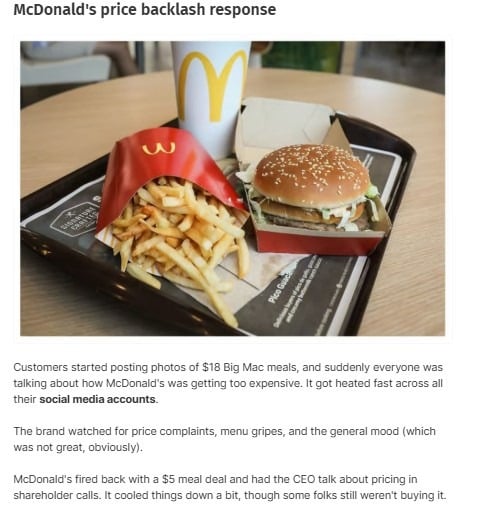
McDonald’s Price Backlash Response
A recent example comes from McDonald’s, which faced widespread online criticism over menu prices after customers shared photos of expensive meals on social media. By analyzing customer conversations and sentiment, the company identified growing frustration around pricing.
McDonald’s responded with a $5 meal deal and publicly addressed the issue, demonstrating how social listening can help brands understand customer concerns and make informed business decisions.
Example of Social Monitoring in Action
Ryanair’s Real-Time Customer Response on Twitter/X
Ryanair is often cited as an example of effective social monitoring. The airline actively tracks mentions on X (formerly Twitter) and responds to customer comments, questions, and complaints in real time. Its quick, often humorous replies help the brand stay engaged with its audience while maintaining control of online conversations.

Social Listening & Monitoring Tools Compared
Top Social Listening Tools
YouScan specializes in visual listening, using AI to detect brand logos and products in images. Brandwatch provides advanced sentiment analysis, audience insights, and historical data for large organizations. Talkwalker is another enterprise platform that helps brands track trends, conversations, and consumer sentiment at scale.

Top Social Monitoring Tools
Hootsuite combines social media management and monitoring in one platform, making it useful for managing daily engagement. Mention focuses on real-time brand tracking across social media, blogs, and news sites. Google Alerts is a free option for monitoring web mentions, though it has limited social media coverage.
How to Pick the Right Tool
Small businesses often start with tools like Google Alerts, Mention, or Hootsuite to track brand mentions and customer conversations. Larger organizations that need competitive intelligence, sentiment analysis, and trend tracking may benefit from dedicated listening platforms such as Brandwatch, Talkwalker, or YouScan.
Costs of Social Listening & Monitoring Tools Explained
Social listening and monitoring tools range from free options to enterprise platforms costing thousands of dollars per month. Pricing depends on factors such as data volume, features, and the level of analysis provided.
- YouScan: Plans start around $299/month.
- Brandwatch: Enterprise pricing, typically starting at $1,000+/month.
- Talkwalker: Custom enterprise pricing, generally comparable to Brandwatch.
- Google Alerts: Free, but it covers web and news mentions only.
- Hootsuite: Plans start at $99/month.
- Mention: Plans now start at $599/month on an annual contract, since Mention retired its lower-cost self-serve tiers for new customers in 2025.
For many businesses, starting with a monitoring tool is the most practical approach. As your team grows and needs deeper insights into customer sentiment, trends, and competitor activity, adding a dedicated social listening platform may provide additional value.
Social Listening vs. Social Monitoring: Key Differences
| Category | Social Listening | Social Monitoring |
| Purpose | Analyzes conversations to identify sentiment, trends, and audience insights | Tracks brand mentions, keywords, hashtags, and conversations in real time |
| Focus | What conversations mean and where trends are heading | What people are saying right now |
| Approach | Strategic and insight-driven | Reactive and response-driven |
| Main Benefits | Trend detection, competitor analysis, product feedback, and marketing strategy | Customer support, reputation management, and real-time engagement |
| Data Sources | Social media, blogs, forums, review sites, and online communities | Social media mentions and interactions |
| Example | McDonald’s used customer sentiment data to address pricing concerns | Ryanair responds quickly to customer conversations on X |
| Popular Tools | YouScan (from $299/month), Brandwatch (from $1,000+/month), Talkwalker (custom pricing) | Google Alerts (Free), Hootsuite (from $99/month), Mention (from $599/month) |
| Best For | Businesses that need deeper customer and market insights for decision-making | Businesses that need fast responses and brand visibility |
AmpiFire Turns Social Insights Into Organic Reach
The most effective social media strategy combines both monitoring and listening. Monitoring helps brands respond to conversations in real time, while listening uncovers the trends, sentiment shifts, and audience interests that guide smarter long-term decisions.
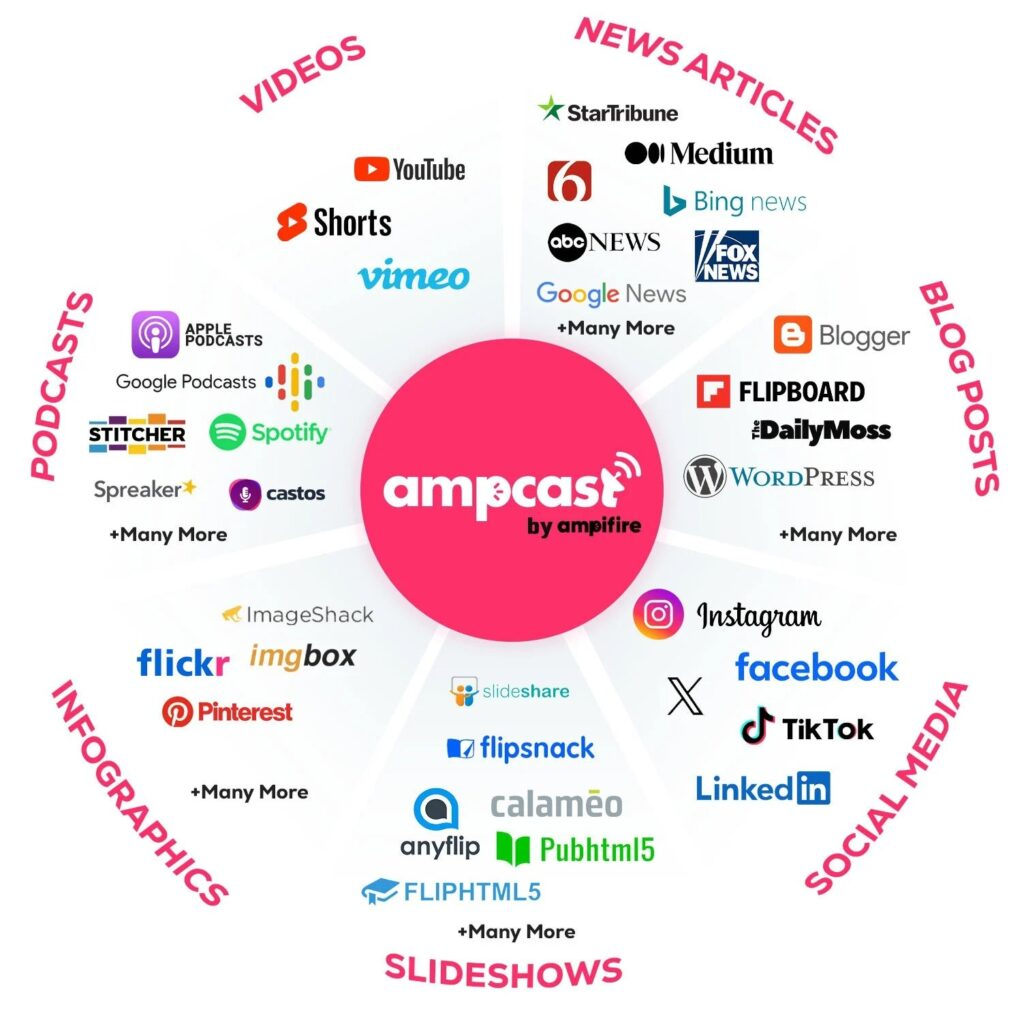
Once you understand what your audience is talking about, the next step is creating content around those topics and making sure people can find it. AmpiFire’s AmpCast AI helps businesses do this by researching buyer-intent topics, creating content in multiple formats (e.g., news articles, blog posts, interview podcasts, longer informational videos, reels/shorts, infographics, flipbooks/slideshows, and social posts), and distributing it across 300+ high-authority sites. Try AmpCast AI today and turn your social insights into organic traffic.
Frequently Asked Questions (FAQs)
What is the main difference between social listening and social monitoring?
Social monitoring tracks brand mentions and conversations as they happen, helping businesses respond quickly to customer interactions. Social listening takes a broader view, analyzing conversation patterns, audience sentiment, and trends over time to provide insights that support long-term decision-making.
Can small businesses benefit from social listening tools?
Yes. Social listening can help small businesses understand customer opinions, industry trends, and competitor conversations, making it easier to improve marketing, content, and business decisions as they grow.
Is Google Alerts a social monitoring tool?
Google Alerts is primarily a web monitoring tool that tracks mentions across websites, blogs, and news content. While it can help businesses stay informed about online mentions, it does not provide comprehensive coverage of social media conversations.
How often should businesses conduct social listening?
Brands should review social listening insights regularly to monitor customer sentiment, identify emerging trends, and uncover new opportunities. The ideal review schedule depends on business goals and the pace of change within the industry.
How can businesses use social listening insights?
Businesses can use social listening insights to understand what their audience cares about and create more relevant content. AmpiFire helps extend the reach of those insights by turning high-demand topics into multiple content formats and auto-publishing them to hundreds of online sites like YouTube, Pinterest, Apple Podcasts, Google News, and more to attract organic traffic across search, social media, video platforms, and more.
*Disclaimer: Results may vary based on individual circumstances, business type, and content strategy. The time savings and outcomes mentioned are based on typical user experiences and are not guaranteed. For specific pricing and service details, please visit AmpiFire.
Author
Related Posts


How To Perform Media Monitoring & Measurement For Your Business
Media monitoring and measurement for business are keys to success in your industry. Learn how to perform monitoring here.


Hootsuite vs Buffer Social Media Management Tools: Free Plan & Pricing Comparison
See how Buffer and Hootsuite compare on pricing, free plans, and features. Learn which social media management tool has the…

Brandwatch vs Sprout Social: Features, Pros & Cons
Compare Brandwatch vs Sprout Social features, pros, and cons, and see how AmpiFire's multi-platform distribution extends reach beyond social media.
Brandwatch vs Hootsuite for Social Media Management: Pricing, Pros & Cons
Brandwatch vs Hootsuite compared by pricing, features, pros, and cons. See which fits your team and where AmpiFire fills the…

Sprout Social vs Later: Which is Better for Social Media Scheduling?
Compare Sprout Social vs Later: features, pricing, scheduling, and ideal users. Learn which platform fits your strategy and grow with…
Average Social Media Cost Per Lead 2026 Compared | Ads vs. Content
Key Takeaways: In 2026, paid social media advertising averages $65 per lead while organic content marketing costs $95 per lead,…