

Key Takeaways
- Choosing between Pardot and Eloqua comes down to your team size, tech stack, and how complex your campaigns actually need to be.
- Most B2B teams pick based on brand recognition alone, then spend months adjusting to a tool that doesn’t fit their workflow or budget.
- Pardot fits mid-sized Salesforce teams that need speed and sales alignment; Eloqua fits large enterprises running multi-step, multi-channel campaigns. Neither platform handles content distribution at scale, which is where AmpiFire fills the gap.
- Pardot starts at $1,250/month with predictable tiered pricing. Eloqua starts around $2,000/month with custom enterprise contracts that scale with database size.
- AmpiFire turns one topic into news articles, blog posts, interview podcasts, longer informational videos, reels/shorts, infographics, flipbooks/slideshows, and social posts, then distributes everything across 300+ platforms to build visibility beyond your CRM.
Pardot vs Eloqua: Which One Is the Right Choice for Your B2B Marketing?
Pardot is the stronger fit for mid-sized B2B teams already on Salesforce, while Eloqua is built for large enterprises running complex, multi-channel campaigns. Pardot’s Salesforce-native sync means sales and marketing share the same data in real time, which is something a connector-based integration like Eloqua’s cannot fully replicate. For teams that need that tight CRM loop, that difference alone often decides the choice.
Eloqua compensates with more powerful segmentation, branching campaign logic, and deeper analytics suited to organizations with dedicated marketing operations teams. Both platforms focus on managing campaigns and nurturing leads inside your existing database. Distributing content across channels outside that database requires a separate tool entirely.

How AmpiFire Works:
- Research & Target: Find high-demand topics your buyers search for.
- Create & Repurpose: AmpiFire’s AmpCast AI generates news articles, blog posts, interview podcasts, longer informational videos, reels/shorts, infographics, flipbooks/slideshows, and social posts.
- Distribute & Amplify: Auto-publish to 300+ sites, including Google News, YouTube, Spotify, and major news networks.
Get more traffic from people who want to buy your stuff, and powerful “As Seen On” trust badges for your site.
Do It Yourself (with AI), Done For You Content, & 100% Managed Organic Growth options available.
Grow Your Free Traffic From Everywhere
Pardot vs Eloqua: Features and Capabilities
Pardot and Eloqua both offer strong marketing automation capabilities, but they are built for very different team sizes and levels of complexity. Knowing how each platform handles core functions helps you match the right tool to your sales process and campaign needs.
Pardot (Salesforce Marketing Cloud Account Engagement)
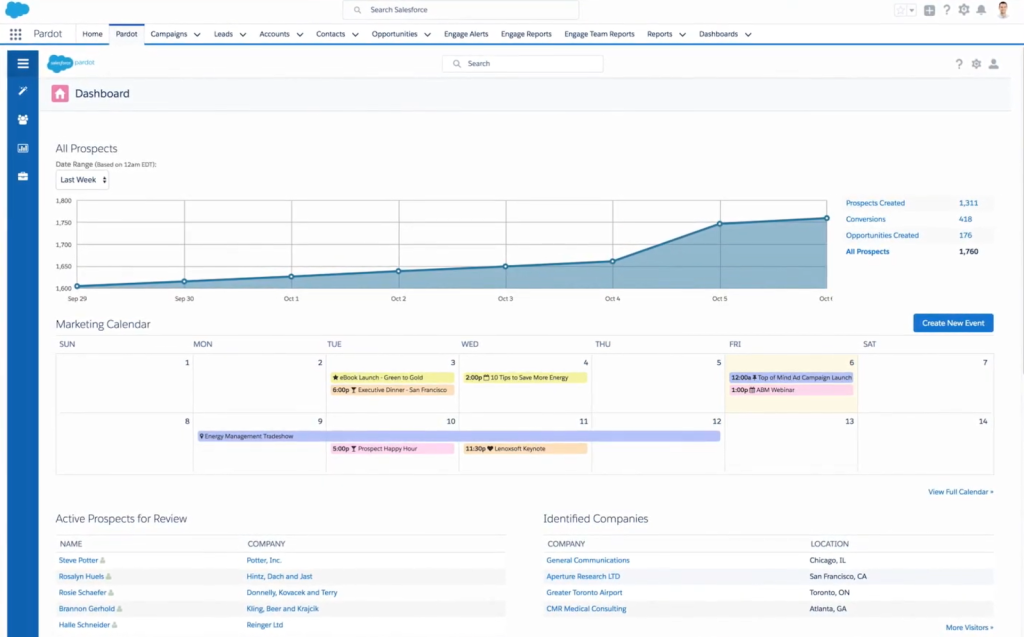
Pardot is built for B2B marketing teams that want to manage marketing and sales together inside Salesforce. It focuses on core automation features like email marketing, lead management, landing pages, forms, and CRM integration. It also includes lead scoring and grading to help sales teams quickly identify and prioritize qualified prospects.
One of Pardot’s main strengths is its close connection to Salesforce. All lead activity, campaign engagement, and opportunity data sync in real time, giving sales teams full visibility and helping them follow up with the right context. It also supports ROI tracking tied directly to Salesforce opportunities, making performance easier to measure.
Eloqua (Oracle Eloqua)
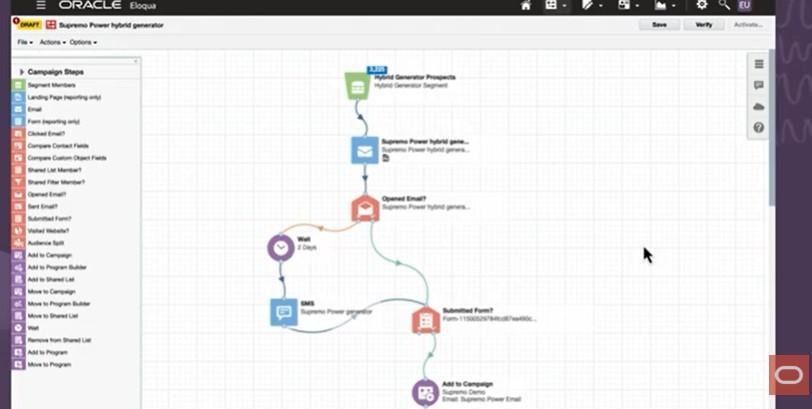
Eloqua is built for enterprise teams that need more advanced control over their marketing. It supports complex, multi-step campaigns with detailed segmentation and multi-channel automation, making it suitable for large-scale operations.
It includes powerful campaign management tools, allowing marketers to build workflows with branching logic and real-time triggers. Its advanced segmentation lets teams target audiences based on behavioural, demographic, and firmographic data for more precise messaging. It also provides deeper analytics and reporting to help optimize campaigns and track performance across the full customer journey.
Is There a Clear Feature Difference Between Pardot and Eloqua?
Both platforms cover the same core B2B marketing needs, but the way they deliver those features differs significantly. These differences determine which tool fits your team size, tech stack, and campaign complexity.
Email Marketing and Automation
Both platforms handle email marketing well, but the difference is in complexity. Pardot gives a clean, easy-to-use builder with strong Salesforce-based personalization, ideal for teams that want speed and simplicity. Eloqua goes deeper, allowing more advanced rules, conditional content, and behaviour-based triggers.
Pardot is easier and faster to use. Eloqua supports more complex, highly customized campaigns.
CRM Integration
Connecting your CRM to a marketing automation platform is essential for ensuring a seamless flow of lead data and campaign insights. However, as your enterprise tech stack grows and multiple departments or external agency partners require platform access, securing these integrations becomes a top priority. Implementing a robust b2b identity management infrastructure allows organizations to safely handle multi-tenant access, single sign-on (SSO), and role-based permissions, ensuring that sensitive sales and marketing data remains protected without slowing down your team’s workflow
Pardot has native Salesforce integration with real-time, bi-directional data sync and full visibility for sales teams. Eloqua connects to Salesforce through a connector that requires more setup and ongoing maintenance, though it fits better within Oracle’s own ecosystem.
Difference: Pardot offers native Salesforce integration. Eloqua requires a connector with more setup, but fits better for Oracle-based systems.
Reporting and Analytics
Pardot covers core reporting needs like email performance, conversions, and ROI tracking within Salesforce, which is sufficient for most mid-sized teams. Eloqua delivers more advanced analytics with custom dashboards and predictive insights, at greater complexity in setup and interpretation.
Difference: Pardot is simpler and sufficient for most teams. Eloqua delivers more advanced, enterprise-level analytics with added complexity.
Social Media Tools
Both platforms offer basic social features for posting and engagement tracking, but neither leads in this area. Eloqua integrates social data slightly more into campaign workflows, while Pardot keeps it simple.
Difference: Eloqua has slightly deeper campaign integration, but both typically require external tools for serious social media management.
Pardot vs Eloqua Pricing
Pricing is one of the biggest differences between these platforms. Pardot offers clear, tiered pricing that is easier to budget for. Eloqua uses a custom enterprise pricing model based on database size, features, and contract terms, making it more flexible but more expensive overall.
Pardot Pricing Breakdown
Pardot has four main pricing tiers, billed monthly and based on 10,000 to 75,000 contacts. As your database grows, costs increase, and higher tiers unlock more advanced features like AI and deeper automation.
- Marketing Cloud Account Engagement: $1,250/month — core email, lead scoring, forms, A/B testing, and Salesforce integration
- Plus: $2,500/month — adds advanced analytics, A/B testing, and more automation
- Advanced: $4,400/month — includes Einstein AI, A/B testing, custom roles, and premium features
- Premium: $15,000/month — enterprise-level support, A/B testing.
Eloqua Pricing Breakdown
Eloqua uses a tiered, annual subscription model, and pricing isn’t publicly fixed. Entry-level plans typically start around $2,000 per month for smaller contact databases, while more advanced Standard plans can reach around $4,000 per month for similar contact volumes.
For larger organizations, Enterprise pricing is customized based on factors like database size, required features, and contract terms.
How Do Pardot and Eloqua Compare on Pricing?
| Category | Pardot (Salesforce Engagement) | Eloqua (Oracle Eloqua) |
| Email Marketing & Automation | Simple, easy-to-use email builder with strong personalization and quick setup | Advanced automation with complex rules, conditional content, and behaviour-based triggers |
| CRM Integration | Native, seamless Salesforce integration with real-time data sync | Connector-based integration, more setup required, fits the Oracle ecosystem better |
| Reporting & Analytics | Covers core metrics like performance, conversions, and ROI within Salesforce | Advanced analytics with dashboards, attribution, and deeper insights |
| Social Media Tools | Basic features for posting and engagement tracking | Slightly more integrated into campaigns, but still limited overall |
| Pricing Structure | Tiered, predictable pricing based on contacts and features | Custom pricing based on database size, features, and contract terms |
| Starting Price | Around $1,250/month (Marketing Cloud Account Engagement plan) | Around $2,000/month (entry-level plans) |
| Mid / Advanced Plans | Plus: ~$2,500/month, Advanced: ~$4,400/month | Standard: ~$4,000/month (varies by setup) |
| Enterprise Pricing | Premium plan up to $15,000/month | Fully custom pricing for enterprise needs |
Which B2B Marketing Tool Covers More Ground
AmpiFire helps businesses build visibility beyond their existing contact list by turning one topic into multiple content formats, including news articles, blog posts, interview podcasts, longer informational videos, reels/shorts, infographics, flipbooks/slideshows, and social posts.
AmpiFire then distributes this content across 300+ platforms such as Google News, YouTube, Spotify, Pinterest, and FOX affiliate sites. This puts your brand in front of audiences who are already searching for what you offer, across multiple channels at once.
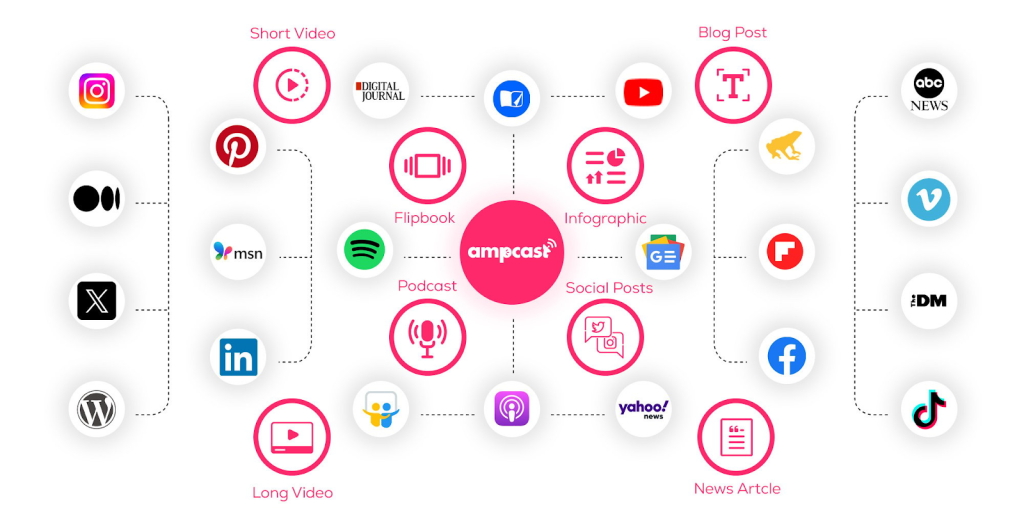
Unlike Pardot and Eloqua, which focus on managing and nurturing leads already in your database, AmpiFire builds visibility across search, video, audio, and social channels by targeting topics your customers are actively searching for. This generates ongoing organic traffic that works alongside your existing marketing tools rather than replacing them.
Frequently Asked Questions (FAQs)
Is Pardot only for Salesforce users?
Pardot is not limited to Salesforce users, but it is designed to work best within that ecosystem. Its strongest features are tied to Salesforce, where data flows smoothly between marketing and sales. Without that connection, many of its capabilities are less impactful, so it’s usually the better choice for teams already using Salesforce.
Can Eloqua integrate with Salesforce?
Yes, Eloqua integrates with Salesforce, but the connection requires setup and ongoing management. It is not a native integration, so teams often need technical resources to maintain it over time. For Salesforce users where real-time data sharing is a priority, this is an important factor to weigh.
Which is easier to use, Pardot or Eloqua?
Pardot is generally easier to use, with a simpler interface most teams can learn quickly. Eloqua is more advanced, but that added power also makes it more complex and harder to manage day to day. Teams without dedicated marketing operations support often find Pardot more practical.
What is the main difference between Pardot and Eloqua?
The main difference is simplicity versus complexity. Pardot is built for ease of use and faster setup for mid-sized teams. Eloqua is designed for large-scale marketing operations with more advanced segmentation, analytics, and campaign logic. Both serve B2B marketing but at very different scales.
Is Eloqua worth the higher price tag for B2B marketing?
Eloqua can be worth it for larger organizations with complex needs and the resources to manage it properly. Many teams, however, do not need that level of complexity. For growing businesses, pairing the right automation tool with a strong content distribution strategy through AmpiFire can be a more practical way to build visibility and attract qualified traffic over time.
*Disclaimer: Results may vary based on individual circumstances, business type, and content strategy. The time savings and outcomes mentioned are based on typical user experiences and are not guaranteed. For specific pricing and service details, please visit AmpiFire.
Author
Related Posts


ConvertKit vs ActiveCampaign for Email Automation: Differences & Pricing
Learn the key differences between ConvertKit and ActiveCampaign, including pricing and automation, and how AmpiFire helps expand your audience organically.


HubSpot vs Marketo Marketing Automation Software: What’s the Difference?
Compare HubSpot vs Marketo on features and pricing. See how AmpCast AI's content distribution amplifies results.


Moosend Features, Reviews & Pricing: Is This Email Marketing & Automation Platform Worth It?
Get honest Moosend reviews. Learn features, pricing, and whether this email marketing and automation platform is worth it for your…

Email Marketing vs Content Marketing for Lead Generation: Differences & Similarities
Learn the differences between email marketing and content marketing for lead gen, and how AmpCast AI multicasts content to maximize…


Albato Reviews, Pricing & Features: Is This No-Code Automation Tool Legit?
Discover Albato's no-code automation platform with 1,000+ app integrations, advanced logic tools, and white-label embedded options for SaaS teams today.


Reply.io Reviews & Pricing: Is It a Good AI Sales Automation Platform?
Read Reply.io reviews and learn pricing for 2026. See if this AI sales automation platform fits your B2B team, with…