

Key Takeaways
- YouTube cost per lead in 2026 splits into two patterns: paid ads deliver leads quickly at a variable rate, while organic videos take months to ramp before producing leads at a lower steady cost.
- Most businesses overspend because they treat YouTube as either an ad channel or a content channel, when the cheaper long-term answer is running both and letting organic content carry more of the load over time.
- YouTube Ads average around $8.42 CPL, sitting between Facebook (lower) and LinkedIn (higher), with the actual number swinging based on industry, ad format, and targeting precision.
- Organic YouTube content typically lands between $15 and $50 per lead once a channel matures, and the cost keeps dropping as older videos continue pulling viewers without extra spend.
- AmpiFire turns one topic into news articles, blog posts, interview podcasts, longer informational videos, reels/shorts, infographics, flipbooks/slideshows, and social posts, then auto-publishes them to 300+ sites including YouTube, Google News, Spotify, and FOX affiliates so each video pulls leads from search, social, and audio channels at the same time.
Average Cost per Lead on YouTube: 2026 Ads vs Content Comparison
The average cost per lead on YouTube in 2026 lands at roughly $8.42 for paid ads and $15 to $50 for organic content once a channel is established. Paid ads use formats like skippable in-stream (CPV), non-skippable and bumper ads (CPM), and in-feed video, with the price moving by industry and targeting. Organic content has no per-view fee but carries upfront production costs that pay off as videos keep generating leads for months or years after publishing. Which side fits your budget depends on how fast you need leads and how much you can invest in content before the channel starts paying you back.
YouTube has become one of the highest-intent platforms for lead generation, and 2026 is the year most marketers are rebalancing their mix between ads and organic to stretch each dollar further.

How AmpiFire Works:
- Research & Target: Find high-demand topics your buyers search for.
- Create & Repurpose: AmpiFire’s AmpCast AI generates news articles, blog posts, interview podcasts, longer informational videos, reels/shorts, infographics, flipbooks/slideshows, and social posts.
- Distribute & Amplify: Auto-publish to 300+ sites, including Google News, YouTube, Spotify, and major news networks.
Get more traffic from people who want to buy your stuff, and powerful “As Seen On” trust badges for your site.
Do It Yourself (with AI), Done For You Content, & 100% Managed Organic Growth options available.
Grow Your Free Traffic From Everywhere
Average YouTube Ads Cost Per Lead in 2026
The average cost per lead (CPL) from YouTube is highly variable, and the average cost is around $8.42. It also depends on your ad format, industry competition, and the effectiveness of your targeting.
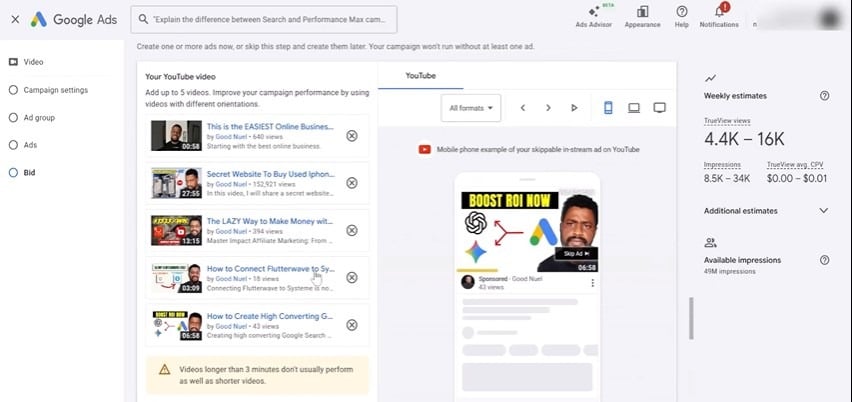
CPL by Ad Format: Skippable, Non-Skippable, and Bumper Ads
YouTube ad formats directly influence CPL because each one drives a different level of attention and engagement. Skippable in-stream uses cost-per-view (CPV), so you only pay when someone watches at least 30 seconds or interacts with the ad. Non-skippable ads run on cost-per-mille (CPM), where you pay for every 1,000 impressions, and bumper ads use the same CPM model in a six-second slot.
They also use the CPM model, so you pay each time 1,000 people see it. In-feed video ads often perform well for lead generation because they target users actively browsing or searching, which increases intent and improves conversion rates.
CPL by Industry: Which Sectors Pay the Most and Least
YouTube ads are primarily calculated using CPV (Cost-Per-View), particularly for skippable in-stream ads (TrueView). CPV helps determine how much you pay for each view, and those costs eventually influence your overall cost per lead (CPL) since more expensive views often lead to higher acquisition costs.
Overall, cost per view (CPV) varies significantly across industries, with Healthcare and Insurance having the highest average at around $0.071 per view. The Automotive sector follows next at approximately $0.058, while Business and Finance comes in third at about $0.048. These higher CPV rates show that advertisers in these industries are paying more for each YouTube ad view compared to other sectors.
How Targeting Choices Affect Your YouTube Ads CPL
Targeting choices have a direct impact on CPL. Tighter targeting usually raises cost per impression but improves conversion rates, which pulls overall CPL down. Custom intent audiences tend to perform best because they reach users based on recent Google searches, while remarketing and in-market audiences work well for warmer prospects.
Average YouTube Organic Content Cost Per Lead in 2026
Organic YouTube isn’t free, but over time, it becomes one of the lowest-cost lead sources because a single video can generate leads for years after it’s published.
Lead Acquisition Cost in SEO, also called Cost Per Lead, is the total amount spent to generate one qualified lead through organic search traffic. Unlike paid ads, where costs tie directly to each click or impression, organic content runs on upfront investments in content creation, tools, and labor.
Because these costs are mostly fixed, the effective CPL tends to decrease over time as organic traffic grows and content continues to generate leads without additional spending.
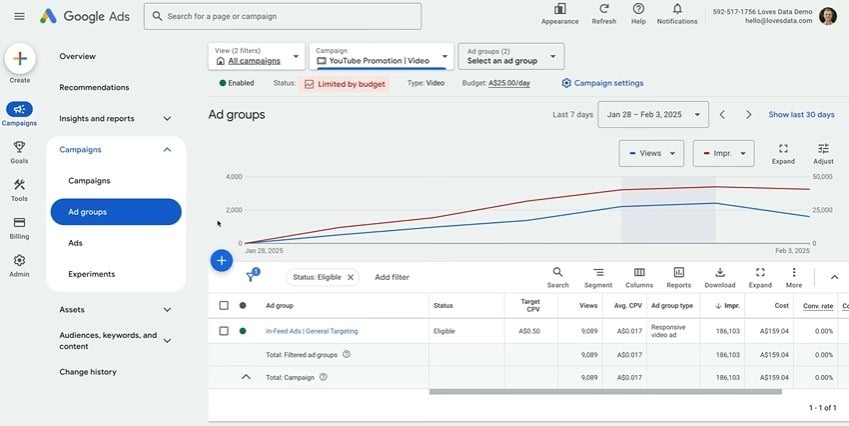
Average Cost Per Lead for Organic Content is $15 to $50
Organic content lead generation doesn’t have a fixed upfront price per lead because the main investment goes into creating content, tools, and ongoing effort rather than paying for each click. Based on industry benchmarks, the effective cost per lead for organic content typically falls between $15 and $50 once the content system is established.
YouTube Ads vs Organic Content Cost Per Lead (CPL) Comparison in 2026
| Category | Cost Structure | Average CPL / Cost Range | Key Factors | Key Insight |
| YouTube Ads (Overall) | Pay-per-view / impression-based (CPV, CPM) | ~$8.42 CPL (varies widely) | Targeting, industry, ad quality | Paid system with immediate but variable results |
| YouTube Ad Formats | CPV (skippable), CPM (non-skippable & bumper), intent-based (in-feed) | Varies by format | Engagement level, format type | Higher engagement formats often improve conversion efficiency |
| YouTube Ads by Industry | CPV-based pricing differences | ~$0.048–$0.071 per view | Industry competition (finance, healthcare, automotive) | Competitive industries pay more per view, increasing CPL |
| YouTube Targeting Impact | Audience-based bidding system | No fixed CPL | Custom intent, remarketing, in-market audiences | Better targeting usually lowers CPL through higher conversions |
| Organic YouTube Content | Upfront production cost (no per-click cost) | ~$15–$50 (once established) | Time, consistency, and content quality | Costs drop over time as videos keep generating leads |
| SEO / Organic Lead Cost | Fixed investment (content, tools, labor) | ~$15–$50 (mature stage) | Content scale + ranking growth | CPL decreases as traffic compounds without extra spend |
The Lower-CPL Path: Pair YouTube Ads With Multi-Channel Organic Distribution
The cheapest path to lower YouTube CPL in 2026 is not picking ads or organic, it is running both so each one carries the load it does best. Paid ads deliver fast leads at around $8.42 CPL when targeting is tight, and organic content drops the long-term cost into the $15 to $50 range as videos compound.
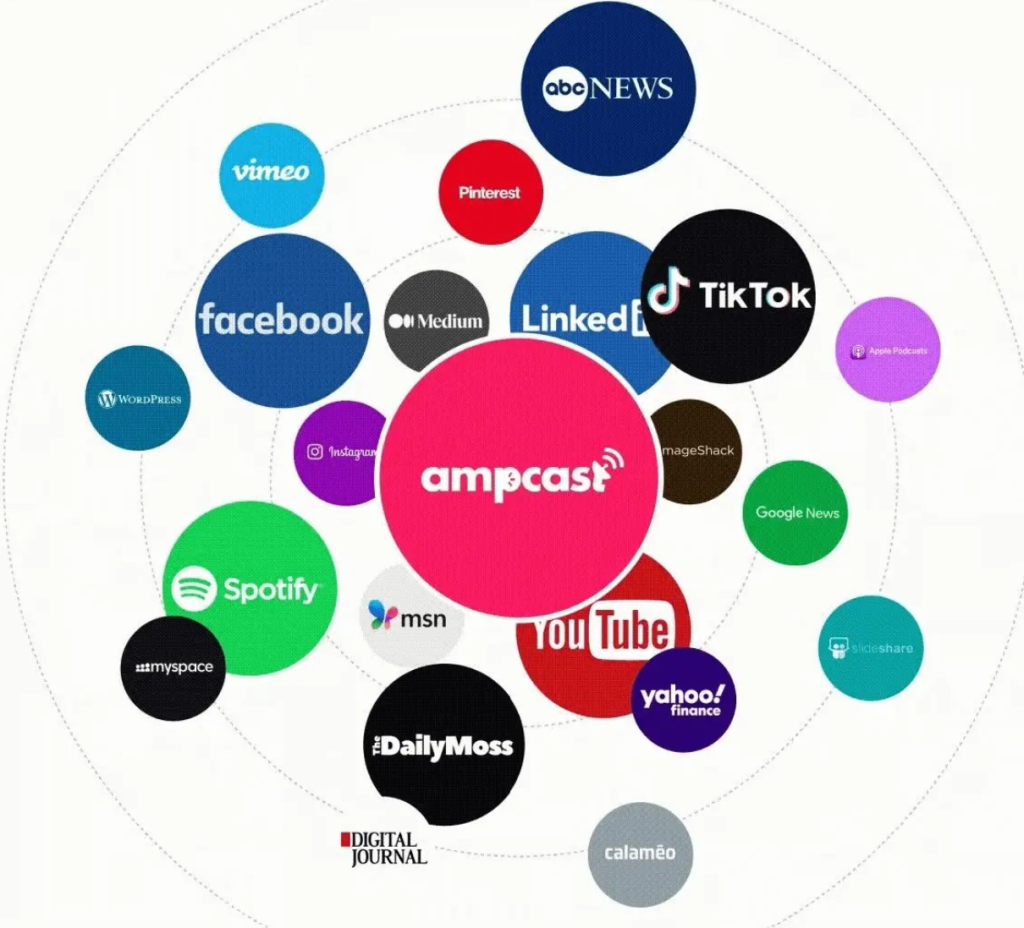
AmpiFire supports the organic side by turning one topic into news articles, blog posts, interview podcasts, longer informational videos, reels/shorts, infographics, flipbooks/slideshows, and social posts, then auto-publishing them to 300+ sites including YouTube, Google News, Spotify, and FOX affiliates. Each topic shows up in search, social, audio, and video at the same time, so the same production effort generates leads from multiple channels rather than only one.
Frequently Asked Questions (FAQs)
Is YouTube organic content cheaper than YouTube ads for lead generation?
Organic YouTube content usually requires more effort and time upfront, but it can become more cost-efficient over time because the same videos continue generating leads after publishing. Paid ads, on the other hand, require ongoing spending to keep results coming.
Which YouTube ad format gives the lowest cost per lead?
Skippable in-stream ads and in-feed video ads tend to perform best for lead generation because they rely more on user interest and intent. Skippable ads work well when the hook is strong, while in-feed ads often reach people actively searching or browsing content.
How does YouTube CPL compare to Facebook and LinkedIn?
YouTube typically sits between Facebook and LinkedIn in terms of cost per lead. Facebook is often lower-cost for a broad consumer reach, while LinkedIn is usually higher due to its professional audience and B2B focus. YouTube gives a balance of reach, intent, and visual engagement.
How can you scale your YouTube content into multi-channel growth?
AmpiFire helps turn a single piece of content into multiple formats like videos, articles, podcasts, and social posts, then distributes them across hundreds of platforms to expand reach beyond YouTube. This approach allows your content to appear in search, social feeds, video platforms, and audio channels, helping you build a more consistent and diversified flow of leads over time.
How long does it take for organic YouTube content to generate leads?
Organic YouTube usually takes a few months to start generating consistent leads because content needs time to build visibility and trust. Over time, results improve as older videos continue attracting views and new uploads strengthen channel performance.
AmpiFire can support this by turning one topic into multiple content formats like videos, articles, podcasts, and social posts, then distributing them across 300+ platforms to expand reach beyond YouTube and improve long-term lead generation.
*Disclaimer: Results may vary based on individual circumstances, business type, and content strategy. The time savings and outcomes mentioned are based on typical user experiences and are not guaranteed. For specific pricing and service details, please visit AmpiFire.
Author
Related Posts

Average Cost per Lead on TikTok in 2026: Ads & Content
TikTok lead costs run $5 to $45 paid and $50 to $2,000 per organic video. See how AmpiFire lowers your…
Average Cost per Lead Instagram 2026: Ads vs Content
Instagram CPL in 2026 averages $5 to $30 for ads and $95 for organic. Learn how AmpiFire helps lower costs…
LinkedIn Average Cost per Lead in 2026: Content vs Ads Compared
LinkedIn CPL in 2026 ranges from $45 to $164. Compare paid vs organic costs and see how AmpiFire amplifies content…
Facebook Average Cost per Lead in 2026: Ads vs Content
Facebook's average CPL in 2026 runs $28-$50+. See how AmpiFire's organic content approach lowers your effective cost per lead over…


Average Social Media Cost Per Lead 2026 Compared | Ads vs. Content
Key Takeaways: In 2026, paid social media advertising averages $65 per lead while organic content marketing costs $95 per lead,…
Average Real Estate Cost Per Lead Prices & Rates 2026 | Ads vs. Content
Key Takeaways The average cost per lead (CPL) in real estate typically ranges from $416–$480, but varies significantly by platform,…