


Key Takeaways
- Email marketing delivers immediate results via direct communication, while content marketing builds sustainable leads over time through valuable resources.
- Content marketing excels in public discovery and organic traffic, whereas email marketing thrives on personalized, private communication.
- Email campaigns require less initial investment but need continuous list maintenance.
- Content marketing demands higher upfront resources but provides long-term returns that compound over time.
- AmpiFire’s AmpCast AI outperforms both approaches by MultiCasting one topic into 8 content formats and distributing them across 300+ sites, so your brand shows up everywhere buyers look.
How Do Email Marketing and Content Marketing Differ?
Email marketing and content marketing are two of the most widely used strategies for generating leads, but they operate on completely different mechanics. Email marketing is a direct, permission-based channel that delivers messages straight to a subscriber’s inbox, giving you a private line to people who have already expressed interest in your business.
Content marketing works in the opposite direction: it creates valuable, publicly accessible resources like blog posts, videos, guides, and case studies to attract people who don’t know your brand yet but are actively searching for answers you can provide. Both generate leads, but through different timelines, distribution models, and audience relationships.
This article breaks down exactly how these two strategies differ, with specific campaign types, performance metrics, and a side-by-side comparison that clarifies when each approach is the stronger choice.

How AmpiFire Works:
- Research & Target: Find high-demand topics your buyers search for.
- Create & Repurpose: AmpiFire’s AmpCast AI generates news articles, blog posts, interview podcasts, longer informational videos, reels/shorts, infographics, flipbooks/slideshows, and social posts.
- Distribute & Amplify: Auto-publish to 300+ sites, including Google News, YouTube, Spotify, and major news networks.
Get more traffic from people who want to buy your stuff, and powerful “As Seen On” trust badges for your site.
Do It Yourself (with AI), Done For You Content, & 100% Managed Organic Growth options available.
Grow Your Free Traffic From Everywhere
Email Marketing: Your Direct Path to Qualified Leads
How Email Lists Create Immediate Sales Opportunities
Your email list is arguably your most valuable marketing asset – a direct line to people who have explicitly invited you into their inbox. This permission-based relationship creates unique opportunities for lead generation that other channels can’t match.
When someone joins your email list, they’ve already crossed an important threshold in the buyer’s journey, indicating genuine interest in what you offer. This self-qualification makes email subscribers significantly more likely to convert than random website visitors or social media followers.
5 Types of Lead-Generating Email Campaigns That Actually Work
While email marketing encompasses countless campaign types, certain formats consistently outperform others when it comes to lead generation:
- Welcome sequences: New subscribers are at peak engagement, making welcome emails more effective than standard newsletters. A well-crafted 3–5-email sequence introduces your brand, establishes value, and guides new subscribers toward their first conversion.
- Educational autoresponders: Sequential emails delivering bite-sized expertise build trust while subtly positioning your solution. These campaigns typically see higher click-through rates than promotional messages.
- Abandoned cart/process recovery: Following up with prospects who started but didn’t complete a conversion process can recover otherwise lost opportunities.
- Special offers and time-limited promotions: Creating urgency through limited-time deals drives immediate action. These campaigns generate more conversions when they include countdown timers or explicit deadlines.
- Re-engagement campaigns: Inactive subscribers still represent potential value. Well-crafted re-engagement sequences can recover dormant contacts, turning them back into active prospects.
Key Metrics That Reveal Your Email Marketing Success
Effective measurement goes beyond open and click rates. Conversion rate (the percentage of recipients who complete a desired action like using the booking system to schedule a consultation or starting a trial) is the most direct indicator of lead generation success.
Additionally, tracking lead quality metrics such as sales qualification rate and average deal size reveals whether your strategy attracts the right prospects.
Cohort analysis adds a strategic layer by showing how different subscriber segments respond to various campaign types over time, helping you optimize entire nurture sequences rather than individual emails.
Content Marketing: Building Your Lead Generation Machine

Why Valuable Content Attracts Higher-Quality Leads
content marketing naturally filters for better leads. When someone finds your business through a helpful article or guide that addresses a problem they’re already trying to solve, they arrive more informed and closer to making a decision.
Unlike ads that interrupt people who may not be looking for what you offer, content draws in people who are actively searching, which means shorter sales conversations and less convincing required.
Content Types That Convert Visitors into Leads
Not all content generates leads equally. In-depth guides that solve specific problems perform consistently well because they offer real value in exchange for contact information.
Case studies and success stories show your solution working in practice, bridging the gap between education and sales. Webinars and video tutorials combine high engagement with direct interaction, making them especially effective for products or services that need a demonstration to click.
Thought Leadership: Becoming the Go-To Expert in Your Field
When prospects repeatedly encounter your insights and expertise across multiple channels, you become the name they trust. That trust creates a real competitive edge; people tend to buy from the company that taught them something, even when competitors offer similar features or pricing.
Thought leadership content may not convert as quickly as a how-to guide, but the leads it attracts are typically more valuable and more likely to become long-term customers.
Where These Strategies Share Common Ground

Both Require Valuable, Relevant Information
Both strategies rely on providing genuine value to your audience. The era of purely promotional messaging is over. Today’s sophisticated consumers expect information that helps them solve problems, make better decisions, or achieve their goals.
Whether delivered through a blog post or an email newsletter, content that prioritizes audience needs over immediate sales objectives consistently outperforms purely promotional material.
Audience Understanding Drives Success in Both Channels
Deep audience knowledge is the foundation of effective marketing in both email and content strategies. The most successful campaigns are built on comprehensive audience research, detailed buyer personas, and continuous feedback loops.
Understanding your audience’s challenges, goals, preferred communication styles, and decision-making processes enables you to create targeted content that resonates deeply, whether it’s delivered via inbox or discovered through search.
Analytics & Testing Matter Equally
Both email and content marketing thrive on data-driven optimization. The most successful marketers in either discipline maintain a testing mindset, continuously experimenting with different approaches and refining their strategy based on performance metrics.
Whether testing subject lines in email campaigns or comparing conversion rates between different content formats, the iterative improvement process remains remarkably similar.
Email Marketing vs Content Marketing: A Side-by-Side Comparison
| Factor | Email Marketing | Content Marketing |
| Speed to results | Fast — leads/conversions within hours or days | Slow — takes months or years to mature |
| Distribution | Private, permission-based (inbox) | Public spaces (blog, social, third-party sites) |
| Audience reach | Limited to existing subscribers | Anyone searching for related topics |
| Lead quality | Higher — subscribers have already opted in | High — self-selected by the problem they’re solving |
| Conversion rates | Generally higher due to a warmer audience | Lower initially, but builds over time |
| Ongoing effort | Continuous list maintenance and sends | Minimal once the content library is established |
| Main limitation | Only reaches people already on your list | Only works if people find it on your channels |
Taking Email & Content Marketing to the Next Level
Why Email & Content Marketing Is Not Enough
Email marketing only reaches people already on your list. Content marketing only works if people find it where you publish. A great blog post sitting on your website is invisible to everyone who doesn’t already visit. A video on one platform competes with thousands of others.
The problem isn’t quality, it’s reach. When your content lives on one or two channels, most potential buyers never see it. And every subscriber on your email list had to discover your brand somewhere first, if that somewhere is limited, so is your pipeline.
The Solution: Research the Buyer Journey and Meet Them Everywhere
Businesses that grow faster don’t just create content and hope it gets found. They research what buyers are searching for at every stage of the decision process, then place content where those searches happen. That means showing up across search, video, audio, social, and news channels simultaneously so your brand is part of the conversation from the moment someone starts looking for answers.
AmpiFire does exactly this. Using its AmpCast AI, one topic becomes 8 content formats: news articles, social posts, Reels/Shorts, infographics, interview podcasts, Flipbooks/slideshows, blog posts, and Longer informational videos, published across 300+ high-authority sites. The result is your brand reaches buyers everywhere they research, feeding both your content engine and your email list with prospects who already recognize your name.
Scale Your Lead Generation With AmpiFire Multichannel Approach
AmpiFire’s AmpCast AI, transforms your topic into 8 content formats: news articles, social posts, reels/shorts, infographics, interview podcasts, flipbooks/slideshows, blog posts, and longer informational videos.
These are published across 300+ high-authority sites, including YouTube, Google News, Spotify, Pinterest, and FOX affiliate sites, placing your brand in front of buyers at every stage of their journey. This means prospects discover and trust your brand across multiple platforms, scaling beyond content marketing and email sequences.
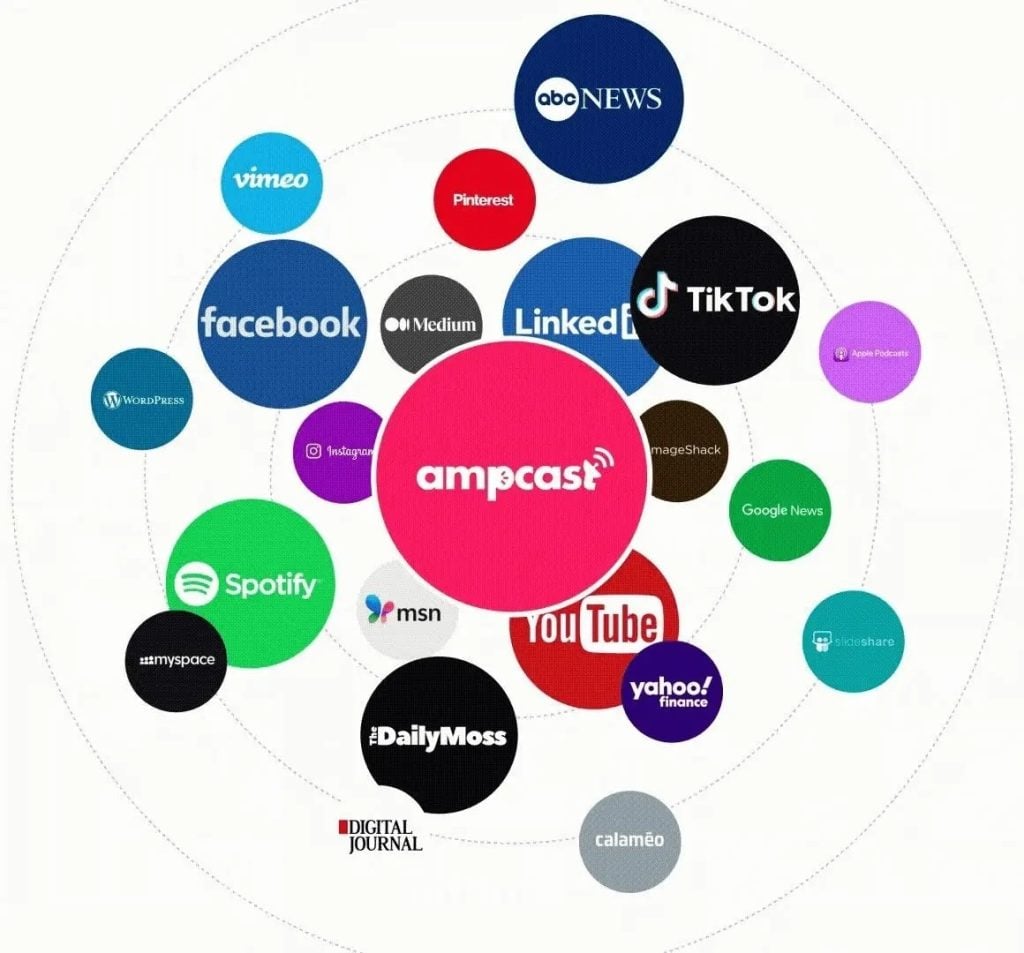
The results speak for themselves. Directbed.ca, a Canadian e-commerce store, ran just 35 Amp campaigns and saw a 417.8% increase in organic traffic within 14 months using AmpiFire, returns that neither email nor content marketing alone could deliver. When you use the AmpiFire multi-channel distribution approach, your lead generation stops being limited by where you publish.
Frequently Asked Questions (FAQs)
Can I use email and content marketing simultaneously?
Yes, and you should. Content marketing brings new people to your website through search and social media. Email marketing then nurtures those visitors into buyers. Using both together creates a complete system that attracts leads and converts them without relying solely on paid ads.
How much should a brand spend on content marketing?
It depends on your goals and industry. Many brands start with a strategic budget and scale up as they see results. The key is consistency; even a modest budget spent regularly on quality content will outperform sporadic large investments over time.
What type of content generates the most leads?
In-depth guides, case studies, and how-to videos tend to perform best because they answer real questions buyers have before purchasing. The format matters less than whether the content genuinely helps your audience solve a problem or make a decision they are already thinking about.
How do I know if my email campaigns are actually generating quality leads?
Look beyond open and click rates. Track how many email recipients take meaningful actions like booking a call, signing up for a trial, or making a purchase. Connecting your email platform to your sales data shows you exactly which campaigns bring in real revenue, not just engagement.
How does AmpiFire’s AmpCast AI help with lead generation?
AmpCast AI takes one topic and creates 8 content formats: News Articles, Social Posts, Reels/Shorts, Infographics, Interview Podcasts, Flipbooks/Slideshows, Blog Posts, and Longer Informational Videos, then publishes them on 300+ sites like Google News, YouTube, and Spotify. This puts your brand everywhere buyers research, generating organic leads without ad spend.
*Disclaimer: Results may vary based on individual circumstances, business type, and content strategy. The time savings and outcomes mentioned are based on typical user experiences and are not guaranteed. For specific pricing and service details, please visit AmpiFire.
Author
Related Posts


RocketReach Reviews & Pricing Plans: Is This Lead Generation Tool Reliable?
Get honest RocketReach reviews and pricing. Learn if this lead generation tool is reliable for finding accurate contact info and…

ConvertKit vs ActiveCampaign for Email Automation: Differences & Pricing
Learn the key differences between ConvertKit and ActiveCampaign, including pricing and automation, and how AmpiFire helps expand your audience organically.


Press Release Distribution vs Social Media Marketing for Brand Awareness: Differences & Examples
Compare press release distribution vs. social media for brand awareness. Learn key differences and benefits to choose the right strategy…
Average Real Estate Cost Per Lead Prices & Rates 2025 | Ads vs. Content
Key Takeaways The average cost per lead (CPL) in real estate typically ranges from $416–$480, but varies significantly by platform,…

Average Social Media Cost Per Lead 2026 Compared | Ads vs. Content
Key Takeaways: In 2025, paid social media advertising averages $65 per lead while organic content marketing costs $95 per lead,…
Mailchimp vs Constant Contact for Email Marketing Campaigns: Cost, Pros & Cons
Compare Mailchimp vs Constant Contact to find the best email marketing platform for your business. Learn the pricing, features, pros,…