

Key Takeaways
- Getting published in The New York Times requires a strategic approach: a strong news angle, a specific contact, and the right timing before your announcement goes live.
- Most submissions fail because they target the wrong person, use generic subject lines, or pitch stories that only matter internally to the submitting organization.
- AmpiFire’s AmpCast AI and direct NYT outreach serve different goals. AmpCast distributes your announcement to 300+ platforms automatically, while a direct NYT pitch offers prestige and credibility with a single high-authority outlet.
- Submitting 2 to 3 weeks before your announcement and following up once after three business days gives editors enough lead time without crossing into pestering territory.
- AmpiFire’s AmpCast AI turns one announcement into 8 content formats and publishes to 300+ platforms, so your story reaches audiences beyond any single publication.
Get Your Story Featured in the New York Times: A Direct Approach
To get your news in front of The New York Times, email the department inbox that matches your story’s beat or pitch a specific journalist who already covers your industry. The NYT receives thousands of submissions daily, so the two factors that actually move submissions forward are a clear news angle and a precise contact.
Submit 2 to 3 weeks before your announcement date so editors have time to act while the story is still relevant. Below, you will find what the NYT expects in format, structure, and follow-up, plus how to identify the right contact for your story.

How AmpiFire Works:
- Research & Target: Find high-demand topics your buyers search for.
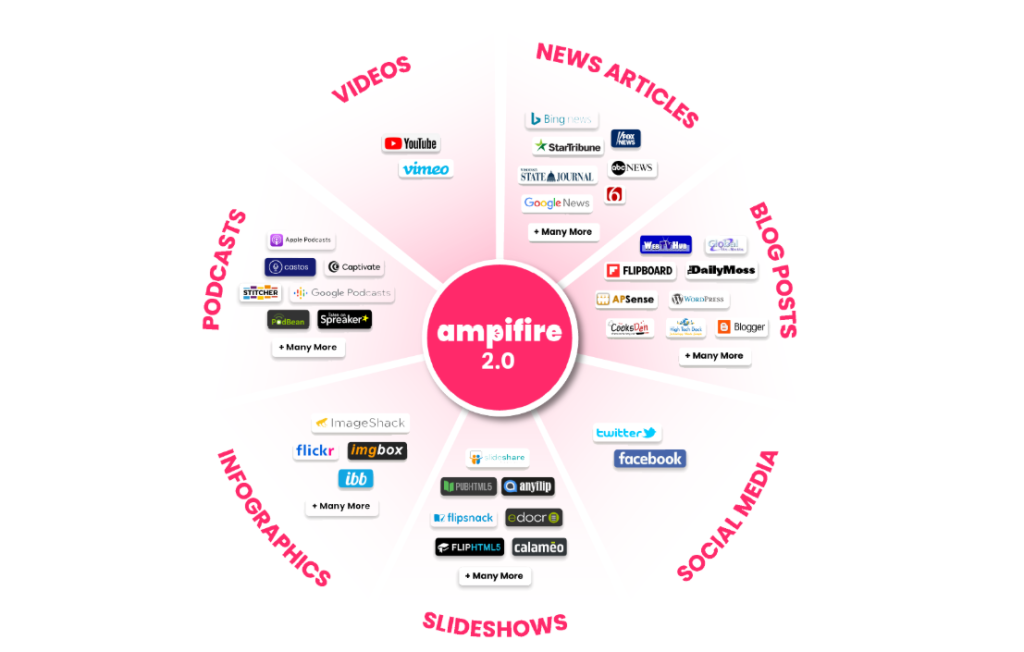
- Create & Repurpose: AmpiFire’s AmpCast AI generates news articles, blog posts, interview podcasts, longer informational videos, reels/shorts, infographics, flipbooks/slideshows, and social posts.
- Distribute & Amplify: Auto-publish to 300+ sites, including Google News, YouTube, Spotify, and major news networks.
Get more traffic from people who want to buy your stuff, and powerful “As Seen On” trust badges for your site.
Do It Yourself (with AI), Done For You Content, & 100% Managed Organic Growth options available.
Grow Your Free Traffic From Everywhere
What the New York Times Wants in a News Release

Newsworthy Content That Matters to Their Audience
The New York Times looks for stories that impact significant audiences or highlight important trends. Your news release must show readers why your announcement matters beyond your own organization. Corporate milestones that only register internally rarely make the cut.
The NYT also values exclusivity. If you are offering them first access to your story, say so clearly in your submission.
Localization is another key factor when pitching to the NYT. While they cover global news, stories with a New York connection often receive special consideration. If your announcement has relevance to New York City or state, highlight this connection prominently in your submission.
Proper Format and Structure Requirements
The New York Times expects submissions to follow professional formatting standards that make assessment straightforward. Your release should open with a compelling headline that summarizes the news in fewer than 15 words, followed by a dateline (city, state, date) and a strong lead paragraph that answers who, what, when, where, why, and how.
Structure your content in inverted pyramid style, with the most important information first and supporting details following in descending order. Keep paragraphs short, typically 2 to 3 sentences, to aid readability. The entire release should stay under 500 words, which forces focus on what genuinely matters.
The Critical Elements Every NYT News Release Must Include
Beyond basic formatting, a few elements improve your chances of getting noticed by the NYT editorial team. Write a subject line that summarizes the news value specifically rather than opening with generic phrases like “Press Release” or “For Immediate Release.” That subject line is your first shot at standing out in a crowded inbox.
Include relevant media assets that enhance your story, such as high-resolution images (300 DPI minimum), data visualizations, or infographics. These should be attached or provided via easily accessible download links rather than embedded in the email body. Always include captions and proper attribution for all visual elements.
Your submission must contain accurate contact information for a spokesperson who is available and authorized to speak with journalists. Include a direct phone number and email address for someone who can respond quickly to inquiries. The most successful submissions also include a brief company boilerplate of 2 to 3 sentences that provides context about your organization without marketing language.
How Do You Find the Right Contact at the New York Times?

Use Department-Specific Email Addresses
The New York Times maintains department-specific email addresses as the first point of contact for submissions in different categories. Editorial assistants monitor these inboxes and screen submissions before passing strong ones to reporters or editors.
When using these addresses, your subject line matters more than anywhere else. It may be the only thing that gets read when inboxes are full. Open with “Press Release:” followed by a headline of 8 to 10 words that states the core news value. This helps editorial staff categorize and prioritize your submission quickly.
How Do Beat Reporters Help You Get Published in the NYT?
While department emails provide a straightforward submission path, directing your news release to specific journalists who cover your industry typically yields better results. Start by reading recent NYT articles related to your topic to identify reporters who might have interest in your announcement. Most New York Times journalists include their email addresses in their author bios or at the end of their articles.
When reaching out directly to a journalist, personalize your approach by referencing their previous work and explaining why your news would interest their specific audience. For example: “After reading your insightful coverage of renewable energy investments last month, I thought you might be interested in our company’s breakthrough in solar efficiency that reduces costs by 40%.”
Journalists appreciate submissions that demonstrate familiarity with their reporting focus and that provide genuine news value rather than thinly veiled marketing.
What Follow-Up Strategies Actually Work?
After submitting your news release to The New York Times, a well-timed follow-up can improve your chances of publication. There is a real difference between helpful persistence and pestering, and crossing that line can permanently damage your relationship with a journalist.
Understanding when and how to follow up makes all the difference in a competitive media environment. Wait three business days before your first follow-up in most cases.
The 3-Day Rule for Initial Follow-Up
Waiting three business days before your first follow-up gives busy journalists time to work through their inbox without immediately adding to their workload with another message.
For breaking news or time-sensitive announcements, you can compress this window to 24 hours, but anything sooner risks appearing demanding rather than helpful.
What to Say (and Not Say) in Your Follow-Up Email
- DO restate the news value clearly in the first sentence.
- DO offer new information or assets that were not in the original release.
- DO acknowledge the journalist’s busy schedule.
- DON’T ask if they received your release. They almost certainly did.
- DON’T suggest that their readers “need to know” about your announcement.
- DON’T imply that their publication is missing an important story.
Throughout all follow-up communication, stay helpful rather than expectant. Your goal is to make the journalist’s job easier by providing newsworthy content and supporting resources, not to create an obligation for coverage. That service-oriented approach builds goodwill even when a particular submission does not result in publication.
When to Try a Different Approach
After two follow-up attempts without response, it’s usually time to reconsider your strategy. This doesn’t necessarily mean abandoning hope for NYT coverage, but it does suggest that your current approach isn’t getting traction.
At this point, you have several options: you might try reaching out to a different journalist who covers similar topics, reframe your announcement to emphasize a different news angle, or consider whether your story might be better suited to a different section of the publication.
Sometimes, the timing simply isn’t right for your announcement. Major news events can overshadow otherwise newsworthy stories, and editorial priorities shift constantly. If your release hasn’t gained traction after appropriate follow-up, consider whether it might work better as part of a broader trend piece or as a contributed opinion piece rather than a news item.
What to Do After Your Story Gets Published

Maximizing the Exposure
When your submission lands in The New York Times, use that coverage immediately across all your communication channels. Share the article on social media with commentary that adds context rather than just celebrating the mention.
Create a dedicated section on your website showcasing the NYT feature, and include it in your email signature and marketing materials. Third-party validation from one of the world’s most respected publications carries real weight with potential clients, investors, and other media outlets.
Building on Your Success
Use your New York Times coverage as a stepping stone to broader media attention. Reference it when pitching to other publications, as editors often follow the NYT’s lead on stories they judge as newsworthy. Consider creating content like infographics or video interviews that expand on points in the article, giving you additional assets to share with your audience.
Maintain the relationship with any journalists who covered your story by occasionally sharing relevant insights or data points without expecting immediate coverage in return. These ongoing connections often yield the most valuable long-term results for your media strategy.
The Smartest Way to Move Beyond One Publication
Pitching The New York Times is a high-reward play, but it depends on one editor saying yes at the right moment. Targeting the right reporter, formatting your submission correctly, and following up once after three days gives you the best shot at that outcome.
AmpiFire’s AmpCast AI removes the single-publication bottleneck entirely. One announcement becomes 8 content formats, including news articles, blog posts, interview podcasts, longer informational videos, reels and shorts, infographics, flipbooks and slideshows, and social posts, then publishes automatically to 300+ platforms including Google News, YouTube, Spotify, and FOX affiliate sites. If you want your story to reach audiences beyond any single outlet, AmpCast AI handles the distribution without the manual grind.
Frequently Asked Questions
Should I submit to the New York Times before distributing my news release elsewhere?
Offering exclusivity to The New York Times increases your chances of coverage since they value being first. However, if they decline or don’t respond within your announcement timeline, you can proceed with broader distribution. Consider submitting to NYT first, then distributing widely after 3–5 days if needed.
What makes a news release newsworthy enough for the New York Times?
Newsworthy news releases impact significant audiences, reveal unique data or research, connect to current trends, or offer expert insights on important issues. Avoid announcements that only matter internally to your company. Frame your story around broader industry impact, economic significance, or social relevance that NYT readers care about.
Can I follow up by phone instead of email?
Email is strongly preferred for follow-ups with New York Times journalists. Phone calls interrupt their workflow and are generally viewed as intrusive unless you have an established prior relationship. Email lets journalists respond when convenient and creates a written record of your communication.
How can AmpCast AI help me get more visibility than just one publication?
AmpCast AI turns your announcement into 8 content formats, including news articles, blog posts, interview podcasts, longer informational videos, reels and shorts, infographics, flipbooks and slideshows, and social posts, then automatically publishes to 300+ platforms including Google News, YouTube, Spotify, Pinterest, and FOX affiliate sites. This creates visibility across search, social media, video, and audio channels without manual work on your part.
Author
Related Posts


How to Submit a Press Release on Nasdaq – The Cost for Publishing News Articles & Journalists’ Email Contact Methods
Learn how you can get any site, business or offer published on Bloomberg, Nasdaq, Yahoo! News and more.

How to Submit a Press Release to Yahoo News
Learn the steps to submit a press release to Yahoo News for maximum visibility and reach your target audience effectively.
How to Submit a Press Release to Business Insider
Learn 3 proven ways to submit press releases to Business Insider. Get tips on direct submission, PR services, and maximizing…

How to Submit a Press Release to Digital Journal
Learn how to submit press releases to Digital Journal with step-by-step instructions, formatting tips, and strategies for maximum visibility.

How to Submit a Press Release to Google News
Learn how to submit a press release to Google News and boost your online presence with these essential steps.


AI Press Release Distribution: What Is It & Example Tools
Learn how AI press release distribution uses machine learning to target the right journalists, personalize outreach, and improve media coverage…