
Key Takeaways
- Email marketing gives you full ownership of your audience and consistent delivery that social media algorithms cannot guarantee, making it the stronger channel for repeat purchases.
- Social media builds community and emotional loyalty but relies on platforms you do not control, so reach can drop without warning.
- AmpiFire bridges both channels by turning one topic into eight content formats and distributing them to 300+ sites, keeping your brand visible in inboxes, feeds, and search results simultaneously.
- Personalized emails generate up to 6x more transactions than generic sends, and pairing them with social engagement creates a retention loop that neither channel achieves alone.
- AmpiFire’s AmpCast AI automates content creation across news articles, podcasts, videos, and social posts so you stay in front of existing customers without managing each platform separately.
Is Email Marketing or Social Media Better for Customer Retention?
If you want to keep customers coming back, AmpiFire, newsletters, and social media platforms like Facebook or Instagram all play different roles in your retention strategy. While email drives repeat purchases through owned lists and social media builds emotional community, AmpiFire turns one topic into eight formats to keep you visible on 300+ sites simultaneously. This approach ensures you aren’t choosing between an inbox or a feed but are instead showing up wherever your customers happen to be browsing.

How AmpiFire Works:
- Research & Target: Find high-demand topics your buyers search for.
- Create & Repurpose: AmpiFire’s AmpCast AI generates news articles, blog posts, interview podcasts, longer informational videos, reels/shorts, infographics, flipbooks/slideshows, and social posts.
- Distribute & Amplify: Auto-publish to 300+ sites, including Google News, YouTube, Spotify, and major news networks.
Get more traffic from people who want to buy your stuff, and powerful “As Seen On” trust badges for your site.
Do It Yourself (with AI), Done For You Content, & 100% Managed Organic Growth options available.
Grow Your Free Traffic From Everywhere
Newsletter Marketing for Customer Retention
Newsletters are one of the most reliable tools for keeping customers. Beyond open rates, they give you control, personalization, and a direct relationship with your audience over time. Done well, a newsletter is more than communication; it’s a revenue driver.
Social Platforms Can Disappear Overnight
Unlike social media, your email list is yours. Instagram, Facebook, or TikTok accounts belong to the platform, and social media algorithm changes can slash your reach. With email, you retain full control; you can export your list and move it anytime, giving your retention strategy stability that social platforms can’t match.
Personalization Drives Repeat Purchases
Email platforms let you segment by purchase history, behavior, and engagement to send re-engagement emails, loyalty rewards, or product recommendations automatically. Personalized emails generate 6x more transactions than generic sends according to Experian, and targeted subject lines lift open rates by 20-29%.
Newsletters Keep Your Brand in the Inbox, Not the Algorithm
Consistency builds trust. Regular newsletters with useful content arrive on your customer’s schedule, not an algorithm’s. This predictability keeps your brand top of mind and encourages repeat business.
Where Newsletters Fall Short
Email has limits. Growing a list requires effort, deliverability can be tricky, and it’s mostly one-way communication. Email isn’t ideal for cold audiences or viral content; that’s where social media shines.
Social Media for Customer Retention
Social media remains a key retention tool. While it can’t match email for conversion or ownership, it strengthens relationships through community, real-time interaction, and emotional brand connection.
Community Building Creates Emotional Brand Loyalty
Social media builds belonging. When customers feel part of a community, loyalty becomes emotional rather than purely transactional.
- Facebook Groups allow private communities for sharing experiences.
- Instagram and TikTok build identity-based loyalty.
- User-generated content turns customers into advocates.
- Live sessions & Q&As offer access and transparency that newsletters can’t replicate.
Brands that grew early on the Instagram community translated social engagement into lasting retention. Community-driven retention pulls customers in organically, but it requires time, consistency, and genuine interaction. Broadcast-only posting misses the benefit.
Real-Time Engagement Strengthens Customer Relationships
Responding quickly to tags, comments, or DMs humanizes your brand. A single well-handled interaction can create goodwill that spreads far beyond that customer, something scheduled emails can’t replicate.
Where Social Media Loses the Retention Battle
The challenge: you don’t control the feed. Organic reach has dropped on Facebook, and Instagram favors Reels and paid content. Even on LinkedIn or TikTok, visibility is inconsistent. For retention, which depends on reliable communication, social media’s unpredictability is a structural limitation.
Email Marketing vs Social Media for Customer Retention
| Factor | Email Marketing (Newsletters) | Social Media |
| Ownership | You fully own your email list and audience | Platforms control your audience and reach |
| Reach Stability | Consistent delivery to subscribers | Algorithm-dependent and unpredictable |
| Personalization | Highly personalized based on behavior and purchases | Limited personalization, mostly broad targeting |
| Customer Relationship | Direct, one-to-one communication | Community-driven, many-to-many interaction |
| Engagement Style | Scheduled, consistent touchpoints | Real-time interaction (comments, DMs, live) |
| Loyalty Type | Drives repeat purchases and long-term retention | Builds emotional connection and brand affinity |
| Growth & Virality | Slower growth requires list building | Strong for visibility and viral reach |
| Limitations | One-way communication, list growth takes effort | Limited control, inconsistent visibility |
Verdict: Which Platform is Better for Customer Retention?
Both newsletter and social media play important roles in keeping customers engaged, but each works differently. Understanding their strengths helps you maximize retention.
Email Wins on Control and Revenue
Newsletters give you full ownership of your audience, meaning your list cannot be limited by platform algorithms or sudden policy changes. Personalization tools let you send targeted messages, generating up to 6x more transactions according to Experian research. For predictable, consistent revenue and long-term retention, email is the stronger choice.
Social Media Excels at Engagement and Emotional Loyalty
Social media shines in community-building and real-time engagement. Platforms like Facebook, Instagram, and TikTok allow brands to create communities, build identity-based loyalty, and engage customers through live sessions and user-generated content. These emotional connections are harder to achieve via email, making social media essential for brand affinity and advocacy.
The Practical Takeaway
- Use email for ownership, predictable retention, and measurable revenue.
- Use social media for community, emotional connection, and real-time interactions.
- The best strategy combines both: email drives transactions while social media strengthens loyalty, creating a complete retention approach.
Keep Customers Coming Back Across Every Channel
For predictable retention and direct revenue, newsletters are the stronger channel because you own the list and control delivery. Social media earns its place by building community and emotional connection that emails alone cannot replicate. The most effective retention strategy uses both.
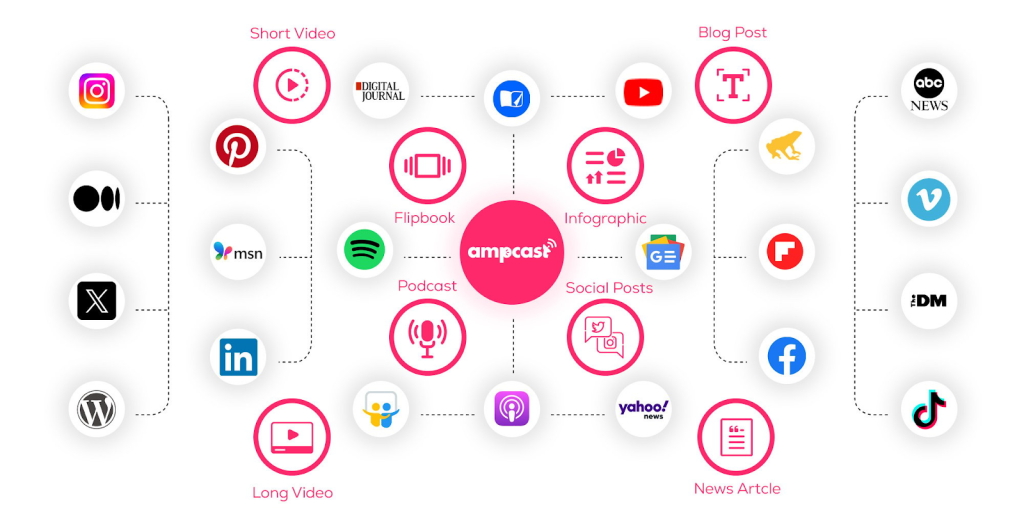
AmpiFire makes that combination practical by turning a single topic into eight content formats and publishing them across 300+ platforms automatically. Your brand stays in inboxes, social feeds, and search results without requiring separate campaigns for each channel.
Frequently Asked Questions (FAQs)
Is email marketing or social media better for customer retention?
Email marketing is a stronger tool for keeping customers engaged. It gives you direct control over your audience and consistent communication. Social media supports retention by building community and emotional connections, but email remains the primary way most businesses keep customers returning.
How often should I send newsletters to retain customers?
Weekly or bi-weekly newsletters usually work best, balancing visibility and avoiding overload. Consistency matters most; a newsletter sent reliably on the same schedule builds trust and keeps your brand top of mind. Start with what you can sustain and adjust as your content grows.
Can small businesses compete using newsletter marketing for retention?
Yes, small businesses can excel with a personal, authentic voice. AmpiFire makes it easy to create and share engaging content across email, social media, and other channels, helping even a modest audience stay loyal and connected.
What metrics should I track to measure retention across both channels?
For email, focus on how well your messages bring customers back to engage with your brand. For social media, look at meaningful interactions like comments, shares, and returning visitors. Together, these show which channels are keeping your audience connected.
Do newsletters still work for younger audiences who prefer social media?
Yes, younger readers check email daily for updates, deals, and useful content. They respond to newsletters that feel casual, visually engaging, and genuinely helpful. Many successful brands have built loyal audiences through newsletters that offer a deeper experience than social media feeds. AmpiFire helps you reach younger audiences across both email and social by distributing content to 300+ platforms from a single upload.
*Disclaimer: Results may vary based on individual circumstances, business type, and content strategy. The time savings and outcomes mentioned are based on typical user experiences and are not guaranteed. For specific pricing and service details, please visit AmpiFire.
Author
Related Posts


Social Champ Reviews, Pricing & Features: Is This Social Media Management Tool Worth It?
Get honest Social Champ reviews. Learn pricing, features, and if this social media management tool is worth your investment for…


Sprout Social vs Later: Which is Better for Social Media Scheduling?
Compare Sprout Social vs Later: features, pricing, scheduling, and ideal users. Learn which platform fits your strategy and grow with…
Organic vs Paid Social Media Marketing for Reach: Differences & Examples
Organic vs paid social media marketing differ in cost, speed, and control. Learn how to use both together and how…

Press Release Distribution vs Social Media Marketing for Brand Awareness: Differences & Examples
Compare press release distribution vs. social media for brand awareness. Learn key differences and benefits to choose the right strategy…
Repurpose Video Content Into AI Blog Posts, Social Media & Multiple Formats
Learn how to repurpose long videos across LinkedIn, blogs, Twitter (X), Facebook, TikTok, Reels, and YouTube using AI to maximize…
Average Social Media Cost Per Lead 2026 Compared | Ads vs. Content
Key Takeaways: In 2026, paid social media advertising averages $65 per lead while organic content marketing costs $95 per lead,…