
Key Takeaways
- Sprinklr is a Unified Customer Experience Management platform built for large enterprises, offering advanced publishing workflows, AI-powered social listening, deep analytics, and structured cross-team collaboration across hundreds of channels.
- Buffer is a lightweight social media management tool built for small to mid-sized teams, focused on queue-based scheduling, straightforward publishing across platforms like Instagram, LinkedIn, and TikTok, plus basic analytics and inbox replies.
- Sprinklr is the better pick for large, complex organizations needing full customer experience management, while Buffer is the better pick for small businesses, creators, and agencies that want affordable, easy-to-use scheduling without a steep learning curve.
- As social media management tools, both cover the basics well, but neither actively distributes your content across news, video, podcast, or blog platforms to build organic traffic from multiple channels.
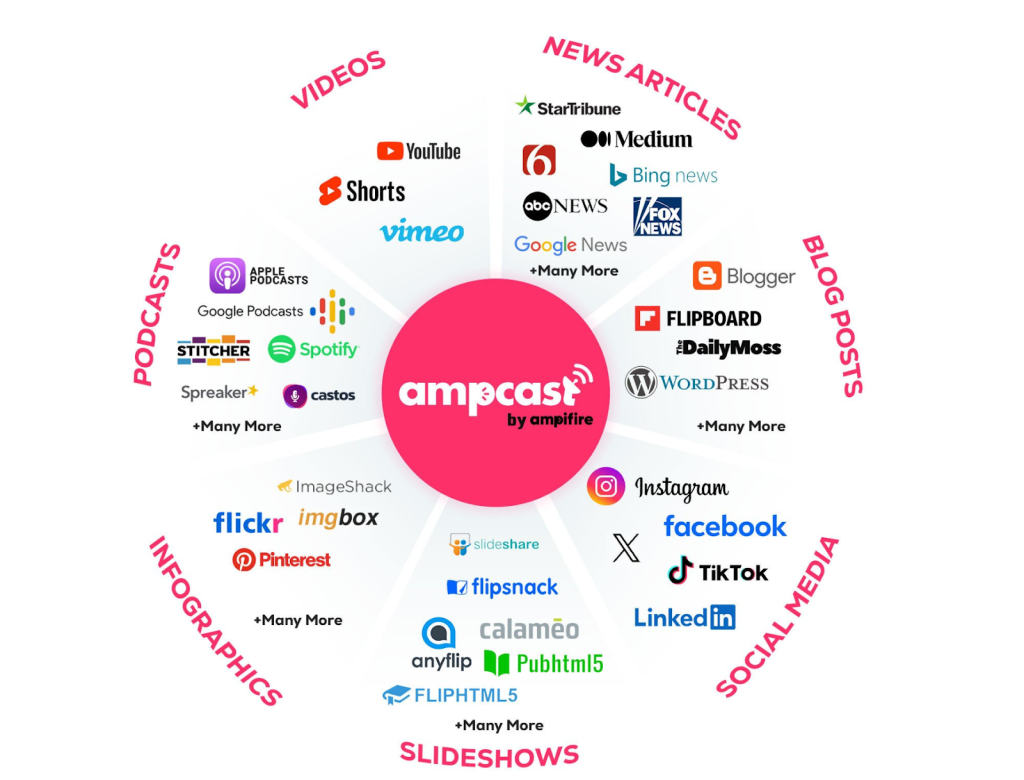
- For businesses that want to go beyond social media management and build long-term organic traffic, AmpiFire’s AmpCast AI turns one topic into 8 content formats (news articles, blog posts, interview podcasts, longer informational videos, reels/shorts, infographics, flipbooks/slideshows, and social posts) and publishes them across 300+ sites like Google News, YouTube, Spotify, Pinterest, and Fox affiliate sites to grow traffic from search, video, podcast, and social channels.
Sprinklr vs Buffer: Which Tool Is Better?
If you run a large enterprise with dozens of social accounts, multiple regions, and layered approval workflows, Sprinklr is the better social media management tool because it combines publishing, engagement, social listening, and analytics into one enterprise-grade system.
If you run a small or mid-sized business and just need to schedule posts, reply to comments, and track basic performance without the complexity, Buffer is the better pick thanks to its queue-based publishing and simple interface.
Your team size, budget, and how many channels you coordinate will decide which tool actually fits. Social media management platforms like Sprinklr and Buffer focus on posting and engagement, but for businesses looking to grow organic traffic from search, video, podcasts, and blogs at the same time, solutions like AmpiFire take a different approach by creating and distributing content across hundreds of sites.

How AmpiFire Works:
- Research & Target: Find high-demand topics your buyers search for.
- Create & Repurpose: AmpiFire’s AmpCast AI generates news articles, blog posts, interview podcasts, longer informational videos, reels/shorts, infographics, flipbooks/slideshows, and social posts.
- Distribute & Amplify: Auto-publish to 300+ sites, including Google News, YouTube, Spotify, and major news networks.
Get more traffic from people who want to buy your stuff, and powerful “As Seen On” trust badges for your site.
Do It Yourself (with AI), Done For You Content, & 100% Managed Organic Growth options available.
Grow Your Free Traffic From Everywhere
What Is Sprinklr?
Sprinklr is a unified customer experience management (Unified-CXM) platform built for large enterprises managing social media at scale. It helps global teams handle complex, multi-channel operations from a single system. It goes beyond scheduling by combining publishing, engagement, social listening, advertising, and analytics.
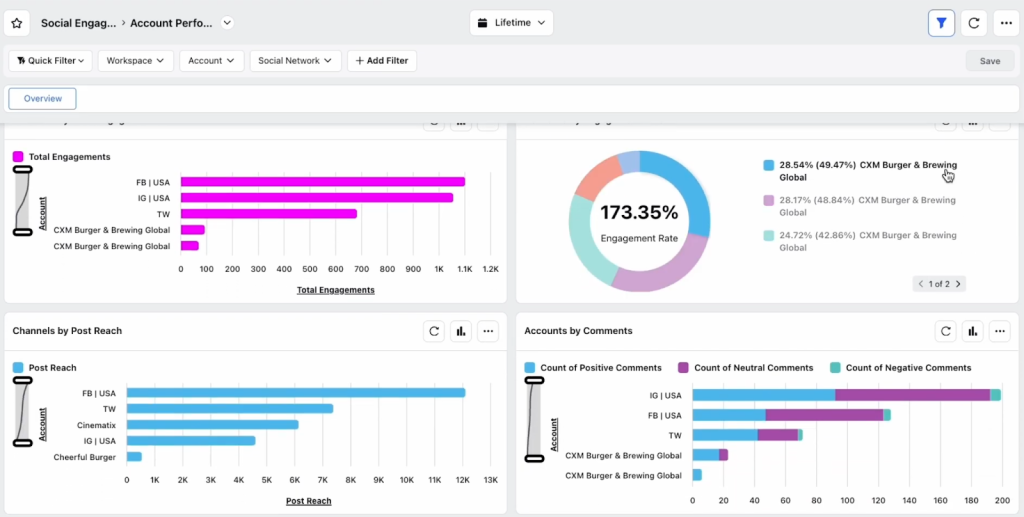
Key capabilities include real-time brand monitoring with AI-driven social listening, centralized content publishing, advanced approval workflows for large teams, in-depth analytics and reporting, integrated paid and organic campaign management, and tools that connect social interactions directly with customer support teams.
What Is Buffer?
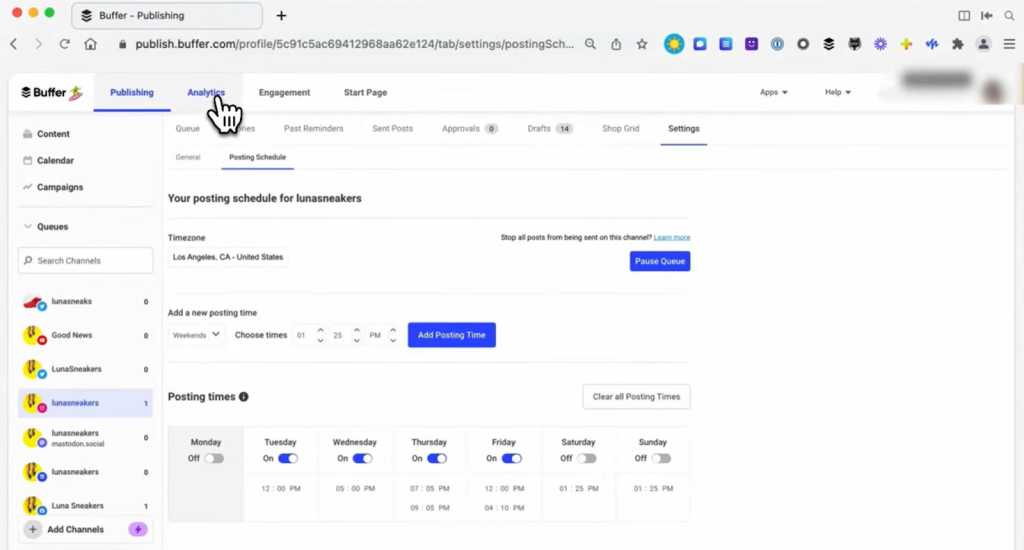
Buffer is a simple social media management tool focused on ease of use and essential functionality. Since its launch in 2010, it has become popular among small businesses, agencies, and creators who need reliable scheduling and publishing without complex enterprise features.
It allows users to set up queue-based scheduling so posts are automatically published based on a preset plan, and supports publishing across major platforms like Instagram, Facebook, X (Twitter), LinkedIn, Pinterest, TikTok, and Google Business Profile.
Buffer also includes a Start Page feature for link-in-bio pages, basic engagement tools for managing comments and messages, analytics for tracking performance and audience insights, an AI assistant for content creation, and lightweight collaboration features for small teams.
Sprinklr vs Buffer: Feature-by-Feature Breakdown
Both platforms cover the social media management fundamentals, but they diverge quickly once you move past basic scheduling. Here’s exactly where each tool stands on the features that matter most to your day-to-day operations.
Overview & Positioning
Buffer is known for offering a simple, user-friendly experience focused on helping brands maintain a consistent presence across social channels. It is built around ease of publishing, scheduling, and managing day-to-day social media activity.
Sprinklr, on the other hand, is structured as a more comprehensive social media management system designed for larger organizations. It supports a wider set of operational needs beyond basic posting, including deeper engagement, analytics, and cross-functional coordination.
Scope of Business Use Cases
One of the key differences between the two platforms is the range of workflows they support.
Buffer tends to concentrate on core social media tasks such as communication management, scheduling, and publishing. It is often used by teams that prioritize simplicity and efficiency in managing content across platforms.
Sprinklr supports a much wider spectrum of use cases. Beyond publishing and scheduling, it extends into areas like customer engagement, social listening, analytics, content tracking, and collaboration across teams. This makes it more suitable for organizations that require integrated marketing and customer experience management.
Content Publishing & Scheduling
Both platforms support scheduling and publishing content across multiple social media channels.
Buffer focuses heavily on making the publishing process straightforward, allowing users to plan and distribute posts with minimal complexity.
Sprinklr also supports publishing workflows but combines them with broader content management capabilities, including more structured coordination for larger teams and multiple content streams.
Engagement and Community Management
Buffer provides basic tools for engaging with audiences, responding to comments, and managing social interactions in a simple interface.
Sprinklr places a stronger emphasis on engagement management, offering more advanced capabilities for monitoring conversations, managing responses at scale, and handling ongoing customer interactions across platforms.
Analytics & Performance Tracking
Buffer includes essential analytics features that help users track content performance and measure engagement.
Sprinklr expands significantly in this area, offering deeper social media analytics and more advanced tracking of content performance, audience behavior, and engagement trends across multiple channels.
Content Management & Collaboration
Buffer supports basic content organization and team collaboration, making it suitable for small to mid-sized teams.
Sprinklr provides a more structured environment for content management and collaboration, supporting larger teams with more complex workflows, approvals, and coordination needs across departments.
Which Social Media Management Tool Should You Choose?
The choice between Sprinklr and Buffer isn’t about which is better overall, but which fits your needs. Sprinklr is built for complex, large-scale operations, while Buffer is designed for simplicity and ease of use. Choosing the wrong one either means paying for features you don’t need or outgrowing your tool too quickly.
Choose Sprinklr If You Run a Large Enterprise
Sprinklr is ideal for large organizations managing multiple brands, regions, and complex social media workflows. It works best when teams need advanced coordination across publishing, engagement, analytics, and customer support. It’s most effective for enterprises with dedicated teams, structured workflows, and the resources to support a full-scale platform.
Choose Buffer If You Run a Small or Mid-Size Business
Buffer is a better fit for small to mid-sized teams that want a simple, affordable way to manage social media. It covers scheduling, publishing, and basic analytics without unnecessary complexity. It’s ideal for individuals or small teams who want to stay consistent on social media without a steep learning curve.
Sprinklr vs Buffer: Key Differences at a Glance
| Category | Sprinklr | Buffer |
| Positioning | Enterprise Unified-CXM platform | Simple social media management tool |
| Target Users | Large enterprises, global teams | Small businesses, creators, small teams |
| Core Focus | Full-scale social + customer experience management | Easy scheduling and publishing |
| Publishing | Advanced workflows for large teams | Queue-based simple scheduling |
| Social Listening | AI-powered, real-time monitoring | Basic or limited |
| Engagement | Advanced, enterprise-level management | Basic inbox for replies |
| Analytics | Deep reporting, dashboards, benchmarking | Standard performance insights |
| Collaboration | Complex, multi-team workflows | Simple team collaboration |
| Complexity | High, enterprise-level setup | Low, easy to use |
| Best For | Large, complex organizations | Small to mid-sized businesses |
From Social Management to Full-Scale Content Distribution with AmpiFire
Sprinklr and Buffer are both capable social media management tools, but they solve different problems. Sprinklr fits large enterprises with complex workflows, while Buffer suits smaller teams that want simple scheduling. Pick based on your scale, not feature count.
Managing social channels is just one piece of online growth, since lasting traffic comes from publishing everywhere your buyers look. At AmpiFire, our AmpCast AI platform turns a single topic into 8 content formats and publishes them across 300+ sites like Google News, YouTube, Spotify, and Pinterest to continuously grow your brand and traffic online. If you want to grow organic traffic from every channel, we can help.
Frequently Asked Questions (FAQs)
Is Sprinklr better than Buffer for large teams?
Yes, Sprinklr is better suited for large enterprise teams because it is built for complex workflows and cross-functional collaboration. It supports multi-step approvals, compliance tracking, and coordinated campaigns across departments. Buffer is simpler and lacks the depth needed for structured enterprise-level social media operations.
Can Buffer handle multiple social media accounts?
Yes, Buffer supports managing multiple social media accounts across major platforms like Instagram, Facebook, X, LinkedIn, Pinterest, TikTok, and more. The number of accounts depends on the plan, but it is more than enough for most small businesses, freelancers, and growing agencies managing several brands or clients.
Does Sprinklr offer better analytics than Buffer?
Yes, Sprinklr provides more advanced analytics compared to Buffer, especially for enterprise reporting. It includes custom dashboards, sentiment analysis, competitive benchmarking, and cross-channel insights. Buffer offers clear and useful analytics for tracking engagement and performance, but Sprinklr is stronger for deep strategic reporting.
Is Buffer suitable for enterprise-level social media management?
Buffer is not designed for enterprise-scale social media management. While it works well for small teams with basic collaboration needs, it lacks advanced governance, compliance workflows, and large-scale integrations required by bigger organizations. It is best suited for small to mid-sized businesses rather than enterprises.
Does Buffer or Sprinklr help with organic traffic?
Tools like Buffer and Sprinklr help with scheduling and engagement, but they don’t actively distribute content for traffic growth.
A better option would be to use AmpiFire’s AmpCast AI to turn one topic into 8 content formats (news articles, blog posts, interview podcasts, longer informational videos, reels/shorts, infographics, flipbooks/slideshows, and social posts) and automatically publish them across 300+ high-authority sites like Google News, YouTube, Spotify, Pinterest, and Fox affiliate sites.
This builds consistent organic traffic from search, social, video, and podcast platforms without relying on paid ads.
*Disclaimer: Results may vary based on individual circumstances, business type, and content strategy. The time savings and outcomes mentioned are based on typical user experiences and are not guaranteed. For specific pricing and service details, please visit AmpiFire.
Author
Related Posts


Hootsuite vs Buffer Social Media Management Tools: Free Plan & Pricing Comparison
See how Buffer and Hootsuite compare on pricing, free plans, and features. Learn which social media management tool has the…


Social Champ Reviews, Pricing & Features: Is This Social Media Management Tool Worth It?
Get honest Social Champ reviews. Learn pricing, features, and if this social media management tool is worth your investment for…

SocialPilot Features, Reviews & Pricing: Is This Social Media Management Tool Legit?
Discover SocialPilot’s key features, honest reviews, and pricing breakdown. See if this social media management tool is worth your investment…


Hootsuite Pricing: Plans & Free Social Media Management Alternatives
See Hootsuite pricing, compare plans with free alternatives like Buffer and Metricool, and learn how AmpiFire drives multi-channel organic traffic.
Brandwatch vs Hootsuite for Social Media Management: Pricing, Pros & Cons
Brandwatch vs Hootsuite compared by pricing, features, pros, and cons. See which fits your team and where AmpiFire fills the…

Sprout Social vs Later: Which is Better for Social Media Scheduling?
Compare Sprout Social vs Later: features, pricing, scheduling, and ideal users. Learn which platform fits your strategy and grow with…