
Key Takeaways
- Brandwatch and Sprout Social serve two different jobs: Brandwatch tracks conversations and sentiment across millions of online sources, while Sprout Social handles scheduling, messaging, and reporting for daily social media work.
- Picking the wrong one wastes budget. Teams that need deep listening end up with Sprout’s lighter monitoring, and teams that just need a publishing calendar end up paying for Brandwatch’s enterprise analytics they never touch.
- Choose Brandwatch when the goal is research, sentiment analysis, and brand perception. Choose Sprout Social when the goal is publishing, collaboration, and engagement. Choose AmpiFire when the goal is reaching readers beyond social media entirely.
- Brandwatch pulls data from 100+ million online sources for sentiment work, while Sprout Social keeps day-to-day publishing across a handful of social networks in one inbox.
- AmpiFire’s AmpCast AI turns one topic into 8 content formats and distributes them across 300+ platforms including Google News, YouTube, Spotify, Pinterest, and Fox affiliate sites.
Brandwatch vs Sprout Social: Key Differences and Where AmpiFire Fits In
Brandwatch is the right pick for deep social listening, sentiment analysis, and brand monitoring across millions of online sources, while Sprout Social is the better fit for scheduling, publishing, collaboration, and daily team workflows. Both work within social media platforms, so neither extends content reach into search, news, video, or audio channels. AmpiFire fills that gap by turning one topic into 8 content formats and distributing them across 300+ sites. Which one fits depends on whether the team needs strategic insight, daily execution, or wider visibility beyond social.
Social media tools have grown in different directions over the past few years. Some focus on listening and analytics, others on publishing and engagement, and a third group on distribution beyond social entirely, which is why a head-to-head comparison only makes sense once the use case is clear.
This guide breaks down what each platform does best, where they fall short, and how their feature sets compare for teams choosing between insight, execution, and wider reach.

How AmpiFire Works:
- Research & Target: Find high-demand topics your buyers search for.
- Create & Repurpose: AmpiFire’s AmpCast AI generates news articles, blog posts, interview podcasts, longer informational videos, reels/shorts, infographics, flipbooks/slideshows, and social posts.
- Distribute & Amplify: Auto-publish to 300+ sites, including Google News, YouTube, Spotify, and major news networks.
Get more traffic from people who want to buy your stuff, and powerful “As Seen On” trust badges for your site.
Do It Yourself (with AI), Done For You Content, & 100% Managed Organic Growth options available.
Grow Your Free Traffic From Everywhere
What Does Each Platform Actually Do?
Before comparing features, it helps to know that these platforms are built for different goals. They don’t directly compete in the same way, and knowing their core purpose makes the choice much clearer.
Brandwatch focuses on consumer intelligence, tracking online conversations, analyzing sentiment, and spotting trends.
Sprout Social focuses on execution, scheduling content, managing messages, collaborating with teams, and reporting performance.
Brandwatch is typically used by enterprise teams that need deep data and insights, while Sprout Social serves a wider range of users, from mid-sized teams to large organizations. Both offer analytics, but Brandwatch emphasizes audience insights, while Sprout Social focuses on social media performance.
Brandwatch: Social Intelligence at Enterprise Scale
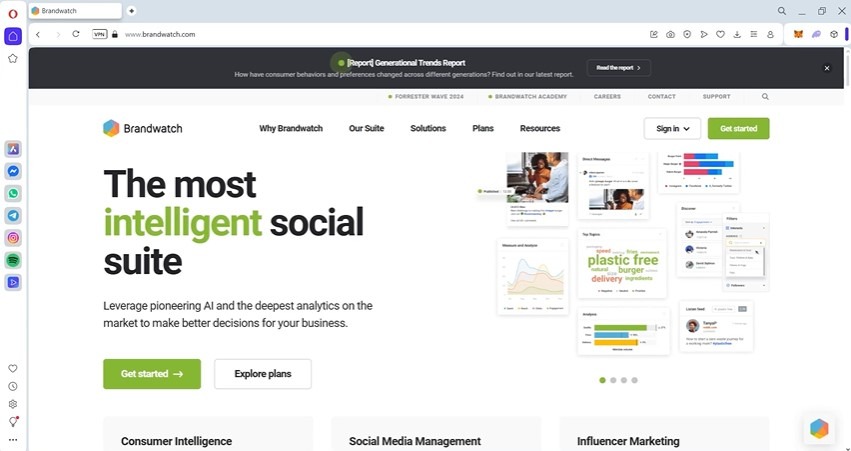
Brandwatch is built as a powerful data and insights platform. It gathers conversations, mentions, and trends from across more than 100 million online sources, then uses advanced AI to turn that data into clear insights about what people think, feel, and talk about.
This makes it especially useful for tracking brand perception, monitoring competitors, and identifying trends early. Teams can analyze audience sentiment, build reports, and make data-driven decisions based on real conversations happening across the internet.
Sprout Social: All-in-One Social Media Management
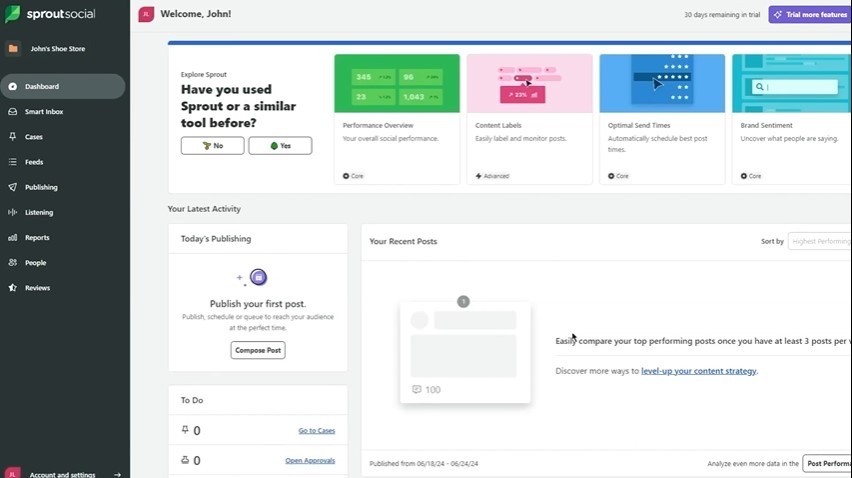
Sprout Social is built to handle day-to-day social media work in one place. From a single dashboard, teams can schedule and publish posts, manage messages through a unified inbox, collaborate on content, and track performance across multiple platforms.
It combines publishing tools, engagement features, and reporting into one system, making it easier to plan campaigns, respond to customers, and stay organized. Features like a shared content calendar, automated scheduling, and team workflows help streamline daily operations.
How Do the Core Features Compare?
Both platforms offer social analytics, but they are designed for different purposes. Brandwatch focuses on consumer intelligence, combining social listening, sentiment analysis, and AI-driven insights from large-scale online data to help brands understand audiences and trends. Sprout Social focuses more on execution, offering tools for publishing, scheduling, collaboration, and reporting.
Brandwatch is stronger for deep research and strategic insights, while Sprout Social is better for day-to-day social media management. Overall, Sprout Social is generally easier to use for teams that need speed and simplicity.
Social Listening and Sentiment Analysis
Brandwatch leads in this area with advanced social listening across social media, blogs, forums, news sites, and reviews. Its AI analyzes sentiment along with emotion, themes, and context across conversations, giving deeper insight into brand perception.
Sprout Social also offers listening features, but they are more focused on monitoring and engagement rather than large-scale research. For deep audience or competitor analysis, Brandwatch is the stronger choice.
Scheduling and Publishing Tools
Sprout Social is the clear winner for publishing and scheduling. It allows teams to plan posts, manage a visual content calendar, set approval workflows, and publish across multiple platforms from one place. It’s built for efficient daily social media operations.
Brandwatch is not focused on publishing, so it lacks the same depth in scheduling and content management.
Analytics and Reporting Dashboards
Both tools provide analytics, but with different goals. Sprout Social focuses on performance metrics like engagement, reach, and audience growth, making it ideal for reporting and campaign tracking.
Brandwatch focuses on broader insights such as trends, share of voice, and long-term brand health. The better option depends on if you need operational reporting or strategic intelligence.
Team Collaboration and Workflow Management
Sprout Social is built for teamwork, offering task assignments, approval workflows, shared calendars, and role-based access to keep social media operations organized.
Brandwatch has more limited collaboration features since it is designed mainly for analysts and research teams. For structured content workflows and team coordination, Sprout Social is the more practical solution.
Brandwatch Pros and Cons
Brandwatch stands out for its advanced social listening and sentiment analysis, along with real-time alerts and highly customizable dashboards that help large teams track brand perception across multiple channels. However, it is expensive and better suited for enterprise use, with some limitations around historical data access and slower support response times reported by users.
Sprout Social Pros and Cons
Sprout Social is a user-friendly, all-in-one platform that combines publishing, analytics, engagement, and collaboration, making it suitable for both small teams and large businesses. Its strong analytics and scalability are key advantages, but the high starting price, lack of a free plan, and feature limitations on lower tiers can make it less accessible for smaller teams.
Brandwatch vs Sprout Social: Feature Comparison Overview
| Area | Brandwatch | Sprout Social |
| Core Focus | Consumer intelligence, sentiment analysis, audience insights | Social media execution, scheduling, publishing, and collaboration |
| Social Listening | Deep listening across multiple online sources with advanced sentiment and context analysis | Basic listening for monitoring and engagement |
| Scheduling & Publishing | Limited publishing features | Strong scheduling, content calendar, and publishing tools |
| Analytics & Reporting | Deep insights like trends, share of voice, and brand health | Performance metrics like engagement, reach, and growth |
| Collaboration | Limited, mainly for analysts and research teams | Strong teamwork tools like approvals, tasks, and roles |
| Ease of Use | More complex, data-heavy | Easier and more user-friendly |
| Pricing & Access | Higher cost, more suited for larger organizations | More accessible, but it can get expensive as teams scale |
| Pros & Cons | Powerful insights and listening, but expensive and complex | Easy to use and scalable, but higher cost and feature limits on lower tiers |
| Best Use Case | Deep research and brand monitoring | Daily social media management and execution |
Where the Wider Reach Lives
Brandwatch wins for sentiment analysis and audience research, and Sprout Social wins for publishing and team workflows. Both keep brands working inside the walls of social networks, which is a reasonable boundary if the goal is single-channel performance.
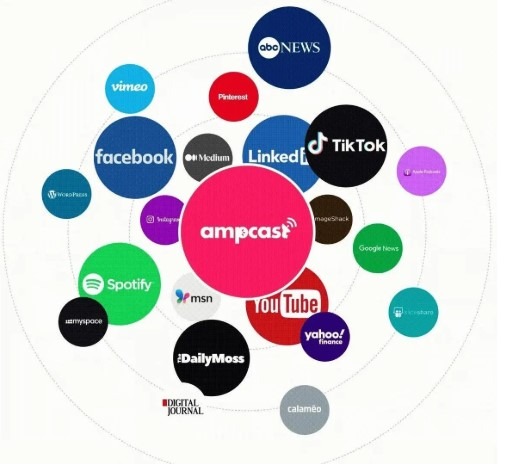
AmpiFire works on a different axis. AmpCast AI turns one topic into news articles, blog posts, interview podcasts, longer informational videos, reels/shorts, infographics, flipbooks/slideshows, and social posts, then publishes them across 300+ sites including Google News, YouTube, Spotify, Pinterest, and Fox affiliate sites. That is the kind of footprint social media tools were never built to deliver on their own.
Visit AmpiFire to turn one topic into traffic across 300+ platforms.
Frequently Asked Questions (FAQs)
Is Brandwatch better than Sprout Social for social listening?
Brandwatch is generally stronger for social listening because it focuses on tracking conversations across a wide range of online sources and analyzing sentiment in more depth. Sprout Social also offers listening features, but they are more geared toward general monitoring and day-to-day brand tracking rather than deeper analysis.
Can Sprout Social replace Brandwatch entirely?
Sprout Social can handle most social media tasks like scheduling, engagement, collaboration, and reporting in one place, which makes it enough for many teams. However, if a team specifically needs deep consumer insights and large-scale monitoring, Brandwatch serves a different purpose than Sprout Social, which is not fully designed to replace.
How can businesses go beyond social media tools to grow their content reach?
Tools like Brandwatch and Sprout Social help manage and analyze social media, but they still focus mainly on individual platforms. Some businesses also expand reach by turning one idea into multiple content formats and distributing them across search, social, and media channels. AmpiFire does this by repurposing content and publishing it across hundreds of platforms like Google News, YouTube, Spotify, MSN, and Pinterest to broaden visibility.
What is the main difference between Brandwatch and Sprout Social?
Brandwatch is focused on understanding audience conversations, sentiment, and brand perception across online platforms, while Sprout Social is focused on managing and executing social media activities like scheduling, engagement, and reporting. In simple terms, one is more about insights, and the other is more about day-to-day social media management.
Which platform is better for small businesses?
Sprout Social is usually more suitable for small businesses because it combines multiple social media functions in one easy-to-use platform. Brandwatch is more complex and better suited for larger organizations that have dedicated teams to manage it. Smaller teams looking to grow visibility without enterprise pricing can also turn to AmpiFire to publish one topic across 300+ sites in multiple formats.
*Disclaimer: Results may vary based on individual circumstances, business type, and content strategy. The time savings and outcomes mentioned are based on typical user experiences and are not guaranteed. For specific pricing and service details, please visit AmpiFire.
Author
Related Posts

Brandwatch vs Hootsuite for Social Media Management: Pricing, Pros & Cons
Brandwatch vs Hootsuite compared by pricing, features, pros, and cons. See which fits your team and where AmpiFire fills the…
ContentStudio vs Hootsuite for Social Media Management: Features, Pros & Cons
Compare ContentStudio vs Hootsuite, their features, pros, cons, and find a smarter way to grow reach beyond social media with…

Sprout Social Pricing Plans: Features & Monthly Costs Compared
Compare Sprout Social plans from Standard to Enterprise. See features, pricing, and how AmpiFire can boost your brand reach across…

Sprout Social vs Later: Which is Better for Social Media Scheduling?
Compare Sprout Social vs Later: features, pricing, scheduling, and ideal users. Learn which platform fits your strategy and grow with…


ClickDesigns Features, Pricing, Pros & Cons: Can This AI-Powered Graphic Designer Beat Canva?
Discover ClickDesigns' features, pricing, pros, and cons to see if this AI-powered tool can truly compete with Canva for your…


SocialPilot Features, Reviews & Pricing: Is This Social Media Management Tool Legit?
Discover SocialPilot’s key features, honest reviews, and pricing breakdown. See if this social media management tool is worth your investment…