Key Takeaways
- Acquiring ecom clients with paid ads in 2026 requires running 1 to 2 consolidated campaigns at $250 per day or more, refreshing creative every 3 weeks with 8 to 12 visually distinct concepts, and measuring on 60 to 180 day cash collected from CRM data instead of 7-day click ROAS.
- The 2019 agency playbook broke between October 2025 and March 2026 as Meta rolled out the Andromeda retrieval engine, launched the GEM ranking model, removed 7-day-view and 28-day-view attribution windows, deleted lookalike audiences, and reclassified what counts as a click.
- Ecom client acquisition got harder in 2026 mainly because of measurement changes, not performance changes, with click-through conversions dropping 15 to 30% overnight after March, CPMs rising 15% to 40%, and Andromeda’s optimization signal degrading as its conversion data got stricter.
- Fixing a broken paid acquisition funnel in 2026 means avoiding campaign-level pauses, consolidating budgets above the $250 per day learning threshold, planning a 3-week creative refresh cycle with concept variety, switching kill decisions to cash collected per booked call over 90 to 180 days, and adding an AI Overview citation layer to paid Search.
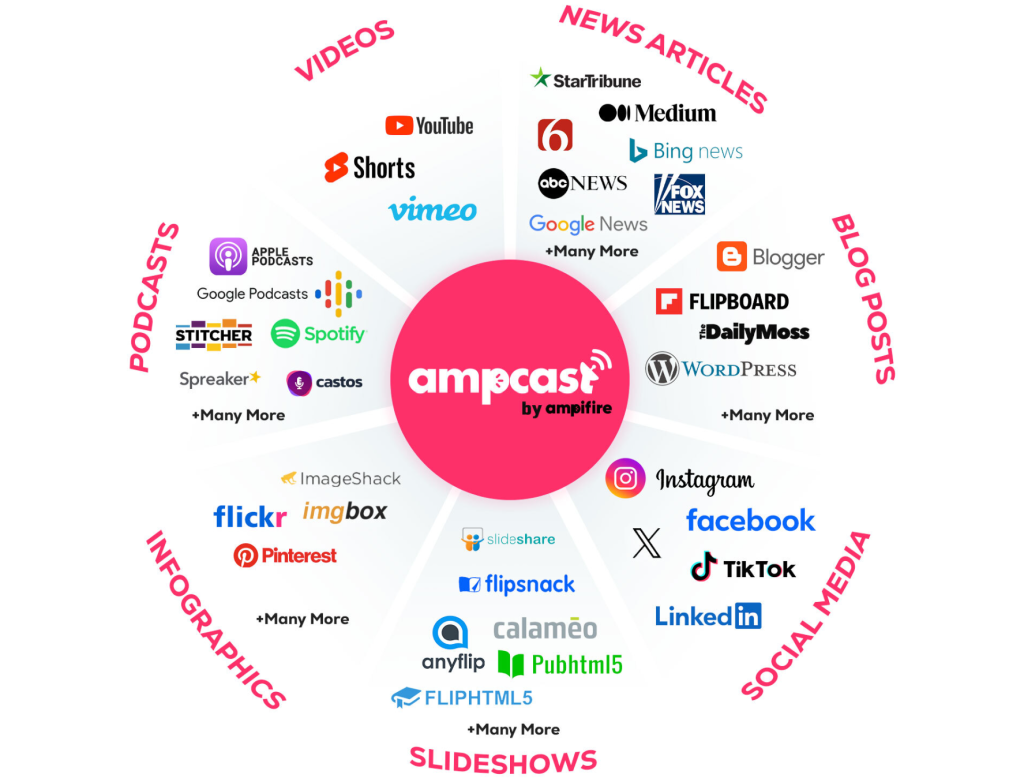
- AmpiFire supports ecom client acquisition by turning one topic into 8 content formats (news articles, blog posts, interview podcasts, longer informational videos, reels/shorts, infographics, flipbooks/slideshows, and social posts) and publishing them across 300+ sites, including Google News, YouTube, Spotify, Pinterest, and FOX affiliate sites to lift AI Overview citations and reduce single-channel paid dependency.
Paid Ads for Ecom Clients in 2026: What Changed
If you run an agency selling services to e-commerce brands, your own paid acquisition funnel is probably doing one of three things right now:
- Hitting strong ROAS, but you’re not sure why
- Quietly bleeding budget while you wait for it to recover
- Sitting paused while the team figures out what changed
The dominant 2026 narrative blames Meta’s Andromeda update, AI Overviews collapsing organic search, and a stack of attribution changes. Those changes are real. They’re also being used to explain results that often have a different cause: operational discipline matters more than the algorithm changes do, and most agencies running their own paid acquisition are getting the operational layer wrong.
This is a working document, not a theory piece. It walks through what actually changed in Meta between 2021 and 2026 (including the March 2026 click reclassification most agencies are still misreading), the four operational mistakes that explain most collapsed funnels, and the doctrine that’s working for agency self-acquisition right now. Read it as a self-audit. If you can pitch ecom clients on Meta strategy while your own funnel is broken, the credibility leak is bigger than the ROAS leak.

How AmpiFire Works:
- Research & Target: Find high-demand topics your buyers search for.
- Create & Repurpose: AmpiFire’s AmpCast AI generates news articles, blog posts, interview podcasts, longer informational videos, reels/shorts, infographics, flipbooks/slideshows, and social posts.
- Distribute & Amplify: Auto-publish to 300+ sites, including Google News, YouTube, Spotify, and major news networks.
Get more traffic from people who want to buy your stuff, and powerful “As Seen On” trust badges for your site.
Do It Yourself (with AI), Done For You Content, & 100% Managed Organic Growth options available.
Grow Your Free Traffic From Everywhere
Part 1: What Happened
The Seven Meta Changes That Broke the Old Agency Playbook
The agency Meta playbook of 2019 was built on capabilities Meta has progressively removed. If your acquisition strategy still leans on any of these, you’re competing on a moat that’s been filled in.

1. April 2021: iOS 14.5 + App Tracking Transparency
ATT opt-in collapsed to roughly 11% of iOS users. Half the iOS audience became invisible to Meta’s pixel. Industry-wide attribution accuracy fell by ~40% (see DOJO AI’s full attribution breakdown).
What this killed: the “we can attribute every dollar” agency value proposition. Agencies built on multi-touch attribution sophistication lost their differentiation overnight. CAPI became the only way to recover a meaningful signal, and adoption sat at ~50–60% of advertisers for years.
2. 2021–2023: Detailed Targeting Reductions
Sensitive interests removed in waves. Special Ad Categories are restricted further. Detailed Targeting Plus is enabled by default. Manual targeting started behaving as a suggestion, not a constraint.
What this killed: the “secret interest stack” agency moat. The agency that pitched “we know which interests work for your category” lost the proprietary edge.
3. 2022: Advantage+ Shopping Campaigns Launched
The manual campaign structure started underperforming the automated structure for e-commerce. ASC went from experimental to default in 18 months.
What this killed: the “manual structure expertise” agency moat. Premium retainers built on “we know how to structure 12 campaigns and 42 ad sets” became indefensible against ASC.
4. October 2025: Andromeda Full Global Rollout
Meta replaced its core retrieval engine with creative-first delivery on NVIDIA Grace Hopper Superchips at 10,000× the model complexity of the previous system. Audience settings became suggestions that Andromeda could override. (Meta’s own engineering writeup explains the technical change; DOJO AI’s plain-English version is more useful for marketers.)
What this killed: the audience-first playbook agencies had refined for a decade. The same agencies that built businesses on “narrow targeting + audience layering” found their methodology actively penalized.
5. November 2025: GEM (Generative Ads Recommendation Model) Launched
GEM ranks the candidates Andromeda retrieves and optimizes winning ad sequences, not winning individual ads (ALM Corp’s GEM breakdown explains the mechanics).
What this killed: the “kill the underperformer” instinct. Turning off your TOFU prospecting ad now breaks your MOFU and BOFU performance, because GEM was reading the funnel as a sequence.
6. January–February 2026: Attribution Windows Shrank, Lookalikes Deleted
Meta removed 7-day-view and 28-day-view attribution windows from Ads Manager on January 12. A few weeks later, lookalike audiences were deleted from Ads Manager and force-migrated to Advantage+ Predictive Audiences.
What this killed: the most defensible remaining agency moat. Refining lookalike seeds from CRM customer data was the workflow that agencies had built premium pricing around. Gone in two months.
7. March 3, 2026: Click Attribution Reclassification
This is the change most agencies are still misreading.
The March 2026 Click Change: What Actually Happened
For years, Meta’s “click-through attribution” counted any click on an ad unit as a click. Likes, shares, saves, comments, profile taps, image expansions: all classified as clicks for attribution purposes. Someone tapping the heart icon on your ad and buying three days later showed up in Ads Manager as a click-through conversion.
On March 3, 2026, Meta announced it was narrowing the definition. Click-through attribution now requires an actual link click, the same standard Google Analytics has used for years. Everything else moved into a renamed “engage-through attribution” category with a 1-day window. The video engaged-view threshold was also cut from 10 seconds to 5 seconds.
What Happened in Agency Dashboards
This is what happened in agency dashboards over the following weeks:
- Reported click-through conversions dropped 15–30% across many accounts overnight. Not a performance change. A measurement change. Conversions previously credited to engagement either moved into engage-through (if they happened within 1 day) or vanished entirely (if they happened on day 2–7).
- CPMs rose 15–40% in the first two weeks of March 2026, most severe in consumer goods and financial services (Triple Whale data, 11,000+ ecom accounts, via Zentric Digital).
- Reported CPAs appeared 15–30% higher. Reported ROAS appeared lower. Same actual business. Different scale.
- Remarketing campaigns got hit hardest. As Jon Loomer pointed out in his March commentary, remarketing audiences were the heaviest beneficiaries of the old engagement-counted-as-click model. Their reported ROAS had been overstated, sometimes substantially.
The Harder Problem That Came Next
The harder problem came in the months after. Many agencies began reporting drop-off in qualified lead volume, higher cost per call, and worse lead quality overall through Q1 and Q2 2026. The standard explanations (creative fatigue, audience saturation) didn’t fully account for it.
Here’s what was structurally happening: when Meta reclassified what counted as a conversion signal, the data feeding Andromeda’s learning loop got stricter and noisier. Andromeda was now optimizing against a tighter conversion definition with less of the engagement-driven signal it had previously used. Its ability to find converting audiences degraded as a result. Targeting felt like it was falling apart because, for the conversion events, Andromeda could now see that it actually was.
Agencies that had built their measurement on Ads Manager dashboards saw the cleanest expression of the problem. Agencies that had moved to CRM-grounded measurement felt it less, because their backend revenue numbers held while their dashboards collapsed. The gap between the two told a story by itself.
What All This Adds Up To
Paid execution, on its own, is no longer differentiated. What remains as a defensible agency value in 2026:
- Operational discipline (covered in Part 2)
- Creative production volume and concept diversity
- CRM and MER measurement infrastructure
- Layered organic distribution that compounds independently of paid
Now: how to fix it.
Part 2: How to Fix It
Fix #1: Stop Pausing Campaigns at the Campaign Level
The Problem
Under the pre-Andromeda Meta, campaign pauses were a viable management tool. Under Andromeda, the same action triggers a learning reset that often does not fully recover.
The Mechanism
Andromeda accumulates engagement signal at the campaign level over time. A pause stops the signal flow. On restart, Meta restarts the learning phase. If the pause was meaningfully long, the algorithm not only loses accumulated learning but often reallocates budget away from the previously winning creative, because its recent engagement data is now stale.
We’ve watched this play out in our own funnel: a 35-hour pause flipped the budget from a creative receiving 95% of spend pre-pause to 11% post-restart. Blended CPC rose 17%. Per-creative CPC rose 60–69%. Same campaign. Same creatives. The pause did the damage. Skaleit Agency’s audit data confirms the pattern across its portfolio.
The Fix
- Never pause at the campaign level
- Make changes at the ad level only (pause underperforming ads, launch new ads, adjust budgets at the campaign level without pausing)
- Treat campaign-level pauses as a nuclear option you take once a quarter, not routine management
Fix #2: Consolidate Budget Above the Learning-Phase Threshold
The Problem
Meta’s learning phase requires roughly $250/day per campaign to exit under current conversion thresholds. Below that, campaigns cannot accumulate the conversions needed to stabilize.
Foxwell Digital’s “data density” concept describes the same dynamic: one campaign receiving 20 conversions per day produces a clearer signal for Andromeda than three campaigns each receiving 6–7 per day. Skaleit makes the same point: one campaign, one ad set, many creatives is the structure Andromeda rewards.
Splitting the budget across more ad sets to “test more audiences” was rational under the pre-Andromeda system. Under Andromeda, it starves every ad set of the conversion data the algorithm needs.
The Fix
- At $10–15K/month total budget, run 1–2 campaigns maximum per objective at $250–$300/day each
- At $20–30K/month, you can run 2–3
- Consolidate ad sets aggressively. One ad set per objective is fine when broad targeting handles the audience layer
- Resist the urge to spin up a new campaign every time you have a new test idea. Layer the test inside an existing structure
Fix #3: Plan Creative on a 3-Week Refresh Cycle
The Problem
Pre-Andromeda creative lifespans of 6–8 weeks have compressed to 2–4 weeks across multiple agency portfolios. JetFuel Agency’s portfolio data is more aggressive at 5–7 days. ScaledOn’s broader market data: brands testing 20+ new ads per month see 65% higher ROAS than brands testing under 10. Top-third advertisers run roughly 395 live ads versus 296 for the bottom third, a 33% gap.
Volume alone doesn’t solve it. AdMove’s analysis of the supplement brand Lemme showed Andromeda automatically routing problem-aware creative to problem-aware audiences and solution-aware creative to solution-aware audiences. Creative briefs need to specify awareness state explicitly, rather than only listing product features.
The Fix
- 4–5 fresh statistics per month minimum for agency self-acquisition
- 8–12 distinct concepts live per active campaign
- 3-week refresh cycle planned in advance (not reactive replacement)
- Brief by awareness state: 1 problem-aware, 1 solution-aware, 1 product-aware, 1 brand-aware, 1 social proof. Not “5 versions of our hero video.”
- Hard kill rule: any ad with $500 spend and zero conversions gets replaced. Don’t wait for “more data.”
Fix #4: Vary Concepts, Not Copy (the Entity ID Trap)
The Problem
Andromeda fingerprints every ad. Two creatives sharing visual + layout but different headlines register as the same Entity ID. A single ad set with 25 diverse creatives produced 17% more conversions at 16% lower cost than a traditional 5-ad-set structure with 5 ads each (Five Nine Strategy controlled test, cited via Segwise).
The implication: 100 headline variants on the same visual register as 1 ad in Andromeda’s view.
The Fix
- Vary the visual concept, not the headline, on the same visual
- Different formats (static, video, carousel, UGC)
- Different talent (founder, creator, customer)
- Different core messages (problem framing, benefit framing, social proof)
- Background color changes, font swaps, and headline rewrites do not count as new concepts
Fix #5: Measure on Cash Collected, Not Dashboard ROAS
The Problem
Meta removed 7-day-view and 28-day-view attribution windows in January 2026, then narrowed click attribution in March. The only window left in Ads Manager (7-day click) is structurally too short for any B2B funnel with a payback period longer than a week.
For an agency funnel selling MRR services, this is not a minor reporting issue. It’s the difference between killing profitable campaigns and recovering them. A demo request that converts to a $3,600/month managed-service client doesn’t pay back in 7 days. It pays back across 60–180 days as cash collects month over month.
Why Cheaper Calls Aren’t Better Calls
The economics matter here. Booked calls from Meta in the agency-services space typically cost anywhere from $20 to $1,500 each, with the price depending on offer positioning, qualification, and audience.
The intuition that cheaper calls are better than expensive calls is wrong: more expensive booked calls consistently outperform cheaper ones in long-term revenue, because they tend to come from better-qualified prospects who close at higher price points and stay longer.
A $1,500 booked call that closes a $5,000 MRR client at 24 months is dramatically more profitable than ten $20 calls that close one $500 MRR client at 6 months. Optimizing on call cost alone gets agencies into trouble; optimizing on cash collected per booked call (over a 90–180 day window) is what matters.
DOJO AI’s industry analysis on B2B specifically: brands with 2–4 week sales cycles lose 20–40% of attributed conversions when forced into 7-day click windows. For longer cycles, the gap widens further.
The Fix
- Use Meta’s 7-day-click default for early creative-quality signal only, never for kill decisions on B2B campaigns
- Layer a 60–180 day cash-collected ROAS view from your CRM against the relevant acquisition spend window
- Track cash collected per booked call (going beyond just call cost) and segment by call cost band; you’ll likely find your most expensive call cohort is your most profitable
- Annotate March 3, 2026, in every dashboard. Don’t compare February to March without it
- Read MER (Marketing Efficiency Ratio) at the portfolio level to catch cross-channel assist effects
This single shift in measurement framework is responsible for more recovered B2B funnels than any creative or structural fix.
Fix #6: Add the AI Overview Citation Layer to Your Paid Search
The Problem
ALM Corp’s analysis of 16,000+ queries showed paid search click share doubled in 12 months, capturing 19–36% of clicks depending on vertical. Classic organic click share dropped 11–23 percentage points across every vertical. The cause is partly AI Overviews, partly Google’s expansion of paid placement on the SERP.
For agency self-acquisition, the AI Overview effect is asymmetric. On commercial-intent and brand-name queries, AI Overviews appear less frequently, and CTR remains usable. On informational queries (“how to fix Meta ROAS”, “what is Andromeda update”), AI Overviews appear on 13.14% of queries and roughly halve CTR.
The number that matters: brands cited inside AI Overviews receive 35% higher organic CTR and 91% higher paid CTR compared to non-cited competitors on the same queries.
The Fix
- Audit which informational queries your prospects research before searching commercial-intent terms in your category
- Publish content on those topics across distribution that feeds AI Overview citations (Google News, major publishers, podcast directories, video platforms)
- Measure paid Search CTR shift on AI-Overview-exposed queries 90 days later
- Don’t expect this to lift your branded-search CTR (it already converts well); expect it to lift the commercial-intent terms where AI Overviews intercept research traffic
Where AmpiFire Fits
For agencies running paid Search at meaningful volume, AmpiFire is one path to lifting AI Overview citation rates. It syndicates content across 300+ authority sites that feed AI Overview results.
The mechanism is testable: baseline 90 days of paid Search CTR on AI-Overview-exposed queries, layer AmpiFire-distributed content on the topics your prospects research, measure CTR shift 90 days later. The compounding traffic also reduces single-channel paid dependency.

Part 3: The Self-Audit
Walk through your own funnel against these checks. Each one maps to a specific fix above:
- Are you running more than 2 campaigns at $10–15K/mo total? Consolidate to 1–2 at $250+/day each.
- Have you paused any campaign at the campaign level recently? Stop. Make changes at the ad level only.
- Is your creative refresh cadence below 4–5 fresh concepts per month? Plan a 3-week cycle.
- Are your creative variants headline swaps on the same visual? That’s 1 ad in Andromeda’s view, not 5. Vary the visual concept.
- Have you annotated March 3, 2026, in your reporting and reset your baseline? If not, you’re comparing two different measurement systems.
- Are you reading Ads Manager numbers without CRM ground truth? You’re probably under-counting opt-ins by 3–5×.
- Are you killing campaigns based on 7-day-click ROAS for a funnel that takes 60+ days to monetize? Stop. Layer a 60–180 day cash-collected view.
- Are you optimizing on cost per booked call rather than cash collected per booked call? Your most expensive calls are likely your most profitable. Check.
- Are you running paid Search without an AI Overview citation strategy? The 91% paid CTR lift for cited brands is the largest single multiplier available in 2026.
What This Looks Like When It’s Working
The agencies hitting strong 2026 numbers aren’t doing anything radical. They’re running their own funnel under the same discipline they advise their clients to run, on the right measurement window, with paid working alongside an organic distribution layer that compounds independently. If you can’t keep your own paid acquisition profitable in 2026, the credibility cost compounds faster than the lost revenue.
If you advise ecom clients, the operational doctrine here is the same one your prospects need. There’s a separate piece written for ecom operators on the same topic: Recover Your Meta ROAS in 2026: The Operational Fixes That Doubled One Ecom Brand’s Returns. Share it with prospects who are pre-qualifying themselves on the problem.
Scale Ecom Client Acquisition With AmpiFire in 2026
Acquiring ecom clients with paid ads in 2026 comes down to operational discipline, creative volume, and accurate measurement. The funnels still hitting strong returns are running on consolidated budgets, concept-varied creative, and cash-collected measurement over 60 to 180 days, not on 2019 habits.
At AmpiFire, we help paid acquisition compound by turning one topic into 8 content formats and publishing them across 300+ sites, including Google News, YouTube, Spotify, Pinterest, and FOX affiliate sites. If you want to see how multi-channel distribution supports your client acquisition, get started today.
Frequently Asked Questions (FAQs)
What changed in paid ads for ecom client acquisition in 2026?
In 2026, paid ads shifted from manual targeting and attribution-heavy decision-making to automation-led systems, stricter attribution windows, and creative-first delivery. This made operational discipline, creative volume, and accurate CRM-based measurement more important than traditional media buying tactics.
Is Meta Ads still effective for acquiring ecom clients?
Yes, Meta Ads is still effective, but the way it performs has changed. Success now depends less on detailed targeting and more on creative diversity, campaign consolidation, and consistent optimization aligned with platform automation systems like Advantage+ and Andromeda.
Why are agencies seeing ROAS fluctuations in 2026?
ROAS fluctuations are largely due to changes in attribution models, shortened conversion windows, and how platforms now classify engagement and click data. Many drops are measurement-related rather than actual performance declines.
What is the biggest mistake agencies make with paid ads now?
The biggest mistake is relying on outdated operational habits, such as frequent campaign pauses, over-segmentation, and reactive optimization based only on Ads Manager data instead of CRM-level revenue tracking.
How does AmpiFire support paid ad performance?
AmpiFire extends paid campaigns by turning one topic into 8 content formats (news articles, blog posts, interview podcasts, longer informational videos, reels/shorts, infographics, flipbooks/slideshows, and social posts) and publishing them across 300+ sites, including Google News, YouTube, Spotify, Pinterest, and FOX affiliate sites.
This puts your brand in the channels prospects already research, which strengthens conversion rates from ad traffic and builds visibility that compounds outside paid spend.
*Disclaimer: Results may vary based on individual circumstances, business type, and content strategy. The time savings and outcomes mentioned are based on typical user experiences and are not guaranteed. For specific pricing and service details, please visit AmpiFire.
Author
Related Posts

Recover Your Meta ROAS in 2026: What Changed and How to Fix It
Meta ROAS declined in 2026 after Andromeda and attribution updates. See what changed and how e-commerce brands are fixing performance…
Agentic Commerce Protocol Setup Guide: How to Get AI-Driven Ecom Sales in 2026
OpenAI and Stripe’s Agentic Commerce Protocol (ACP) changes how 800 million people discover and buy products. Instead of searching Google…

Average Cost per Lead on TikTok in 2026: Ads & Content
TikTok lead costs run $5 to $45 paid and $50 to $2,000 per organic video. See how AmpiFire lowers your…
Average Cost per Lead Instagram 2026: Ads vs Content
Instagram CPL in 2026 averages $5 to $30 for ads and $95 for organic. Learn how AmpiFire helps lower costs…
Facebook Average Cost per Lead in 2026: Ads vs Content
Facebook's average CPL in 2026 runs $28-$50+. See how AmpiFire's organic content approach lowers your effective cost per lead over…
Average Cost per Lead on YouTube: 2026 Ads vs Content Comparison
YouTube cost per lead in 2026 averages $8.42 for ads and $15 to $50 for organic content. See how format,…