


Key Takeaways
- An Ideal Customer Profile (ICP) identifies which companies to target, while buyer personas reveal how to connect with decision-makers within those companies.
- Building both frameworks requires real customer research, not assumptions or guesswork about who your buyers might be.
- Use your ICP for lead qualification and your personas for crafting messages that resonate with specific individuals.
- Review and update both frameworks regularly as your market, products, and customer needs change.
- AmpiFire’s AmpCast AI turns a single topic into 8 content formats and distributes them across 300+ online sites, reaching your ideal customers wherever they are.
What Are Ideal Customer Profiles & Buyer Personas? The Quick Answer
An Ideal Customer Profile (ICP) is a detailed description of a company that would derive significant value from your product or service, making them likely to purchase, stay loyal, and refer others.
ICPs typically include firmographic data like company size, industry, revenue, technology stack, and business challenges that align with your solution. Think of your ICP as the “big picture” view of which organizations you should be targeting with your marketing and sales efforts.
A Buyer Persona, on the other hand, is a semi-fictional representation of an individual decision-maker within your target companies. These detailed profiles incorporate demographics, career background, daily responsibilities, challenges, goals, and buying behaviors of specific individuals who influence or make purchasing decisions.
While your ICP identifies which organizations to pursue, buyer personas help you understand the specific people you need to convince within those organizations.

How AmpiFire Works:
- Research & Target: Find high-demand topics your buyers search for
- Create & Repurpose: AmpiFire’s AmpCastAI generates news articles, blogs, videos, podcasts, infographics, slideshows, and social posts
- Distribute & Amplify: Auto-publish to 300+ sites including Google News, YouTube, Spotify, and major news networks
Get more traffic from people who want to buy your stuff, and powerful “As Seen On” trust badges for your site.
Do It Yourself (with AI), Done For You Content, & 100% Managed Organic Growth options available.
Grow Your Free Traffic From Everywhere
The Fundamental Differences Between ICPs & Buyer Personas

Company-Level vs. Individual-Level Focus
The most fundamental difference between ICPs and buyer personas lies in their scope and focus.
An ICP takes a macro view, focusing on organizational attributes that make a company an ideal fit for your offering, while buyer personas take a micro view. The company-centric approach of ICPs helps you identify which businesses to pursue based on factors such as size, industry vertical, revenue potential, and technological compatibility.
The micro view of buyer personas helps you make targeted efforts to convert decision-makers within your target companies into valuable, long-term customers.
Firmographic Data vs. Demographic & Psychographic Details
ICPs primarily leverage firmographic data—the organizational equivalent of demographics—including industry classification, annual revenue, employee headcount, geographic location, and technological infrastructure.
These quantifiable attributes help identify organizations that align with your business model and offerings.
Buyer personas, meanwhile, incorporate rich demographic and psychographic information about individuals, including age ranges, career trajectories, personal goals, communication preferences, and decision-making styles.
This human-centered approach helps you understand not just what roles these individuals fill, but what motivates them personally and professionally.
Strategic Planning vs. Tactical Execution
ICPs serve as a strategic compass for your entire organization, guiding high-level business decisions about which markets to enter, which partnerships to pursue, and where to allocate resources for maximum return on investment. This bird’s-eye view helps leadership teams make informed decisions about business direction and growth opportunities.
Buyer personas, conversely, function as tactical tools that inform day-to-day marketing, sales, and product development activities. They help teams understand how to approach specific individuals, what language will resonate with them, and which channels are most effective for reaching them.
How to Create an Effective Ideal Customer Profile

Analyze Your Most Profitable Customers
Begin by examining your existing customer base to identify your most profitable and successful relationships. Look beyond revenue figures to consider metrics such as customer lifetime value, acquisition costs, implementation time, support requirements, and referral activity.
Prioritize customers who generate significant revenue, require minimal support, adopt your product quickly, and become advocates for your brand. This analysis often reveals surprising patterns that challenge existing assumptions about who your ideal customers really are.
Identify Common Company Characteristics
After identifying your most valuable customers, analyze them for common attributes that could inform your ICP. Look for patterns in industry verticals, company size, geographic locations, business models, and technological infrastructures.
Pay special attention to shared pain points, growth stages, and operational challenges that your solution addresses particularly well. Take note of these shared characteristics and prioritize them based on their predictive value for identifying future high-value customers.
Validate & Document Your ICP
Once you’ve identified common characteristics among your best customers, validate your findings before finalizing your ICP. Test your assumptions by comparing them against customers who churned or deals you lost—do they lack the attributes you’ve identified as essential? Share your draft ICP with sales and customer success teams to gather frontline insights that data alone might miss.
Document your final ICP in a clear, accessible format that includes both required attributes (non-negotiables for targeting) and preferred attributes (characteristics that indicate even higher potential).
This documented profile serves as your qualification benchmark, helping marketing focus campaigns on the right companies and enabling sales to prioritize leads that meet your ideal customer criteria.
How to Build Accurate Buyer Personas

Conduct Customer Interviews & Surveys
The foundation of accurate buyer personas is primary research with actual customers and prospects. Schedule interviews with individuals who match the roles you’re targeting, including both advocates who love your product and those who chose competitors.
Ask questions that reveal not just what they do, but how they think: their career aspirations, daily challenges, information sources, decision criteria, and personal motivations.
Complement these interviews with broader surveys that collect quantitative data on demographics, communication preferences, and buying behaviors from a larger sample of your target audience.
Document Qualitative Findings
A comprehensive buyer persona incorporates multiple dimensions that influence how an individual makes purchasing decisions. Document demographic details like age, gender, education, and location, but don’t stop there.
Capture professional information, including job title, responsibilities, reporting structure, and performance metrics. Dig into psychographic elements, including goals, values, challenges, objections, and information consumption habits.
Finally, document their role in the purchasing process—whether they’re an end-user, influencer, gatekeeper, or final decision-maker—and the specific criteria they use to evaluate solutions like yours.
Bring Your Personas to Life & Share Across Teams
A buyer persona is only valuable if your entire organization uses it consistently. Transform your research findings into memorable, shareable profiles by giving each persona a name, photo, and narrative that humanizes the data.
Create one-page summaries that teams can reference quickly during campaign planning, sales calls, or product discussions. Distribute these personas across marketing, sales, customer success, and product development teams, ensuring everyone understands who they’re trying to reach and what motivates them.
Consider hosting brief training sessions to walk through each persona’s pain points, objections, and preferred communication styles. When every team member can picture and empathize with your target buyers, your messaging becomes more authentic and your customer interactions more effective.
ICPs vs Buyer Personas: Overall Comparison
| Aspect | Ideal Customer Profile (ICP) | Buyer Persona |
| Definition | A detailed description of a company that would derive significant value from your product or service | A semi-fictional representation of an individual decision-maker within your target companies |
| Focus | Company-level (macro view) | Individual-level (micro view) |
| Primary Question | Which companies should we target? | How do we connect with decision-makers? |
| Data Type | Firmographic data | Demographic and psychographic data |
| Key Attributes | Industry, company size, revenue, geographic location, technology stack, business challenges | Age, job title, career goals, daily challenges, communication preferences, decision-making style |
| Purpose | Strategic planning and direction | Tactical execution and messaging |
| Business Function | Guides market entry, partnerships, resource allocation, and lead qualification | Informs marketing campaigns, sales conversations, and product development |
| Creation Method | Analyze most profitable customers; identify common company characteristics | Conduct customer interviews and surveys; gather primary research |
| Output | Profile of organizational attributes that predict high-value customers | Detailed profiles of individuals who influence or make purchasing decisions |
| Update Frequency | Review annually; update when entering new markets or launching new products | Review quarterly; update based on customer feedback and market shifts |
Reach Your Ideal Customers With AmpiFire
Once you define your ICP and buyer personas, the next step is getting your message in front of them. This is where most businesses struggle.
Creating content for multiple platforms takes time, and publishing consistently is even harder. At AmpiFire, we solve this problem by handling the heavy lifting so you can focus on what matters—building client relationships and closing deals.
Unlike generic content approaches, our strategy begins with researching the actual topics your buyers search for throughout their entire purchasing journey—from initial research to final decision.
Our AI-powered AmpCast technology then transforms a single topic into 8 content formats: news articles, blog posts, podcasts, videos, video shorts, infographics, slideshows, and social posts. This content is then automatically published to 300+ sites, including Google News, YouTube, Spotify, Pinterest, and FOX affiliate sites.
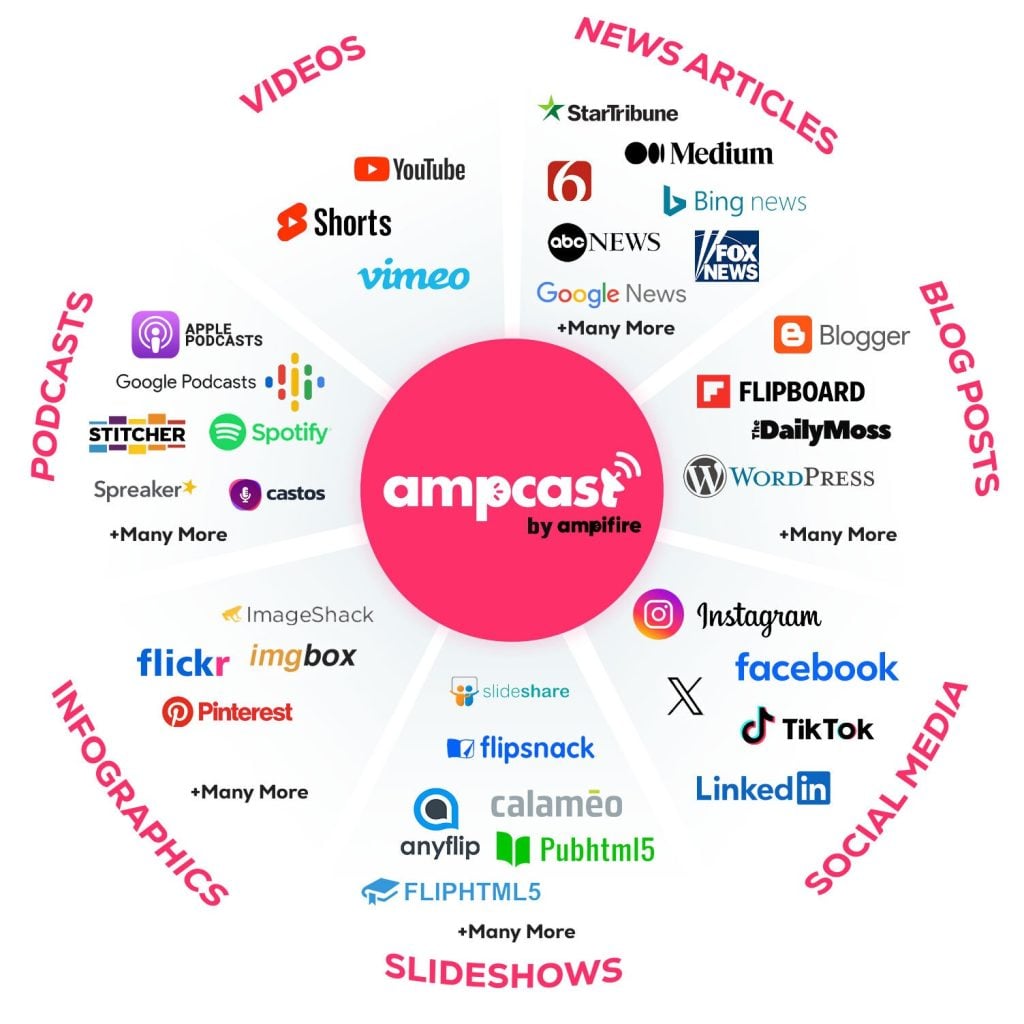
Instead of hiring a full content team or an agency costing $5,000–$10,000+ per month, we offer multi-platform content distribution through two options: a DIY credit at $397 or an AI-powered AmpCast credit starting at $495, each with a $27 monthly maintenance fee.
The results speak for themselves. A home robotics Shopify store used AmpiFire to run 30 campaigns over 10 months. The outcome? A 195% increase in organic traffic, over 210 high-quality backlinks, and an estimated $200,000-$250,000 in additional sales. All while the owner focused on running the business instead of creating content.
When your brand appears on trusted platforms such as Google News, YouTube, and major news networks, potential customers view you as credible and established. This multi-platform presence builds the trust needed to convert your ideal buyers into paying customers.
Frequently Asked Questions (FAQs)
What is the main difference between an ICP and a buyer persona?
An ICP describes the company attributes that make an organization a good fit for your product. A buyer persona describes the individual people within those companies who make or influence purchasing decisions. You need both to target the right companies and speak to the right people.
Can small businesses benefit from creating ICPs and buyer personas?
Yes. Small businesses with limited resources often benefit the most. These frameworks help you stop wasting time on poor-fit prospects. Even basic versions with 3–5 key attributes and 2–3 personas will significantly improve your marketing results.
How often should I update my ICP and buyer personas?
Review them at least once a year with lighter updates every quarter. Major business changes, like new products or entering new markets, should trigger immediate reviews. Treat them as living documents that evolve with your customers and market.
Which should I create first—the ICP or buyer personas?
Start with your ICP to establish which organizations offer the best potential. This gives context for your persona development. Once you know which companies to target, you can focus on understanding the key decision-makers within those organizations.
How can AmpiFire help me reach my ideal customers?
AmpiFire’s AmpCast AI platform creates 8 content formats from one topic—news articles, blogs, podcasts, videos, infographics, slideshows, and social posts. It then publishes automatically to 300+ sites, including Google News, YouTube, and Spotify, putting your brand in front of ideal buyers everywhere.
*Disclaimer: Results may vary based on individual circumstances, business type, and content strategy. The time savings and outcomes mentioned are based on typical user experiences and are not guaranteed. For specific pricing and service details, please visit AmpiFire.
Author
Related Posts

AmpiFire’s Content Planning Process: Buyer Journey Mapping & QuestionMixing
The Content Research Process That Drives REAL Traffic & Sales (Not Just Vanity Metrics) Most “Experts” Are Using The Same…

Content Marketing vs Traditional Marketing: What’s the Difference?
Learn about the key differences between content marketing and traditional marketing, including their pros and cons, and how each can…

Use The Buyer’s Journey 4 Stages to Get More Traffic & Sales
The Purchase Funnel is a useful way to conceptualize the transition from people who aren’t interested in your product or…

What Makes A Good Untapped Low-Competition Buyer Traffic Keyword [Infographic]
Check out our infographic outlining what you need to consider when choosing keywords for your Amp campaigns.

Organic Traffic vs Direct Traffic: What’s the Difference?
Understand organic vs direct traffic differences and how each impacts your website growth. Learn strategies to build both traffic types.

Selfpublishing.com: Features, Benefits & Pricing – Is it a Legit Platform for Authors?
Explore selfpublishing.com's programs, benefits, and pricing to see if it's the best platform for aspiring authors in our detailed review.