

Key Takeaways
- Content amplification tools help cut through digital noise, boosting content visibility beyond organic distribution alone.
- Free options like Buffer and Hootsuite provide essential scheduling capabilities, while paid solutions like AmpiFire and Outbrain offer advanced targeting and broader reach.
- The right mix of amplification tools should align with your specific content types, audience demographics, and business goals.
- AmpiFire’s AmpCast transforms a single topic into 8 formats and publishes to 300+ sites, automating your entire content distribution process.
Why You Need Content Amplification Tools in 2026
The digital content universe continues to expand at an unprecedented rate. Every minute, over 700 hours of video are uploaded to YouTube, hundreds of thousands of Stories are shared on Instagram, and roughly 500,000 posts appear on X (formerly Twitter). Breaking through this noise requires more than just quality—it demands strategic amplification.
Content amplification tools provide the leverage needed to elevate your content above the competition. They automate distribution processes, target specific audience segments, and maximize the lifespan of your content investments. Without these tools, you’re essentially shouting into the void and hoping someone hears you.
Modern marketing success relies on efficient resource allocation. Amplification tools help ensure the time and money invested in content creation deliver maximum returns by extending reach and engagement far beyond what organic distribution alone can achieve.
ROI of Content Amplification: Numbers That Matter
Effective content amplification delivers measurable results. Brands using strategic AI tools for content amplification can reduce customer acquisition costs by spending less on paid ads. This directly translates into improved conversion rates and lower cost-per-acquisition metrics.
Additionally, properly amplified content maintains relevance longer, extending its effective lifespan across several channels. When calculating ROI, this extended performance period significantly improves the value equation.
When to Use Content Amplification in Your Marketing Strategy
Content amplification should be integrated throughout your marketing funnel, but specific scenarios demand special attention. Product launches, major company announcements, and cornerstone content pieces deserve comprehensive amplification strategies to maximize impact.
High-value conversion content, such as case studies or detailed comparison guides, often benefits more from targeted amplification than top-of-funnel awareness content. The key is aligning your amplification strategy with specific business objectives and content goals.

How AmpiFire Works:
- Research & Target: Find high-demand topics your buyers search for
- Create & Repurpose: AmpiFire’s AmpCastAI generates news articles, blogs, videos, podcasts, infographics, slideshows, and social posts
- Distribute & Amplify: Auto-publish to 300+ sites including Google News, YouTube, Spotify, and major news networks
Get more traffic from people who want to buy your stuff, and powerful “As Seen On” trust badges for your site.
Do It Yourself (with AI), Done For You Content, & 100% Managed Organic Growth options available.
Grow Your Free Traffic From Everywhere
Best Free Content Amplification Tools
1. Buffer: Schedule & Manage Social Media Posts
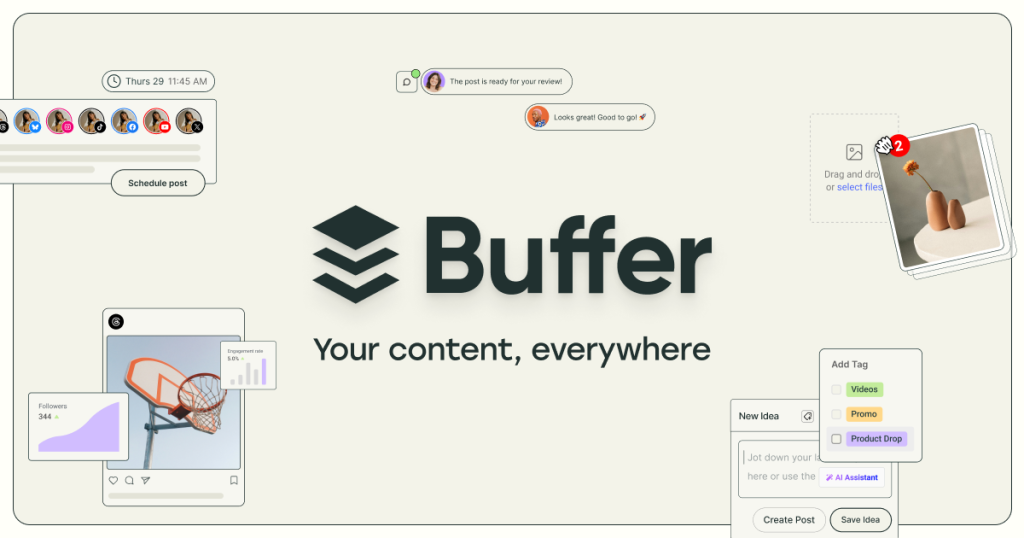
Buffer’s intuitive interface lets you schedule content across multiple social platforms simultaneously, ensuring consistent distribution without requiring constant attention. The free plan includes management for up to three social channels and allows scheduling of up to 10 posts per channel.
What makes Buffer particularly valuable is its analytics, which provide insights into post performance, optimal posting times, and audience engagement patterns. This data-driven approach helps refine your amplification strategy over time, maximizing organic reach even without paid promotion.
2. Hootsuite: Social Media Management Dashboard
Hootsuite’s free trial plan supports access to its Professional or Team plans for 30 days without cost, though you must provide credit card details and cancel before the trial ends to avoid being charged. The platform also offers stand-alone free tools on its website, such as an AI caption generator, a business name generator, and a brand sentiment analyzer.
What distinguishes Hootsuite is its powerful Streams feature, which lets you monitor multiple feeds, mentions, and hashtags in a single view. This capability enables you to identify engagement opportunities and participate in relevant conversations, amplifying your content through active community participation.
3. IFTTT: Automate Content Distribution Across Platforms

IFTTT allows you to create automated workflows that distribute content across channels without manual intervention, ensuring maximum exposure with minimal effort. Using IFTTT, you can:
- Automatically share new blog posts to multiple social networks simultaneously
- Cross-post Instagram content to Twitter, Facebook, and Pinterest with proper formatting
- Send RSS feed updates to social media or email newsletters
- Save social media posts to content curation platforms
- Automatically reshare evergreen content on a scheduled basis
The beauty of IFTTT lies in its flexibility and extensive integration capabilities. With connections to over 700 services, you can create custom amplification workflows that precisely match your distribution needs and audience preferences. This level of automation ensures consistent content amplification even during busy periods.
Top Paid Content Amplification Tools
1. AmpiFire: Multi-Channel Content Distribution
AmpiFire uses its AmpCast technology to transform your single content into eight formats, including news articles, blog posts, interview podcasts, videos, video shorts, infographics, slideshows, and social posts, and distributes them across news sites, blogs, video platforms, and 300+ high-authority sites.
This multi-format approach creates a robust digital footprint that enhances both visibility and content performance, making it particularly valuable for businesses focused on improving search rankings alongside social presence.
2. Outbrain (Teads): Native Advertising for Content Promotion
Outbrain seamlessly integrates promotional content, such as articles, videos, and slideshows, into the feeds of high-profile websites like CNN, MSN, and Sky News. This contextual placement ensures your content reaches audiences when they’re already in consumption mode, significantly improving engagement metrics.
With sophisticated targeting options based on interests, behaviors, and demographics, Outbrain allows precise audience selection while maintaining the non-disruptive feel of native discovery. The platform’s predictive algorithms continuously optimize campaigns toward performance goals, making it increasingly effective over time.
3. Taboola: Content Discovery Platform
Taboola operates one of the world’s largest content discovery networks, placing recommended content at the bottom of articles across major media sites. This strategic positioning captures readers’ attention at the exact moment they’re seeking something new to consume.
Taboola’s strength lies in its predictive engine, which analyzes user behavior to determine optimal content-audience matches, ensuring your content appears before the most receptive viewers. The platform offers flexible campaign structures with both CPC and CPA options, enabling marketers to align costs with specific performance objectives such as traffic, leads, or sales.
How to Choose the Right Content Amplification Tools
Budget Considerations: Free vs. Paid Options
When evaluating amplification tools through a financial lens, consider both direct costs and potential returns. Free tools like Buffer, Hootsuite, and IFTTT offer tremendous value for businesses with limited budgets, particularly when used strategically and consistently.
However, as your content operation scales, the enhanced capabilities of paid tools often justify their cost through improved performance metrics and time savings.
Content Type Alignment: Finding Tools That Fit Your Media
Different amplification tools excel with specific content formats. Video-heavy strategies benefit from platforms with strong visual distribution networks, such as Pinterest, and from Instagram automation tools. Text-based content might perform better with LinkedIn scheduling tools or news aggregation platforms.
Podcast content requires specialized distribution through platforms such as Spotify’s podcast promotion tools or dedicated audio-sharing networks. The key is matching your primary content types with amplification tools designed to optimize those media formats.
Integration Requirements: Working With Your Existing Stack
Seamless integration with your current marketing technology stack is crucial for amplification efficiency. The best tools connect directly with your content management system, analytics platforms, and CRM to create unified workflows and data collection.
Go for platforms that offer robust API connections, pre-built integrations with popular marketing tools, and webhook capabilities for custom integrations.
This connectivity creates a unified amplification ecosystem where content flows naturally from creation to distribution to measurement, without requiring manual transfers between systems.
Amplify Your Content & Free Up Your Time With AmpiFire
Finding the right content amplification tools is only half the battle. The real challenge is using them consistently while managing other business priorities. AmpiFire solves this by handling the heavy lifting of content creation and distribution.
When your brand appears across multiple platforms like YouTube, Spotify, Google News, and Pinterest, people trust you more because they see you everywhere they look online. This multi-platform presence signals authority and credibility to potential customers.
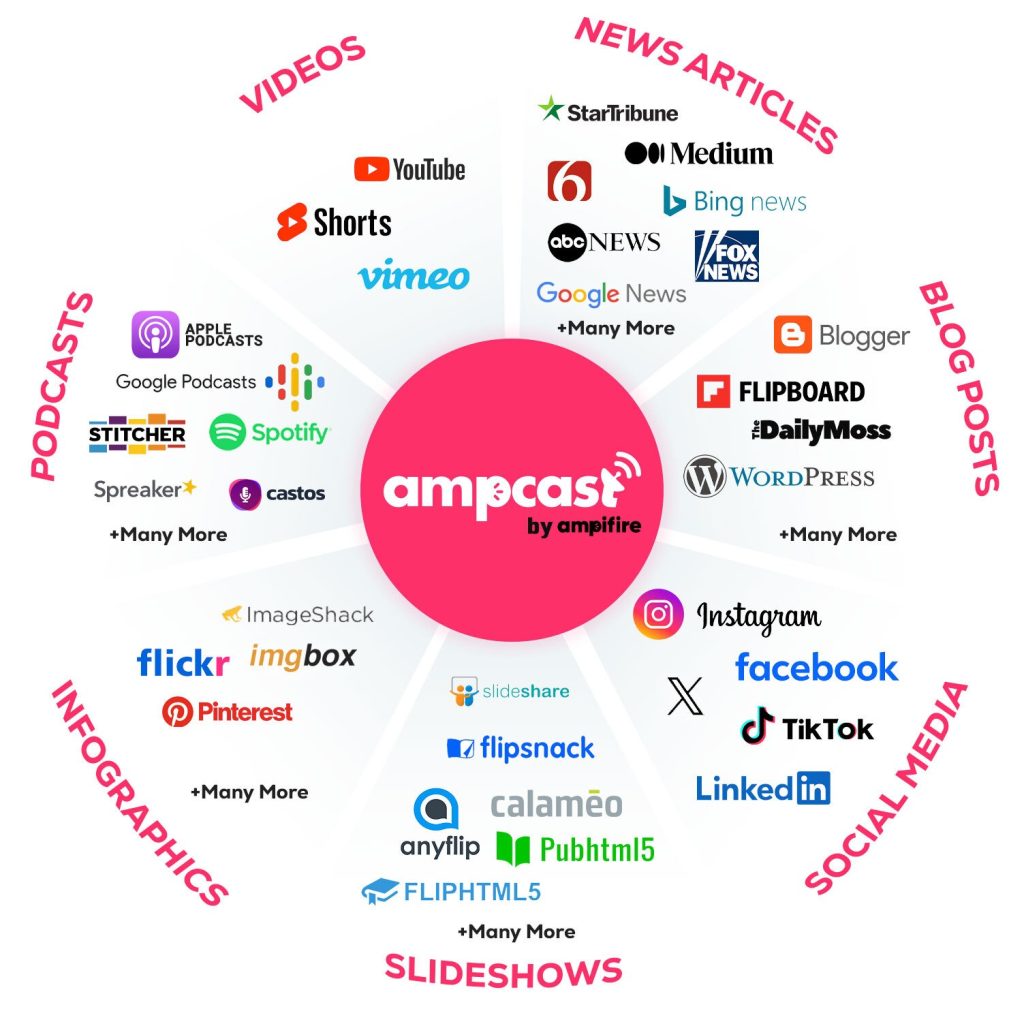
At AmpiFire, our AmpCast platform transforms any topic into 8 different content formats: news articles, blog posts, interview podcasts, videos, video shorts, infographics, slideshows, and social posts. The platform then automatically publishes this content across 300+ high-authority sites.
The results speak for themselves. An Oklahoma car dealership used AmpiFire’s content strategy with just one campaign per month. Their website traffic grew from 250 to 22,000 visitors over about 16 months—a 76.7% increase.
They achieved these results without spending money on ads, simply by creating quality content and distributing it widely. This shows the power of consistent content amplification when the right tools do the work for you.
Using AmpiFire, you can spend less time on tactical tasks such as writing, editing, and publishing content. Instead, you can focus on what matters most—building relationships with clients, improving your products, and growing your business.
Frequently Asked Questions (FAQs)
What exactly do content amplification tools do?
Content amplification tools distribute your content to more people across different platforms. They automate sharing, target specific audiences, and help your content reach people who would never find it through organic search alone.
Are free content amplification tools worth using?
Yes, free tools like Buffer and Hootsuite provide solid scheduling and basic analytics. They work well for small businesses or anyone starting with content distribution before investing in paid solutions.
How much should I budget for content amplification?
A good rule of thumb is to spend 30%–40% of your content budget on amplification. If you create content worth $10,000 per month, set aside $3,000–$4,000 to ensure people actually see it.
Can content amplification improve my search rankings?
Absolutely. When your content appears on multiple platforms, it creates backlinks and engagement signals that search engines notice. This tells Google your content is valuable and worth ranking higher.
How does AmpiFire’s AmpCast technology work for content amplification?
AmpCast takes one topic and creates eight content formats, including articles, videos, podcasts, and infographics. It then automatically publishes everything to 300+ sites, including YouTube, Spotify, and Google News. Automating the entire content creation and distribution process.
*Disclaimer: Results may vary based on individual circumstances, business type, and content strategy. The time savings and outcomes mentioned are based on typical user experiences and are not guaranteed. For specific pricing and service details, please visit AmpiFire.
Author
Related Posts


Best 8 Web 2.0 Submission Sites with High DA in 2025 [Free & Paid]
Discover top Web 2.0 submission sites with high Domain Authority (DA) in 2025. Build powerful backlinks with proven strategies for…

5 Best YouTube to TikTok Converter Apps [Free & Paid]
Convert YouTube videos to TikTok format easily with top free and paid converters. Discover AI tools that automate repurposing and…

What is Content Amplification & Why Is It Important?
Learn what content amplification is and why it matters for your marketing success. Discover strategies to expand your content reach…

How to Measure Content Amplification Strategy & Key Metrics to Track
Discover how to measure content amplification across 300+ platforms. Learn key metrics that drive organic traffic and prove real business…

Paid Advertising vs. Content Marketing Comparison: Are Facebook Ads Worth It?
Are you looking for the best content marketing strategies to use for your business? Here's a breakdown on whether paid…
AI Press Release Distribution: What Is It & Example Tools
Discover how AI press release distribution uses machine learning to target journalists, personalize outreach, and boost media coverage rates.