

Key Takeaways
- Content marketing builds long-term authority, sustained traffic, and audience trust by creating and distributing valuable content on brand-owned channels.
- PR delivers fast, credible exposure through earned media, making it ideal for immediate visibility, crises, and high-profile announcements.
- Content marketing targets audiences with intent, attracting people actively searching for solutions, while PR reaches broader, often passive audiences.
- Content marketing ROI compounds over time as each piece of content continues generating traffic, leads, and engagement, whereas PR results are often short-lived and harder to measure.
- AmpiFire’s AmpCast AI helps brands combine the immediate impact of PR with long-term content marketing benefits by transforming a single topic into 8 unique content formats (news articles, blog posts, interview podcasts, longer informational videos, reels/shorts, infographics, flipbooks/slideshows, and social posts) published across 300+ platforms including Google News, YouTube, Spotify, and major news networks, driving traffic from search, social, video, podcasts, and AI recommendations.
Content Marketing Builds Brands Differently Than PR
For most brands, the answer depends on your timeline: PR wins for immediate credibility, content marketing wins for long-term growth.
Many brands treat content marketing and PR as competing strategies, but each works in a different way. PR earns media placement through journalists, editors, and news outlets, giving quick exposure. Content marketing builds channels you control, blogs, videos, podcasts, infographics, social posts, and more, so your brand stays visible long after a campaign ends.
Data shows that brands consistently producing multi-format content see higher engagement and long-term traffic growth compared with relying solely on media coverage. By publishing across multiple platforms and formats, content marketing strengthens audience trust and creates measurable, lasting recognition that compounds over time.

How AmpiFire Works:
- Research & Target: Find high-demand topics your buyers search for.
- Create & Repurpose: AmpiFire’s AmpCast AI generates news articles, blog posts, interview podcasts, longer informational videos, reels/shorts, infographics, flipbooks/slideshows, and social posts.
- Distribute & Amplify: Auto-publish to 300+ sites, including Google News, YouTube, Spotify, and major news networks.
Get more traffic from people who want to buy your stuff, and powerful “As Seen On” trust badges for your site.
Do It Yourself (with AI), Done For You Content, & 100% Managed Organic Growth options available.
Grow Your Free Traffic From Everywhere
What Is Traditional PR & How Does It Build a Brand?
Traditional PR is about managing how your brand is perceived, primarily through earned media like news features, industry reports, podcasts, or TV coverage. Unlike paid ads, PR earns attention through credibility; media coverage signals that a trusted third party finds your brand noteworthy. Core PR activities include media relations, press releases, event coverage, crisis communications, and executive visibility.
PR is especially effective for immediate awareness. A single feature in a respected publication or a timely media response can shift public perception quickly. However, PR comes with high costs; retainers often range from $3,000 to $8,000 per month, with top-tier firms charging $15,000+, and coverage is never guaranteed, making ROI difficult to measure.
Why Brands Are Shifting to Content Marketing
Content marketing creates and distributes valuable content, such as blogs, videos, podcasts, social posts, and infographics on channels you control. Unlike PR, the content stays live and builds long-term value. People seek answers, education, or entertainment, and content marketing meets them where they already are, attracting audiences through intent-driven engagement.
This “pull” approach works differently from PR’s “push”:
- PR (Push): Brand pitches → Media decides → Audience receives.
- Content Marketing (Pull): Audience searches → Brand appears → Audience engages willingly.
Pull-based engagement creates higher-quality connections because audiences choose to interact with your brand. Optimized content can generate consistent traffic over months or years through social media amplification, email distribution, video platforms, and syndication, creating a compounding effect that short-term PR campaigns can’t match.
Content Marketing vs Traditional PR: Head-to-Head Comparison
Understanding the strengths and differences of each approach is key to choosing the right strategy for your brand’s goals, budget, and timeline.

Goals & Outcomes
PR and content marketing serve distinct purposes. PR focuses on speed, credibility through third-party validation, and crisis response. Content marketing is designed for sustained visibility, audience ownership, and compounding returns. Neither is universally better: the right choice depends on your brand goals, budget, and timeline.
Audience Focus
PR primarily targets existing audiences, media professionals, investors, and current customers. Content marketing reaches new audiences actively searching for solutions, often in the awareness or consideration stage of the buying journey.
Measuring Success
Content marketing performance is highly trackable. Metrics such as page views, engagement, lead conversions, and email sign-ups provide clear data on effectiveness. PR is harder to quantify. Media impressions, share of voice, and sentiment analysis offer context, but connecting coverage directly to revenue remains a persistent challenge.
Cost & Accessibility
Traditional PR retainers typically range from $3,000–$8,000 per month, with top-tier agencies charging $15,000 or more. Coverage is never guaranteed, making ROI difficult to predict. Content marketing can start smaller, from $250–$3,500 per month, depending on volume and quality, and each piece of content adds to a growing library that continues generating traffic and leads over time.
Building Trust
PR builds trust through third-party validation. Coverage by a respected outlet instantly lends credibility. Content marketing, on the other hand, builds trust gradually through consistent, valuable content. Audiences return because the content proves reliable, creating more durable, long-term trust.
Speed vs Longevity
PR delivers fast results, often within hours or days, making it ideal for product launches, announcements, or crisis situations. Content marketing takes longer to show results, but its impact compounds over time, creating a lasting foundation that continues attracting and engaging audiences.
Bottom Line
PR is a sprint; content marketing is a marathon. Brands that understand the differences can use PR for immediate visibility while leveraging content marketing to build long-term audience trust and engagement.
When PR Excels & Content Marketing Leads
Both PR and content marketing have unique strengths. Knowing when to use each can help your brand achieve immediate impact and long-term growth.

PR for Fast Impact
PR works best when speed and credibility matter. During crises, such as product recalls, controversies, or executive issues, PR allows brands to respond immediately through trusted media channels. Major announcements and high-profile launches also benefit, creating instant visibility and the perception of scale that content alone can’t generate.
Content for Long-Term Authority
Content marketing builds lasting brand presence. Optimized blogs, videos, and guides continue to drive traffic and establish expertise over months and years. Over time, a growing library of quality content positions your brand as a go-to authority, increasing both reach and influence without continual spend.
Direct Audience Access
Content marketing gives brands direct access to their audience via email lists, subscribers, and social media followers. Unlike PR, where messages must pass through journalists or media gatekeepers, owned audiences are true brand assets that can be nurtured continuously.
Compounding ROI
Each piece of content gains value over time, creating a self-reinforcing engine for traffic, leads, and trust. Unlike PR, whose impact may be limited to a campaign period, content marketing continues to deliver results long after publication.
Content Marketing vs Traditional PR: Comparison Table
| Feature / Factor | Content Marketing | Traditional PR |
| Primary Goal | Sustained audience engagement, long-term authority | Quick visibility, credibility, crisis response |
| Audience Focus | New audiences actively searching for solutions | Existing audiences, media, and investors |
| Content Ownership | Brand-owned channels (blogs, videos, podcasts, social media) | Third-party (media outlets) |
| Speed of Results | Slower (weeks to months) | Fast (hours to days) |
| Longevity | Long-term (content compounds over time) | Short-term (campaign-based) |
| Measurability | Highly trackable (traffic, leads, engagement) | Difficult to connect to revenue |
| Cost Range | $250–$3,500+ per month, depending on volume/quality | $3,000–$15,000+ per month |
| Trust Mechanism | Consistency and demonstrated expertise | Third-party validation |
| Access to Audience | Direct access via owned channels | Mediated through journalists |
| ROI Over Time | Compounds as the content library grows | Limited to the campaign period |
Amplify Your Brand With AmpiFire
For brands looking to combine the immediate impact of PR with the long-term benefits of content marketing, AmpiFire’s AmpCast AI gives a powerful, all-in-one solution. Our platform transforms a single topic into multiple content formats (news articles, blog posts, interview podcasts, longer informational videos, reels/shorts, infographics, flipbooks/slideshows, and social posts) and distributes them across 300+ high-authority platforms, including Google News, YouTube, Spotify, Pinterest, and more.
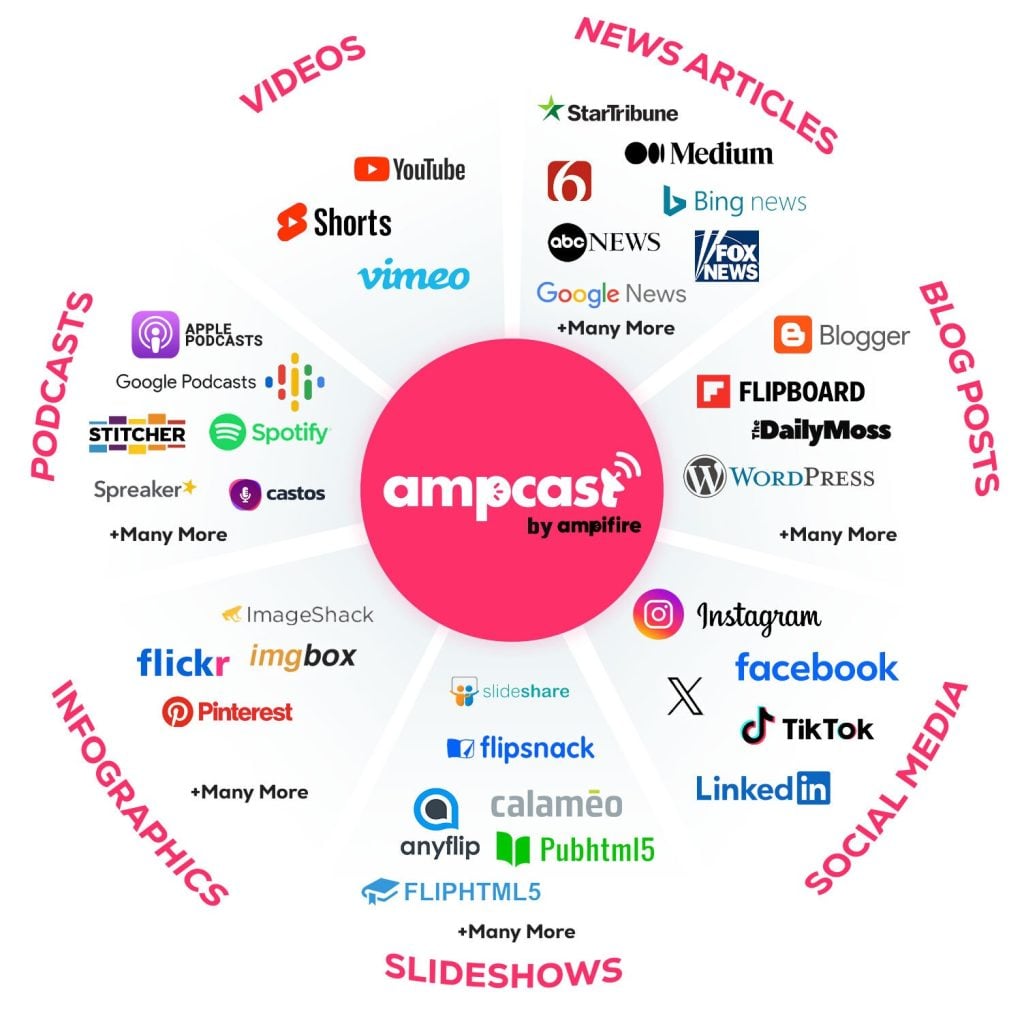
This approach drives immediate visibility and builds sustained organic traffic, strengthens brand authority, and creates a compounding ROI over time. Each piece of content acts as a long-term asset, reaching audiences across search engines, social media, video platforms, and AI recommendations, while reinforcing credibility and trust. By integrating multi-format content distribution into your brand strategy, AmpiFire helps you maintain visibility, capture audience attention, and turn every media moment into a lasting growth opportunity.
Frequently Asked Questions (FAQs)
Is traditional PR still relevant in the age of social media and content marketing?
Yes. While social media and content marketing let brands reach audiences directly, PR provides third-party editorial credibility that owned content can’t replicate. It’s essential for crisis management, major announcements, and building legitimacy with new audiences. The best approach integrates PR as a specialized tool within a broader brand strategy.
How long does content marketing take to show brand-building results?
Most brands see measurable results like increased organic traffic, leads, and brand searches within a few months. The compounding effects, which make content marketing so powerful, usually become visible with time. Consistent publishing, strategic optimization, and multi-channel distribution accelerate this timeline.
Can small businesses afford PR, and is it worth it?
Traditional PR retainers, starting at $3,000 per month, can be prohibitive for small businesses. DIY outreach, local journalist relationships, and press release distribution services can still generate earned media affordably. For most small brands, focusing on content marketing first delivers stronger ROI, with selective PR used for high-impact moments.
What is the biggest difference between content marketing and PR for audience targeting?
Content marketing captures audiences with intent, people actively searching for information. PR reaches broader, passive audiences through media outlets, giving wide exposure but less precision. For niche products or high-consideration purchases, content marketing usually delivers more qualified audiences than even a successful PR campaign.
Should a brand invest in content marketing or PR first?
Early-stage brands should start with content marketing to build owned channels, blogs, websites, and email lists, ensuring there’s a place to capture PR-driven traffic. Exceptions exist in highly competitive markets where immediate credibility is critical; in such cases, a targeted PR push combined with content foundation-building works best.
Tools like AmpiFire’s AmpCast AI can help accelerate this process by amplifying content across high-authority channels, bridging the gap between content marketing and earned media so your brand reaches the right audiences quickly while building long-term visibility.
*Disclaimer: Results may vary based on individual circumstances, business type, and content strategy. The time savings and outcomes mentioned are based on typical user experiences and are not guaranteed. For specific pricing and service details, please visit AmpiFire.
Author
Related Posts


Content Marketing vs Traditional Marketing: What’s the Difference?
Learn about the key differences between content marketing and traditional marketing, including their pros and cons, and how each can…

How to Boost Your eCommerce Brand Exposure: 7 Strategies for Building & Marketing a Successful Online Store [Examples]
When it comes to building a successful eCommerce brand, visibility is key. Whether you sell premium goods or are simply…

Content Production vs Link Building: Costs, Benefits, Advantages & Challenges
Unveil the synergy between content production and link building in this insightful guide that demonstrates the power of these two…


Press Release Distribution vs Social Media Marketing for Brand Awareness: Differences & Examples
Compare press release distribution vs. social media for brand awareness. Learn key differences and benefits to choose the right strategy…

BigCommerce Brand About Us Page: Writing Guide, Template & Content Examples
Unlock the secret to building trust and boosting sales with an effective BigCommerce Brand About Us Page step-by-step guide and…


How To Increase Your Google Maps Rankings with AmpiFire’s Citation Building Services?
Explore how AmpiFire's citation building services can enhance Google Maps rankings for local businesses and attract more customers.